The Technique
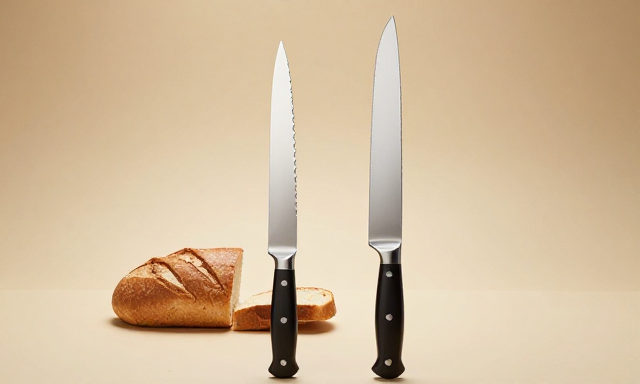
Use a long serrated bread knife or a sharp chef's knife to cut sandwiches — never a dull blade, never a serrated steak knife with short teeth. Use a single decisive sawing motion starting from one side and working through rather than pressing straight down. Cut with confidence: a hesitant, slow cut allows the sandwich to compress and shift. Let the knife do the work.
Why It Works
A sandwich is a compression-sensitive structure. A dull or inappropriately sized knife applies crushing force before it achieves any cutting — by the time it reaches the filling, the bread is already deformed and the layers have shifted. A long serrated knife makes contact across the full width of the sandwich simultaneously, distributing cutting force evenly rather than concentrating it at one point. The serrations also start cutting without any downward pressure, which is the enemy of good sandwich structure. The result is a clean face that reveals all layers intact — the cross-section you spent time building.
When to Use It
For any sandwich where the cut face matters — which is most sandwiches. A deli-style cross-cut is presentation-critical; a jagged, compressed cut face signals sloppiness regardless of how well the sandwich was built. Even for sandwiches you're eating alone, a clean cut makes the meal more enjoyable. The clean face also reveals whether your layers are as even as intended, giving you feedback for next time.
Pro Tips
- The diagonal cut (corner to corner) creates more surface area on the cut face and is genuinely better for eating — the tapered end is easier to get started on
- Wipe the blade between cuts when cutting sandwiches in batches
- For club sandwiches and thick constructions, one hand holds the top down lightly while the other saws
- A sharp chef's knife with a long blade (10 inches or more) is actually ideal for most sandwiches — don't default to serrated just because it's bread