Ingredient Guide

The
Cheese
Guide

Cheese is what separates a sandwich from a meal and a meal from an experience. A field guide to 37 cheeses — their origins, melt behavior, flavor intensity, and exactly where they belong.

37 cheeses covered | 7 categories | Browse all ↓
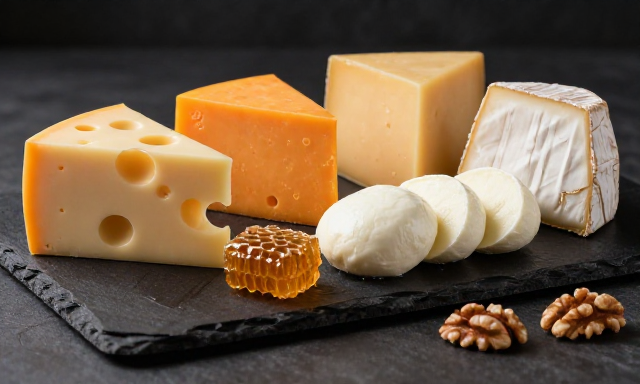
Variety of sandwich cheeses

The wrong cheese doesn't just taste wrong — it behaves wrong. It seizes when it should flow, pools when it should stretch, overwhelms when it should support. Understanding how a cheese melts — or whether it melts at all — is fundamental to building a great hot sandwich. And understanding flavor intensity is equally critical for cold builds, where there's no heat to coax a reticent cheese into showing itself. This guide rates every cheese on both dimensions and tells you exactly where to deploy it.

Melt Rating Key
★★★★★ Flows like sauce — ideal for hot builds
★★★★ Melts smoothly with moderate heat
★★★★★ Melts reasonably well with high heat
★★★★★ Softens but doesn't flow — cold builds preferred
★★★★ Does not melt — use as spread or garnish
Categories

Processed

2 cheeses

American Cheese

USA
Silky, smooth
Melt
Flavor
Profile: Mild, creamy, slightly salty

American cheese is an engineered marvel rather than a traditional cheese, and that's precisely the point. It's made by blending natural cheeses (typically cheddar or Colby) with emulsifying salts — usually sodium citrate — which break the protein structure and allow fat and water to remain perfectly combined when heated. The result is a cheese that melts without breaking into greasy puddles or rubbery strings, producing that signature glossy, creamy blanket that defines the American cheeseburger. Originally developed in the early 20th century for food service applications where consistent melt was critical, American cheese became the default diner cheese not out of laziness but out of practicality. It's mild enough not to overpower a beef patty and rich enough to add genuine lusciousness.

Builder's Tip

Use two slices stacked on a hot burger patty and cover the pan for 30 seconds — the trapped steam melts both slices simultaneously into one molten layer.

Best On
  • Cheeseburger
  • Grilled cheese
  • Breakfast sandwich
  • Patty melt

Velveeta

USA
Ultra-smooth, liquid when melted
Melt
Flavor
Profile: Very mild, rich, buttery

Velveeta occupies a unique space — it's so processed that the FDA classifies it as a 'pasteurized prepared cheese product' rather than cheese, which tells you everything about its nature and nothing about why it works. The emulsifier content is even higher than standard American cheese, which means Velveeta melts at a lower temperature and into a smoother, more liquid consistency. At room temperature it's almost spreadable; when heated it becomes a sauce. For sandwich applications, Velveeta is most useful as a base for cheese sauces — melt it with a splash of evaporated milk and some jalapeños and you have an extraordinarily smooth queso that works as a dip or a sandwich drizzle. Its flavor is extremely mild, which means it functions primarily as a textural vehicle for stronger flavors.

Builder's Tip

Combine Velveeta with a sharper cheddar in a grilled cheese for the best of both worlds: Velveeta provides the melt, sharp cheddar provides the flavor.

Best On
  • Grilled cheese
  • Cheesesteak sauce
  • Breakfast sandwich

Soft

5 cheeses

Brie

France (Brie region, Seine-et-Marne)
Creamy, buttery, runny when ripe
Melt
Flavor
Profile: Buttery, earthy, mushroomy, with gentle ammonia notes when very ripe

Brie is a soft-ripened cheese with a white bloomy rind produced by Penicillium camemberti mold, which is what gives it that distinctive earthy, mushroomy quality. Underneath the rind, the paste softens from the outside in as the cheese ages — a perfectly ripe Brie should be uniformly soft throughout, nearly flowing at room temperature. The flavor ranges from mild and buttery in a young wheel to deeply earthy and pungent in an older one. For sandwiches, Brie's luxury lies in its room-temperature behavior: you don't need to melt it. Pulled from the fridge 30 minutes before assembly, it spreads like butter and adds an extraordinary richness. When heated, it melts beautifully and quickly — a Brie and ham croque monsieur is a masterclass in French restraint.

Builder's Tip

Remove Brie from the fridge 30 minutes before building your sandwich. It will spread rather than tear, and the flavor blooms significantly at room temperature.

Best On
  • Ham and brie baguette
  • Prosciutto and fig jam
  • Turkey with cranberry
  • Brie and apple

Camembert

Normandy, France
Creamy, dense when cold, runny when ripe
Melt
Flavor
Profile: Earthy, pungent, buttery, barnyard notes

Camembert is Brie's more pungent, smaller Norman cousin — similar in style but typically sold as individual rounds rather than large wheels, which means each one ripens more consistently. Made from raw (or pasteurized for export) cow's milk in Normandy, authentic Camembert de Normandie carries a noticeably stronger flavor than Brie, with more pronounced earthy, mushroomy, and faintly barnyard notes that develop as the cheese ripens. The rind is fully edible and contributes most of the flavor complexity. On a sandwich, Camembert pairs exceptionally well with tart accompaniments — apple slices, cornichons, or a smear of Dijon — that cut through its richness. It also works beautifully in a hot pressed sandwich where it melts into something almost custardy.

Builder's Tip

Camembert melts more aggressively than Brie — in a panini press, it can become liquid very quickly, so press briefly and at lower heat.

Best On
  • Camembert and apple baguette
  • Roasted vegetable panini
  • Mushroom melt

Cream Cheese

USA (New York, 1870s)
Smooth, spreadable, dense
Melt
Flavor
Profile: Mild, tangy, rich, slightly sweet

Cream cheese is a fresh unripened cheese made from a combination of cream and milk, giving it a fat content around 33% and a consistency that is simultaneously spreadable and substantial. It was popularized in New York in the 1870s when a dairyman in upstate New York began producing it commercially under the Philadelphia brand — hence the enduring name — though its spiritual home became the Jewish deli and the bagel. The flavor is mild with a gentle tanginess from controlled acidification; it spreads at refrigerator temperature (unlike butter) and doesn't melt when heated so much as it softens and becomes runny. On a bagel with lox, the cream cheese functions as both adhesive and flavor mediator, its richness absorbing the salmon's brine while its tang complements the smoky cure.

Builder's Tip

Let cream cheese sit out for 20 minutes before spreading — cold cream cheese tears bread. Room-temperature cream cheese spreads cleanly and evenly.

Best On
  • Bagel and lox
  • Everything bagel sandwich
  • Cucumber tea sandwich
  • Smoked salmon

Ricotta

Italy
Grainy, light, fluffy
Melt
Flavor
Profile: Mild, slightly sweet, milky

Ricotta — literally 'recooked' in Italian — is traditionally made from the whey leftover after making mozzarella or provolone. The whey is heated until the remaining proteins precipitate out, producing a soft, grainy, almost fluffy white cheese with a very delicate milky sweetness. Because it's made from whey rather than milk, it's lower in fat than most cheeses and has a very short shelf life. In sandwiches, ricotta is used as a spread or base rather than a melting element — it doesn't melt at all, but its light texture pairs beautifully with roasted vegetables, herbs, lemon zest, and a drizzle of good olive oil. It's particularly effective on open-faced preparations where its whiteness and lightness can be shown off against colorful toppings.

Builder's Tip

Season ricotta aggressively before using it as a spread — salt, pepper, lemon zest, and fresh herbs transform it from bland to compelling.

Best On
  • Ricotta and honey toast
  • Grilled vegetable sandwich
  • Italian open-faced with roasted peppers

Burrata

Puglia, Italy
Firm shell, liquid creamy center (stracciatella)
Melt
Flavor
Profile: Rich, milky, luscious, fresh

Burrata is a theatrical cheese — from the outside it looks like a plain ball of fresh mozzarella, but cut it open and a river of stracciatella (torn mozzarella strands suspended in cream) spills out. It was invented in Puglia in the 1950s as a way to use mozzarella scraps, but the combination of the yielding outer shell and the liquid interior became something extraordinary in its own right. Burrata doesn't melt in any conventional sense; you simply break it open over whatever you're building and let the cream flow. On a piece of grilled bread with prosciutto and a drizzle of good olive oil, it's one of the most luxurious things you can eat. It must be consumed within 24-48 hours of purchase — stale burrata is a tragedy.

Builder's Tip

Burrata should be served at room temperature and broken open at the table. Never slice it in advance — the cream drains out and the magic is lost.

Best On
  • Bruschetta sandwich
  • Caprese panini
  • Prosciutto and burrata focaccia

Fresh

5 cheeses

Fresh Mozzarella

Campania, Italy
Soft, yielding, slightly bouncy
Melt
Flavor
Profile: Mild, milky, fresh, slightly tangy

Fresh mozzarella is made by stretching and kneading hot curd until it becomes smooth and elastic — a technique called pasta filata, or 'spun paste.' The result is a cheese with a glossy, slightly squeaky texture that releases liquid as it's cut or compressed. Authentic fresh mozzarella (Mozzarella di Bufala is made from water buffalo milk; Fior di Latte from cow's milk) is stored in brine or whey and has a shelf life of only a few days. On sandwiches, fresh mozzarella behaves very differently from the low-moisture mozzarella on pizza — it releases significantly more water, which can make bread soggy if you're not careful. The solution is to salt sliced mozzarella and let it drain on paper towels for 15 minutes before using it, or to assemble and eat the sandwich immediately.

Builder's Tip

Salt fresh mozzarella slices and drain on paper towels for 15 minutes before using. This draws out excess liquid and concentrates the flavor.

Best On
  • Caprese sandwich
  • Margherita panini
  • Mozzarella and prosciutto
  • Tomato and basil

Feta

Greece
Crumbly, dense
Melt
Flavor
Profile: Salty, tangy, sharp, briny

Feta is a PDO-protected Greek cheese made from sheep's milk or a mixture of sheep and goat's milk, aged in brine, which is responsible for both its saltiness and its preservative properties. It's one of the oldest cheeses in the world, with references to a similar product appearing in ancient Greek texts. The brining gives feta an unmistakable sharp, tangy, intensely salty flavor with a crumbly texture that ranges from dry and chalky in mass-market versions to creamy and slightly yielding in high-quality Greek or Bulgarian examples. Feta doesn't melt — it softens and becomes creamier when baked, but doesn't flow. On sandwiches it functions as a seasoning more than a cheese, contributing bursts of salt and tang to every bite. Its crumbly nature means it distributes unevenly, which is actually a feature: some bites are more intense than others.

Builder's Tip

Rinse mass-market feta under cold water before using to reduce excess saltiness. Good Greek feta needs no such treatment.

Best On
  • Greek salad pita
  • Mediterranean veggie wrap
  • Lamb gyro
  • Spinach and feta wrap

Halloumi

Cyprus
Rubbery, dense, squeaky; firms when grilled
Melt
Flavor
Profile: Salty, milky, with caramelized notes when grilled

Halloumi is unique in the cheese world for its extraordinarily high melting point — a property that results from its production method, which involves heating the curd in whey at a very high temperature, effectively denaturing the proteins in a way that makes them resistant to melting. This means halloumi can be grilled, pan-fried, or broiled until it develops a deep golden crust and caramelized exterior while the interior stays firm and chewy. The flavor is mild and milky when raw with a very pronounced saltiness; when grilled it develops sweet caramelized notes that balance the salt beautifully. It's the vegetarian sandwich protein: substantial enough in texture and flavor to anchor a sandwich the way meat does. In a pita with cucumber, tomato, and tahini, grilled halloumi is extraordinary.

Builder's Tip

Pat halloumi dry before grilling — surface moisture creates steam that prevents browning. A very hot dry pan develops the best crust in about 90 seconds per side.

Best On
  • Grilled halloumi pita
  • Halloumi and roasted pepper wrap
  • Mediterranean veggie sandwich

Paneer

Indian subcontinent
Dense, firm, slightly crumbly
Melt
Flavor
Profile: Mild, milky, neutral

Paneer is a fresh acid-set cheese made by curdling heated milk with lemon juice or vinegar and pressing the curds into a firm block. Like halloumi, it has a high melting point and can be cubed, sliced, and pan-fried or grilled without melting. Unlike halloumi, paneer is nearly unsalted, with an extremely mild flavor that makes it an excellent vehicle for bold spices and sauces — it absorbs marinades well and its neutral character means it doesn't compete with complex flavor profiles. In Indian cuisine, paneer is marinated in spiced yogurt and grilled for tikka, then used in wraps and rolls. The Kati roll — a spiced grilled paneer filling wrapped in a paratha — is one of India's great street foods and one of the world's great sandwiches.

Builder's Tip

Marinate paneer cubes in yogurt, turmeric, cumin, and chili for at least 2 hours before grilling. The marinade penetrates and creates a flavorful crust.

Best On
  • Paneer tikka wrap
  • Saag paneer naan sandwich
  • Spiced paneer kati roll

Bocconcini

Campania, Italy
Soft, yielding, tender
Melt
Flavor
Profile: Mild, milky, delicate, fresh

Bocconcini — literally 'little mouthfuls' in Italian — are small balls of fresh mozzarella, typically bite-sized or slightly larger. They're identical to fresh mozzarella in production and character, simply in a smaller format that offers more practical cutting flexibility for sandwiches. Because they're round, you can slice them into even coins that layer perfectly across a sandwich without the tearing and irregular shapes that come from cutting a larger ball. The flavor is the same as fresh mozzarella: mild, milky, and fresh, with the same tendency to release liquid and the same short shelf life. In a caprese panini with good tomatoes and fresh basil, bocconcini slices are the elegant choice.

Builder's Tip

Slice bocconcini into uniform coins for sandwiches — the smaller balls give you more precise control over thickness than cutting from a large mozzarella ball.

Best On
  • Caprese panini
  • Italian antipasto sandwich
  • Roasted tomato and basil

Semi-Soft

8 cheeses

Low-Moisture Mozzarella

USA (Italian-American adaptation)
Firm when cold, stretchy and gooey when melted
Melt
Flavor
Profile: Mild, slightly salty, with lactic tang

Low-moisture mozzarella is the American adaptation of fresh mozzarella — pressed and aged briefly to reduce water content from around 60% to below 50%, making it firmer, longer-lasting, and dramatically better at melting without releasing a flood of liquid. This is the cheese that made the New York pizza slice possible: when heated, it stretches into long, dramatic pulls rather than pooling into a wet puddle. On hot sandwiches, it's extraordinarily useful — it melts at moderate heat, stretches without becoming rubbery, and turns golden brown under a broiler. The flavor is milder and saltier than fresh mozzarella, less delicate, more workhorse. For a meatball sub or chicken parm sandwich, low-moisture mozzarella is the only correct answer.

Builder's Tip

For the best melt, shred your own block mozzarella rather than buying pre-shredded. Pre-shredded contains anti-caking agents that impede melting.

Best On
  • Meatball sub
  • Chicken parm sub
  • Eggplant parm
  • Hot Italian sandwich

Provolone

Southern Italy
Smooth, slightly waxy; stringy when melted
Melt
Flavor
Profile: Mild (dolce) to sharp and peppery (piccante)

Provolone is a pasta filata cheese — made by the same stretching technique as mozzarella — that comes in two distinct styles with dramatically different characters. Provolone dolce is aged under three months and has a mild, buttery, slightly tangy flavor similar to a gentle young cheddar. Provolone piccante is aged six months or longer, producing a sharp, pungent, slightly spicy flavor. Both melt well, though piccante can be oilier due to its higher moisture loss. In the Italian-American deli tradition, provolone became the standard sandwich cheese, appearing on hoagies and subs across the country. On a Philly cheesesteak, provolone is one of the three canonical choices (along with Cheez Whiz and American), prized for its melt and its mild funk.

Builder's Tip

Ask for provolone piccante at a good Italian deli — the sharp, aged version has dramatically more flavor and transforms a basic sandwich into something memorable.

Best On
  • Italian hoagie
  • Philly cheesesteak
  • Muffuletta
  • Italian beef

Fontina

Valle d'Aosta, Italy
Dense, creamy, smooth; flows freely when melted
Melt
Flavor
Profile: Nutty, buttery, earthy, with truffle-like depth

Fontina Val d'Aosta is one of the great melting cheeses in the world — it melts at a relatively low temperature into a smooth, flowing, creamy sauce rather than becoming stringy or greasy, which makes it invaluable in hot sandwich applications. The authentic version from the Valle d'Aosta (distinct from Scandinavian or domestic copies, which are milder and less complex) has a pale yellow, semi-firm paste with a nutty, earthy flavor that has been compared to truffles in depth and complexity. It's the traditional cheese in fondue valdostana, and that same flowing melt behavior makes it the ideal choice for a French dip or any sandwich that needs the cheese to essentially become a sauce. The French croque monsieur is traditionally made with Gruyère, but Fontina is arguably even better.

Builder's Tip

Fontina melts so well it can run out of the bread if you're not careful — use a slightly cupped bread or fold the edges to contain it.

Best On
  • French dip
  • Croque monsieur
  • Grilled cheese
  • Mushroom melt
  • Hot roast beef

Havarti

Denmark
Creamy, supple, slightly elastic
Melt
Flavor
Profile: Mild, buttery, slightly tangy, creamy

Havarti is a Danish semi-soft cheese developed in the mid-19th century by Hanne Nielsen, one of the first female cheesemakers to gain international recognition. It's a washed-curd cheese, meaning the curds are washed with warm water during production to remove lactose, which results in a milder, less acidic flavor than most natural cheeses. The texture is creamy and supple with small irregular holes; the flavor is buttery and mild with just enough tang to be interesting. Havarti comes in several styles — plain, dill, caraway, jalapeño — and all melt well without becoming stringy. It's a versatile, crowd-pleasing cheese that pairs easily with most deli meats and doesn't overpower delicate ingredients. Its approachability makes it one of the best everyday sandwich cheeses.

Builder's Tip

Havarti's mildness is a feature for multi-ingredient sandwiches — it adds richness and melt without competing with turkey, avocado, or vegetables.

Best On
  • Turkey and Havarti
  • Grilled cheese
  • Ham and Havarti on rye
  • Club sandwich

Gouda

Netherlands
Smooth, waxy, firm when young; crystalline when aged
Melt
Flavor
Profile: Mild and buttery (young) to caramel and toffee (aged)

Gouda encompasses an enormous range of cheeses unified by their Dutch origin and washed-curd production method. Young Gouda (aged 1-4 months) is mild, smooth, and buttery, melting well and pairing with almost anything. Aged Gouda (1-2 years) develops a dramatically different character — the interior darkens to amber or brown, the texture becomes firm and crystalline with crunchy tyrosine crystals, and the flavor shifts to deep caramel, butterscotch, and toffee notes. Smoked Gouda is perhaps the most sandwich-focused variety: the smoke adds another layer of complexity to the mild base cheese, and it melts beautifully in a panini. For grilled cheese, a combination of young and aged Gouda gives you both superior melt and concentrated flavor.

Builder's Tip

Smoked Gouda paired with bacon in a grilled cheese is one of the all-time great combinations — the smoke echoes the bacon and both melt into one coherent layer.

Best On
  • Bacon and Gouda
  • Gouda grilled cheese
  • Smoked Gouda BLT
  • Turkey and smoked Gouda

Monterey Jack

California, USA
Smooth, semi-firm, supple
Melt
Flavor
Profile: Mild, buttery, slightly tangy

Monterey Jack was developed in California in the 19th century, with the 'Jack' referring to David Jacks, a businessman who commercialized the cheese made by Spanish missionaries in the Monterey Bay area. It's a mild, white, semi-soft cheese with excellent melting properties — higher moisture than cheddar means it flows smoothly without breaking. Pepper Jack, its most popular variant, adds diced jalapeños and red bell peppers for heat and color. Colby-Jack (or 'Co-Jack') swirls Monterey Jack with orange Colby for a mild blend that's ubiquitous on sandwiches. The cheese's mild flavor makes it extremely adaptable: it won't overpower chicken, avocado, or delicate vegetables, but it adds a creamy richness and the glossy melt that makes hot sandwiches so satisfying.

Builder's Tip

Pepper Jack is one of the best all-purpose melt cheeses for a burger — the heat from the jalapeños adds excitement without the mess of adding sliced peppers separately.

Best On
  • California club
  • Quesadilla
  • Breakfast burrito
  • Green chile cheeseburger
  • Turkey melt

Muenster

USA (inspired by French Munster)
Smooth, supple, rubbery edge rind
Melt
Flavor
Profile: Mild, creamy, slightly tangy

American Muenster is a semi-soft cheese modeled loosely after the French Munster from Alsace, though the two are dramatically different — the French version is a washed-rind cheese with a pungent aroma and strong flavor, while American Muenster is mild, creamy, and approachable. It's recognizable by its pale yellow interior and distinctive orange rind (colored with annatto or paprika), and it melts extraordinarily well due to its high moisture content. On a hot sandwich, Muenster gets glossy and creamy, flowing into the bread and coating the other ingredients without becoming greasy or stringy. It's a natural choice for patty melts and grilled cheese because its mild flavor doesn't compete with the bread or the caramelized onions, instead contributing pure, creamy richness.

Builder's Tip

Muenster is one of the best cheeses for patty melts — its exceptionally smooth melt and mild flavor let the caramelized onions and rye bread shine.

Best On
  • Grilled cheese
  • Patty melt
  • Hot ham and cheese
  • Turkey melt

Pepper Jack

California, USA
Smooth, supple, with visible pepper bits
Melt
Flavor
Profile: Mild base with direct jalapeño heat and red pepper sweetness

Pepper Jack is Monterey Jack base cheese with diced jalapeños, serrano peppers, and red bell peppers mixed into the curd before pressing and aging. The cheese structure remains Monterey Jack — smooth, mild, and excellent melting properties — while the peppers provide heat, color, and visual interest. The heat level is moderate and approachable rather than punishing, and the red pepper pieces add a slight sweetness that balances the jalapeño's sharp bite. When melted on a burger or grilled sandwich, the cheese forms a uniform creamy layer while the pepper pieces maintain their texture, distributing heat throughout. It's one of the most useful cheeses in the sandwich builder's arsenal because it delivers seasoning and richness simultaneously.

Builder's Tip

Pepper Jack paired with avocado in a chicken sandwich creates a self-contained balance — the fat in the avocado moderates the pepper's heat and the cheese binds everything.

Best On
  • Spicy chicken sandwich
  • Green chile burger
  • Turkey and avocado
  • Breakfast sandwich

Semi-Hard

9 cheeses

Cheddar

Cheddar, Somerset, England
Firm, slightly crumbly (mild to medium); crystalline (extra-sharp)
Melt
Flavor
Profile: Mild and creamy (young) to sharp, tangy, complex (aged)

Cheddar is the world's most widely consumed cheese and one of the most misunderstood — the word covers a spectrum from mild, rubbery, industrial blocks to raw-milk, cave-aged wheels with crystalline textures and flavors that rival the finest wines in complexity. The cheddaring process — cutting, stacking, and turning the curds to expel whey and develop acidity — is unique to this style and responsible for its characteristic tang. Mild cheddar (aged 2-3 months) melts easily but has little flavor. Sharp cheddar (6-12 months) offers a good balance of melt and flavor intensity. Extra-sharp or aged cheddar (2+ years) has so much protein breakdown that it can become oily when melted, but the flavor is extraordinary. For grilled cheese, a blend of mild (for melt) and sharp (for flavor) is the pro move. White cheddar contains no annatto coloring; orange cheddar's color is purely cosmetic.

Builder's Tip

Blend sharp and mild cheddar in a grilled cheese: sharp provides flavor, mild ensures a smooth melt. Two-thirds sharp, one-third mild is the sweet spot.

Best On
  • Classic cheeseburger
  • Grilled cheese
  • BLT
  • Ploughman's sandwich
  • Reuben

Swiss Cheese

Switzerland
Smooth, slightly rubbery, with characteristic holes
Melt
Flavor
Profile: Mild, nutty, slightly sweet, with faint earthiness

American Swiss cheese is a mild, pasteurized interpretation of Swiss Emmental, with the distinctive holes (called 'eyes') produced by Propionibacterium freudenreichii bacteria that release carbon dioxide during aging. The flavor is considerably milder than authentic Swiss or Emmental, which suits its role as the Reuben's cheese of choice — in that sandwich, the Swiss takes a supporting role behind the corned beef, sauerkraut, and Thousand Island. Swiss melts very smoothly due to its moisture content, becoming elastic and stringy rather than pooling. Genuine Swiss Emmental from Switzerland has a nuttier, more complex flavor and would elevate any sandwich it appeared in. On a classic deli sandwich, Swiss earns its reputation for reliable neutrality — it contributes richness and melt without dominating.

Builder's Tip

Swiss is the essential Reuben cheese not because it's the most flavorful but because its mild nuttiness doesn't fight the sauerkraut or the corned beef.

Best On
  • Reuben
  • Club sandwich
  • Corned beef on rye
  • Monte Cristo
  • French onion

Gruyère

Gruyères, Fribourg, Switzerland
Dense, smooth, slightly moist; silky when melted
Melt
Flavor
Profile: Nutty, slightly sweet, fruity, with savory depth

Gruyère is arguably the finest melting cheese in the world — it produces a smooth, even, non-greasy melt without stringing excessively, and its flavor is complex enough to stand on its own. Made from raw cow's milk in the Swiss canton of Fribourg under strict AOP regulations, authentic Gruyère is aged at least five months, with reserve versions reaching twelve months or more. The flavor is layered: notes of hazelnuts, dried fruit, and brown butter develop into a savory, almost meaty depth that intensifies with age. It's the definitive cheese for croque monsieur — the classic Parisian grilled ham and cheese — and for French onion soup. On any hot sandwich where the cheese is supposed to be the star rather than a supporting player, Gruyère is the correct answer. Nothing melts like it and nothing tastes like it.

Builder's Tip

Grate Gruyère rather than slicing it for grilled cheese — it melts more evenly and distributes throughout the sandwich rather than forming a dense central layer.

Best On
  • Croque monsieur
  • French onion grilled cheese
  • Mushroom melt
  • Reuben upgrade
  • Fondue toast

Emmental

Emmental valley, Bern, Switzerland
Firm, smooth, elastic
Melt
Flavor
Profile: Nutty, mildly sweet, fruity, faintly tangy

Emmental is the archetypal Swiss cheese — the one everyone pictures when they think of cheese with holes — and it's the original from which American Swiss is derived and diluted. The cheese is produced in enormous wheels (up to 100kg) in the Emmental valley, aged for at least four months, during which the propionibacterium bacteria create carbon dioxide that forms the cheese's famous large round holes. The flavor is nutty and sweet with a mild fruitiness — more complex than American Swiss but less intense than Gruyère, which makes it a useful middle ground for sandwiches where you want more character than Swiss but less assertiveness than Gruyère. It melts well and stretches beautifully. In Germany and Austria, Emmental appears on countless open-faced sandwiches and hot presses.

Builder's Tip

Emmental is the right choice when Gruyère is too assertive — it has more character than American Swiss but won't overpower delicate fillings like turkey or chicken.

Best On
  • Reuben
  • Ham and Swiss
  • Turkey melt
  • Open-faced grilled sandwich

Manchego

La Mancha, Spain
Firm, compact, slightly crumbly
Melt
Flavor
Profile: Buttery, nutty, tangy, with lanolin and grassiness from sheep's milk

Manchego is Spain's most famous cheese, made exclusively from the milk of Manchega sheep in the La Mancha region — the homeland of Don Quixote — and aged anywhere from 2 months (semicurado) to 2 years (añejo). Sheep's milk gives it a distinctive character that cow's milk cheeses lack: a subtle lanolin richness, a more concentrated fat content, and a buttery texture with a mildly grainy bite. Young Manchego is softer and milder; aged Manchego develops a firmer, more crystalline texture and an intensely savory, nutty, almost peppery flavor. Its classic Spanish pairing — thin slices with membrillo, the quince paste — is one of the greatest cheese combinations in the world: the fruit's sweetness and acidity perfectly counterbalancing the sheep's milk richness. Manchego doesn't melt as well as cow's milk cheeses due to its fat structure, making it better for cold builds.

Builder's Tip

Pair Manchego with membrillo (quince paste) and Serrano ham on a crusty roll for one of the great simple sandwiches — sweet, salty, savory, and satisfying.

Best On
  • Manchego and Serrano ham bocadillo
  • Manchego and quince paste
  • Manchego and chorizo

Jarlsberg

Norway
Smooth, slightly elastic, with large irregular holes
Melt
Flavor
Profile: Mild, nutty, slightly sweet, buttery

Jarlsberg was developed in Norway in the 1950s as a milder, more commercially accessible alternative to Swiss Emmental, using similar production methods but with a Scandinavian sensibility toward approachability. The characteristic large, irregular holes and mild, nutty flavor made it an immediate success both domestically and in export markets, where it became one of the best-selling imported cheeses in the United States. The flavor is sweeter and more buttery than Swiss Emmental, less intense but very pleasant — it's the cheese for people who love Swiss but find it occasionally too pungent. Jarlsberg melts very well, producing a smooth, elastic stretch similar to Swiss. On a turkey sandwich or a deli-style build, Jarlsberg adds reliable richness and a gentle nuttiness that complements without competing.

Builder's Tip

Jarlsberg is Swiss's more approachable sibling — use it whenever you want a nutty, melting cheese but Swiss feels too aggressive for the other ingredients.

Best On
  • Turkey and Jarlsberg
  • Ham and Jarlsberg
  • Open-faced Scandinavian sandwich
  • Grilled cheese

Sharp Cheddar

Cheddar, Somerset, England
Firm, slightly crumbly
Melt
Flavor
Profile: Sharp, tangy, complex with hints of crystalized lactate

Sharp cheddar occupies the sweet spot between mild cheddar's boring neutrality and extra-sharp cheddar's occasional inability to melt. Aged 9-12 months, sharp cheddar has developed enough of its characteristic tang and complexity to be genuinely interesting — that bite of lactic acid and subtle crystalline texture — without sacrificing the ability to melt into a smooth, flowing layer. The flavor works across an extraordinary range of applications: it makes a great burger cheese, transforms a grilled cheese from simple to complex, holds its own against apple slices in a cold sandwich, and forms the base of every great pimento cheese. It's the workhorse of the cheese world — you could build an entire career eating nothing but sharp cheddar on bread and not exhaust its possibilities.

Builder's Tip

Sharp cheddar is the ideal base for pimento cheese — its tang and the pimentos' mild sweetness make a combination that has been perfecting itself in the American South for over a century.

Best On
  • Pimento cheese sandwich
  • Classic grilled cheese
  • Cheeseburger
  • Apple and sharp cheddar

Colby

Colby, Wisconsin, USA
Springy, open texture, moist
Melt
Flavor
Profile: Mild, creamy, slightly sweet, buttery

Colby was created in 1885 in Colby, Wisconsin by Joseph Steinwand as a variation on cheddar that retained more moisture — instead of cheddaring the curds, they're washed with cold water to stop acid development, producing a milder, springier, more open-textured cheese. The flavor is milder and sweeter than young cheddar, with less tang, which makes it popular for those who find cheddar too sharp. Its open, moist texture means it melts extremely well — more readily than cheddar — and it's commonly blended with Monterey Jack to create Colby-Jack. In Wisconsin diner culture, Colby is the default burger cheese, chosen for its reliable melt and crowd-pleasing mildness. It lacks the depth of good cheddar, but its melt characteristics and mild flavor make it extremely functional.

Builder's Tip

Colby melts faster than cheddar at lower temperatures — ideal for a burger or sandwich where you want even coverage without waiting for the cheese to catch up.

Best On
  • Basic cheeseburger
  • Grilled cheese
  • Deli sandwich
  • BLT

Raclette

Valais, Switzerland
Firm when cold, flows like liquid when melted
Melt
Flavor
Profile: Creamy, buttery, nutty, with savory barnyard notes

Raclette is one of Switzerland's great dining traditions — a semi-hard cow's milk cheese from the Valais canton that is traditionally melted by holding a half-wheel near an open fire and scraping (racler means 'to scrape' in French) the melting cheese over potatoes, charcuterie, and cornichons. The cheese's extraordinary melt behavior — it becomes almost liquid and flows smoothly without seizing or becoming greasy — makes it ideal for sandwich applications that involve melting. The flavor is richer and slightly more pungent than Gruyère, with a distinctive barnyard quality that becomes more pronounced as the cheese heats. When melted over bread with thin-sliced potatoes, pickles, and ham, Raclette produces one of the most satisfying hot sandwiches imaginable.

Builder's Tip

Raclette melts at such a low temperature that you can melt it over a warm sandwich without even using a broiler — just place slices on a warm-from-the-pan open-faced build.

Best On
  • Raclette and potato tartine
  • Open-faced charcuterie melt
  • Raclette and cornichon on sourdough

Hard

4 cheeses

Parmigiano-Reggiano

Emilia-Romagna, Italy
Hard, granular, crystalline, crumbly
Melt
Flavor
Profile: Intensely savory (umami), nutty, fruity, salty, complex

Parmigiano-Reggiano is one of the most carefully controlled and rigorously authentic cheeses in the world — aged for a minimum of 12 months, with 24 and 36-month versions considered superior, under PDO designation that restricts production to a small area of Emilia-Romagna. The resulting cheese is extraordinarily complex: free amino acids and glutamates produced during the long aging process make it one of the highest naturally occurring sources of umami flavor in any food. Crystals of tyrosine form throughout the paste, giving it a crunch that signals proper aging. On sandwiches, Parm rarely functions as the primary cheese (it doesn't melt smoothly enough) but as a finishing element — grated over a meatball sub, over eggplant parm, or shaved thinly over a Caesar wrap, it adds an intensity that no other cheese can match.

Builder's Tip

Grate Parmigiano-Reggiano directly over a hot sandwich just before serving — the heat volatilizes its aromatic compounds and the cheese sticks to whatever it touches.

Best On
  • Italian beef (grated over)
  • Eggplant parm
  • Caesar salad sandwich
  • Meatball sub (finished)

Pecorino Romano

Lazio, Sardinia, Italy
Very hard, granular, dry
Melt
Flavor
Profile: Sharp, salty, pungent, distinctively sheepy

Pecorino Romano is older than Parmigiano-Reggiano — Roman soldiers were eating it as far back as the first century BC — and shares the hard, granular character of Parm while being sharper, saltier, and more pungently flavored due to the use of sheep's milk. The word 'pecorino' simply means 'of sheep,' and this cheese carries all the lanolin-rich intensity of sheep's milk amplified by at least eight months of aging. It's significantly saltier than Parmigiano and can overwhelm if overused — a little goes a long way. In sandwiches, Pecorino Romano is a finishing cheese used sparingly for its enormous intensity. On a lamb-based sandwich it's particularly appropriate, as sheep's milk echoes the animal in a harmonious way.

Builder's Tip

Use Pecorino Romano sparingly — its salt content is very high and a tablespoon of finely grated Pecorino can season a sandwich as effectively as a pinch of salt.

Best On
  • Italian meatball sub (grated)
  • Arancini sandwich
  • Lamb kebab wrap

Asiago

Asiago plateau, Veneto, Italy
Semi-firm (fresh) to hard and crumbly (aged)
Melt
Flavor
Profile: Mild and milky (fresh) to sharp, nutty, tangy (aged)

Asiago comes in two dramatically different forms that are essentially different cheeses sharing a name and an origin. Asiago Pressato (fresh) is semi-soft, mild, and springy — a perfectly pleasant everyday cheese that melts reasonably well. Asiago d'Allevo (aged) ranges from medium (3-8 months) to old (9-18 months) to stravecchio (18+ months), each stage producing a harder, more crumbly, more intensely flavored cheese. The aged version has a sharp, complex, nutty tang that approaches Gruyère territory and makes it genuinely interesting. On sandwich menus at coffee shops and panini bars, Asiago appears constantly because it has name recognition and a moderately interesting flavor without being as expensive or aggressive as Gruyère.

Builder's Tip

Specify fresh or aged when ordering — Asiago Pressato and d'Allevo are essentially different cheeses that happen to share a name.

Best On
  • Italian hoagie
  • Grilled chicken panini
  • Turkey and Asiago on ciabatta

Aged Gouda

Netherlands
Very firm, dry, crystalline with crunchy tyrosine crystals
Melt
Flavor
Profile: Deep caramel, butterscotch, toffee, smoky, concentrated

Aged Gouda — typically labeled as 'Boerenkaas' when farmhouse-made, or aged 18-36 months commercially — is almost unrecognizable as the same cheese as young Gouda. The interior has darkened to amber or brown, moisture has dropped dramatically, and the texture has become firm and crystalline with crunchy white specks throughout (tyrosine amino acid crystals — the same thing that appears in aged Parmesan). The flavor is extraordinary: intense caramel, butterscotch, and toffee notes with a savory depth that lingers for minutes after eating. It doesn't melt in the conventional sense, instead softening slightly when heated. On a sandwich, aged Gouda is best used like Parmigiano — shaved thin or in small amounts as a flavor bomb, not as a melting layer.

Builder's Tip

Shave aged Gouda with a vegetable peeler for the most elegant thin slices — they'll curl beautifully and provide intense flavor without overwhelming.

Best On
  • Aged Gouda and apple
  • Aged Gouda and prosciutto
  • Charcuterie-style open-faced sandwich

Blue

4 cheeses

Gorgonzola

Lombardy and Piedmont, Italy
Creamy, spreadable (dolce); firm, crumbly (piccante)
Melt
Flavor
Profile: Creamy and mild (dolce) to sharp, pungent, earthy (piccante)

Gorgonzola is one of the world's oldest blue-veined cheeses, with production records dating back to the 11th century in Lombardy. The blue-green veining is created by Penicillium glaucum mold, introduced during production and encouraged to develop through needling — puncturing the cheese with metal rods to create air channels. Gorgonzola dolce (young) is creamy, mild, and spreadable, with a gentle funkiness and sweetness; Gorgonzola piccante (aged) is firmer, crumblier, and markedly more pungent and complex. On sandwiches, Gorgonzola is a power ingredient — a small amount transforms a steak sandwich into something extraordinary. Its classic pairings — pear, walnut, honey, arugula — all appear on sandwich menus for good reason: sweet and bitter flavors balance the cheese's intensity.

Builder's Tip

Spread Gorgonzola dolce directly on warm bread — the heat softens it further and the creaminess permeates the sandwich rather than sitting in a distinct layer.

Best On
  • Steak and gorgonzola
  • Pear and walnut on focaccia
  • Buffalo chicken with blue
  • Arugula and gorgonzola

Roquefort

Roquefort-sur-Soulzon, France
Moist, crumbly, slightly sticky
Melt
Flavor
Profile: Intensely sharp, salty, tangy, with complex mineral and earthy notes

Roquefort is France's most celebrated blue cheese — a PDO-protected cheese made exclusively from the milk of Lacaune sheep, inoculated with Penicillium roqueforti, and aged for a minimum of three months in the natural limestone caves of Combalou near the village of Roquefort-sur-Soulzon. The caves maintain a constant temperature and humidity ideal for the Penicillium mold, and natural air currents through the cave's 'fleurines' (cracks in the limestone) create the perfect conditions for development. Roquefort is one of the most intense cheeses on earth — very salty, sharply pungent, with a complex mineral quality and an almost metallic tang. On sandwiches it should be used sparingly and paired with bold flavors that can stand up to it: walnuts, honey, endive, steak, or strong mustard.

Builder's Tip

Balance Roquefort's intensity with sweetness — honey or fig jam on the same sandwich smooths the sharp edges without masking the cheese's extraordinary character.

Best On
  • Roquefort and walnut baguette
  • Steak and Roquefort
  • Endive and Roquefort open-faced

Stilton

Derbyshire, Nottinghamshire, Leicestershire, England
Creamy, crumbly, slightly moist
Melt
Flavor
Profile: Rich, nutty, tangy, earthy — milder and creamier than Roquefort

Stilton is England's great blue cheese — a PDO-protected variety produced only in the Vale of Belvoir region, with a character distinctly different from its French and Italian counterparts. Where Roquefort is sharp and saline and Gorgonzola can be pungent and earthy, Stilton is comparatively measured: nutty, rich, slightly tangy, with a creamy texture that crumbles rather than spreading. It's produced in cylindrical forms and aged for 9-12 weeks, during which the characteristic blue-green veining develops. Stilton's more restrained intensity makes it one of the most food-friendly blue cheeses — it appears naturally on a ploughman's lunch alongside crusty bread, pickle, and ham, and pairs beautifully with pear, walnuts, and roast beef. It is traditionally eaten with a glass of port.

Builder's Tip

Crumble Stilton onto a roast beef sandwich rather than slicing it — the irregular chunks distribute the flavor more interestingly than a uniform layer.

Best On
  • Ploughman's
  • Pear and Stilton on walnut bread
  • Roast beef and Stilton

Danish Blue (Danablu)

Denmark
Creamy, slightly soft, crumbly
Melt
Flavor
Profile: Sharp, salty, slightly bitter, pungent

Danish Blue, or Danablu, was developed in Denmark in the early 20th century as a more affordable alternative to Roquefort, using cow's milk instead of sheep's milk and a similar mold. It's sharper and saltier than Stilton, and lacks the complex mineral depth of Roquefort, but it's considerably less expensive and widely available, which has made it the default 'blue cheese' on burger menus worldwide. The flavor is direct and assertive — very salty with a sharp, clean blue funk — and the texture is creamier than many blues. On a burger with blue cheese sauce or crumbled directly on a steak sandwich, it performs reliably. For those new to blue cheese on sandwiches, Danish Blue is a good entry point: assertive but not intimidating.

Builder's Tip

Mix crumbled Danish Blue with a tablespoon of mayonnaise and a few drops of hot sauce for an instant blue cheese sauce that melts into a hot burger beautifully.

Best On
  • Blue cheese burger
  • Buffalo chicken
  • Walnut and endive open-faced
  • Steak sandwich