Ingredient Guide

The
Bread
Guide

Everything starts with the bread. A comprehensive field guide to 30 types of sandwich bread — their origins, textures, flavor profiles, and exactly what they're built for.

30 breads covered | Browse all ↓
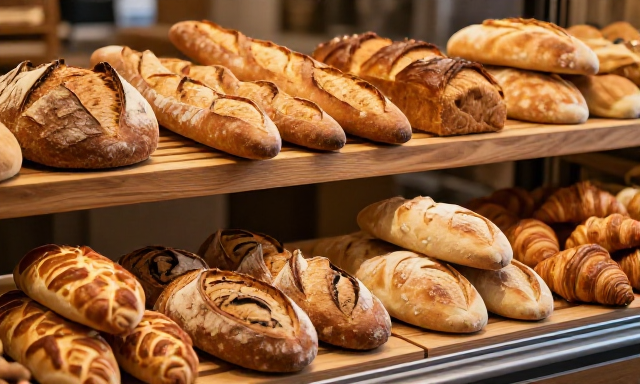
Variety of sandwich breads

Bread is not just a container. It's texture, structure, flavor, and cultural context all at once. The bread you choose determines what fillings can work, how much moisture the sandwich can absorb, and whether the result is something worth eating or something that turns into a soggy mess by the third bite. This guide covers every major sandwich bread on earth — from the sourdough boules of San Francisco to the injera of Addis Ababa.

Sourdough

San Francisco, USA (popularized)
Chewy crumb, crackly crust Tangy, complex, slightly acidic

Sourdough is leavened by a live culture of wild yeast and lactic acid bacteria rather than commercial yeast, which is why its flavor is so much more complex than ordinary bread. The fermentation process — which can take anywhere from 12 to 48 hours — produces lactic and acetic acids that give the bread its characteristic tang while also improving digestibility and shelf life. The thick, crackly crust develops during a high-heat bake, often in a Dutch oven, trapping steam that keeps the crumb open and chewy. For sandwiches, that sturdy structure holds up beautifully against wet ingredients like tomatoes and mayonnaise without disintegrating. San Francisco's foggy, cool climate happens to be ideal for the particular wild yeast strains that produce the most assertive tang, which is why that city became synonymous with the style.

Builder's Tip

Let sourdough toast slightly before building your sandwich — the crust softens just enough while the crumb stays firm, giving you structure without jaw-breaking toughness.

Best For
  • Turkey club
  • Grilled cheese
  • BLT
  • Avocado toast sandwich

Rye Bread

Northern Europe (Germany, Scandinavia)
Dense, moist, slightly springy Earthy, nutty, mildly bitter

Rye bread is made from rye flour, which contains less gluten-forming protein than wheat, resulting in a denser, moister loaf that stays fresh for days longer than wheat bread. The earthy, slightly bitter flavor comes from rye's bran and from the pentosans — a type of fiber that absorbs enormous amounts of water and gives rye bread its characteristic sticky crumb. Light rye uses mostly white rye flour for a milder taste; dark rye or pumpernickel uses whole-grain rye and often molasses or caraway seeds for depth. The flavor is inseparable from the deli tradition: pastrami and rye became iconic not by accident but because rye's earthiness cuts through fat in a way that soft white bread cannot. In Germany and Scandinavia, dense rye crispbreads and hearty loaves have sustained populations through harsh winters for thousands of years.

Builder's Tip

If rye bread is drying out, a brief steam or a damp paper towel in the microwave for 15 seconds restores the moisture without making it gummy.

Best For
  • Pastrami
  • Corned beef
  • Smoked salmon
  • Open-faced Scandinavian smørrebrød

Whole Wheat Bread

Global (ancient grain, modern loaf form: 19th century USA/Europe)
Slightly dense, soft to chewy depending on recipe Nutty, slightly sweet, hearty

Whole wheat bread uses the entire wheat kernel — bran, germ, and endosperm — rather than just the starchy endosperm used in white flour, which means it retains far more fiber, vitamins, and minerals. The bran particles in whole wheat flour cut through developing gluten strands during mixing, which is why whole wheat loaves tend to be denser than white bread; bakers often add vital wheat gluten or use a blend of whole wheat and white flour to compensate. The nutty, slightly sweet flavor comes largely from the wheat germ, which contains oils and compounds that brown beautifully during baking. Good whole wheat sandwich bread should have enough structure to support a full build without tasting like cardboard — the difference between grocery-store whole wheat and a properly made loaf is enormous. Look for "100% whole wheat" on the label, not just "wheat bread," which can be mostly white flour with caramel coloring added.

Builder's Tip

For sandwiches with aggressive fillings like tuna or egg salad, whole wheat's nuttiness is an asset rather than a neutral carrier — it actively makes the sandwich taste better.

Best For
  • Turkey and avocado
  • PB&J
  • Chicken salad
  • Tuna salad

White Sandwich Bread

USA (industrial production: early 20th century)
Soft, pillowy, even crumb Mild, slightly sweet, neutral

The white sandwich loaf as most people know it — Pullman-style, perfectly square slices, uniform crumb — is a product of industrial baking that emerged in the early twentieth century. The Pullman loaf is named for the lidded pans once used on railroad dining cars, which produced the characteristically straight sides and tight crumb. Made with enriched white flour, milk or milk powder, fat, and a little sugar, the bread is engineered for tenderness: the fat coats gluten strands to keep them soft, the sugar feeds yeast and encourages browning, and the dairy adds flavor and tenderness simultaneously. Its neutrality is a feature, not a bug — it never competes with fillings, which is exactly why it has endured as the default sandwich bread for over a century. Artisan bakers have produced excellent versions with better flour and longer fermentation, but the classic soft white loaf has a texture no other bread can replicate.

Builder's Tip

For grilled cheese specifically, standard soft white bread has the ideal fat content and structure to toast evenly golden without burning before the cheese melts.

Best For
  • PB&J
  • Grilled cheese
  • BLT
  • Classic deli sandwiches
  • Tea sandwiches

Brioche

Normandy, France
Pillowy soft, feathery crumb, tender Rich, buttery, lightly sweet, eggy

Brioche is technically enriched dough taken to an extreme: classical recipes call for an equal weight of butter to flour, plus multiple eggs, which produces a crumb so tender it borders on cake. The extended cold fermentation — which can run 24 to 48 hours — develops flavor without overproofing, and the high fat content creates a crust that turns deep golden and slightly lacquered during baking. Its flavor is unmistakably rich and buttery with a hint of sweetness, which makes it an extraordinary match for savory fillings that need a little contrast — fried chicken, lobster salad, or a perfectly seasoned burger all taste dramatically better on brioche than on plain white bread. The bun format, popularized in American burger culture in the early 2010s, brought brioche to a massive audience. Toasting it briefly in butter amplifies the flavor exponentially.

Builder's Tip

Always toast brioche buns cut-side down in a dry pan — the high butter content means it toasts very quickly and will burn if you add additional fat.

Best For
  • Lobster roll
  • Fried chicken sandwich
  • Burger
  • Egg sandwich
  • Club sandwich

Ciabatta

Veneto, Italy (1982)
Crispy crust, open airy crumb with large holes Mild wheat flavor, slightly tangy

Ciabatta — Italian for 'slipper,' a reference to its flat, wide shape — was invented in 1982 by baker Arnaldo Cavallari in response to the French baguette's dominance in Italian sandwich culture. The key to its distinctive large holes and chewy crumb is a very high hydration dough (often 75-80% water) that is handled as gently as possible to preserve the gas bubbles formed during fermentation. The wet dough is typically shaped directly on a floured surface and requires minimal kneading, relying instead on stretch-and-fold techniques during bulk fermentation. When baked at high heat, the exterior crisps dramatically while the interior stays open and airy. That porous crumb is ideal for pressed sandwiches — a panini press drives out the air, fusing the fillings and bread into something you can't achieve with a dense loaf.

Builder's Tip

For cold sandwiches, hollow out some of the airy crumb interior to create a pocket for fillings — this prevents the bread from dominating at the expense of everything inside.

Best For
  • Italian sub
  • Caprese
  • Prosciutto and arugula
  • Pressed panini

Focaccia

Liguria, Italy
Soft, oily, chewy with a slight crisp bottom Olive oil-rich, savory, herby

Focaccia is a flatbread that straddles the line between bread and pizza — baked in a generous pool of olive oil that fries the bottom crust as it bakes, producing a deeply savory, slightly crispy underside while the top stays pillowy and soft. The dimples pressed into the dough before baking serve a real purpose: they trap the olive oil and toppings, ensuring even distribution and preventing the surface from ballooning up. Ligurian focaccia (the original) is relatively plain — olive oil, coarse salt, sometimes fresh rosemary — while other regional versions add olives, caramelized onions, or even cheese pressed into the dough. As a sandwich bread, focaccia's oiliness means you need very little additional fat in the filling; its flavor is assertive enough to hold its own against strong cheeses and cured meats, and its size makes it ideal for sharing sandwiches cut into squares.

Builder's Tip

Let focaccia cool completely before slicing for sandwiches — the crumb firms up significantly as it cools, making it much easier to cut cleanly and stack fillings.

Best For
  • Italian cold cuts
  • Caprese
  • Roasted vegetables
  • Mozzarella and prosciutto

Baguette

France (Vienna bread origins, French form: 19th century)
Shatteringly crispy crust, chewy, open crumb Wheaty, slightly yeasty, mildly tangy

The baguette is arguably the world's most iconic bread and one of the few foods protected by UNESCO Intangible Cultural Heritage status (a decree in 1993 even mandated what can legally be called a baguette in France). The distinctive crust results from steam injection in the oven during the first minutes of baking, which keeps the surface soft long enough to expand fully before setting into that crackly, blistered exterior. The crumb should be irregular and slightly chewy — a sign of proper fermentation — while the interior stays creamy and mild. The standard French sandwich made from a baguette, the jambon-beurre (ham and butter), is France's best-selling sandwich by a massive margin, which tells you everything about how well the bread works with simple, high-quality fillings. The Vietnamese banh mi, perhaps the baguette's greatest global evolution, adapts a French-influenced Vietnamese bread to carry a completely different culinary tradition.

Builder's Tip

Baguettes stale fast — the high surface-area-to-crumb ratio means the crust loses crispness within hours. Build your sandwich as close to eating as possible, or revive in a 350°F oven for 4 minutes.

Best For
  • Ham and butter (jambon-beurre)
  • Banh mi
  • Muffuletta-style
  • Brie and cornichon

Pretzel Bread

Germany / USA (as a sandwich roll)
Chewy, dense, slightly glossy crust Malty, savory, distinctly alkaline

Pretzel bread gets its distinctive dark brown crust and chewy texture from dipping the shaped dough in a lye (sodium hydroxide) or baking soda solution before baking — a process called lauging in German. The alkaline bath raises the pH of the dough surface dramatically, accelerating the Maillard reaction so the crust browns deeply at normal baking temperatures while developing the characteristic malty, slightly bitter flavor that no other bread replicates. Lye baths produce a more authentic result than baking soda; professional bakers use food-grade lye, while home bakers typically substitute baked baking soda for safety. The coarse salt crystals pressed into the surface before baking add textural crunch and amplify the savory character. As a sandwich roll, pretzel bread's bold flavor pairs especially well with German-style cured meats, whole-grain mustard, and aged cheeses like Emmental or Gruyère.

Builder's Tip

If the pretzel roll seems too thick and dense, slice off the top dome and use only the bottom half as the base — this gives you more filling-to-bread ratio.

Best For
  • Bratwurst
  • Mustard and ham
  • Reuben
  • Burger
  • Turkey with Swiss

Pumpernickel

Westphalia, Germany
Very dense, moist, almost brick-like Deep, earthy, molasses-sweet, slightly sour

Traditional German pumpernickel is one of the most distinctive breads in the world: it's made entirely from coarsely cracked whole rye grain, leavened with sourdough culture, and baked at an extraordinarily low temperature (around 250°F) for anywhere from 16 to 24 hours in a covered tin. This long, slow bake triggers a Maillard reaction throughout the entire loaf rather than just on the crust, producing the deep, dark color and complex sweetness without any added molasses — though American 'pumpernickel' often adds molasses or cocoa for color and sweetness, which is a shortcut that produces a different bread entirely. True Westphalian pumpernickel is sold in thin, pre-sliced packages because the loaf is too dense to slice at home without a mandoline. Its dense, moist texture and concentrated flavor make it ideal as a base for open-faced sandwiches where restraint is key — a thin smear of crème fraîche and a few slices of smoked salmon is a more appropriate application than a towering club.

Builder's Tip

Because authentic pumpernickel is so dense and flavorful, thin is the word — use it like a cracker rather than bread, and let toppings shine rather than piling them high.

Best For
  • Smoked salmon with cream cheese
  • Open-faced sandwiches
  • Aged cheese
  • Pickled herring

Challah

Ashkenazi Jewish tradition, Central and Eastern Europe
Soft, slightly pull-apart, tender crumb Mildly sweet, eggy, rich

Challah is a braided enriched bread central to Jewish Shabbat and holiday traditions, made with eggs, oil (traditionally no dairy, keeping it pareve under kosher law), and a little sugar or honey. The braiding is more than decorative — it creates multiple layers of dough that produce a pillowy, slightly pull-apart texture when baked, and the egg wash brushed on before baking gives the crust a deep golden-brown color and gentle sheen. The flavor is subtly sweet and distinctly eggy, landing somewhere between brioche (which uses butter) and plain white bread. As a sandwich bread, challah excels with egg-based fillings because the flavors harmonize rather than compete — egg salad on challah is one of the truly great deli sandwiches. The bread also makes exceptional French toast-style sandwiches, and its slight sweetness is a pleasant foil for salty deli meats.

Builder's Tip

Day-old challah actually performs better for sandwiches than fresh — the crumb firms up slightly, making it easier to slice cleanly and load with fillings without the bread compressing.

Best For
  • Egg salad
  • Turkey
  • Tuna salad
  • French toast sandwiches
  • Deli-style

Pita

Middle East / Eastern Mediterranean (ancient)
Soft, slightly chewy, pockets form during baking Mild, wheat-forward, slightly yeasty

Pita bread is one of humanity's oldest breads — flatbreads similar to pita have been baked in the Middle East and Eastern Mediterranean for at least 4,000 years. The defining characteristic is the pocket that forms when the bread is baked at very high heat (typically 450-500°F or higher): steam builds rapidly inside the dough and puffs it up completely, creating two layers separated by a hollow center. When the bread cools, the pocket remains. Not all pita puffs perfectly — thicker, whole wheat versions often don't form a complete pocket — but the pocket style is ideal for stuffing with moist, crumbly fillings like falafel or ground lamb that would fall through a conventional sandwich. Greek-style pita is often thicker and softer, used as a wrap, while Lebanese and Syrian pita tends to be thinner and crisps easily when toasted.

Builder's Tip

To open a pita without tearing it, microwave for 15 seconds first to make it pliable, then cut off just a thin strip from the top edge rather than slicing it in half.

Best For
  • Falafel
  • Shawarma
  • Gyro
  • Hummus and vegetables
  • Grilled chicken

Naan

South Asia / Central Asia (Persian-influenced)
Soft, slightly charred in spots, pillowy interior Mild, slightly tangy from yogurt, lightly smoky

Naan is a leavened flatbread traditionally cooked on the walls of a tandoor oven, a cylindrical clay oven that reaches temperatures exceeding 900°F — far hotter than any home oven. The intense radiant heat cooks the bread in under two minutes, producing the characteristic charred spots and a smoke-tinged flavor impossible to replicate on a stovetop without a very hot cast iron pan. The dough is enriched with yogurt, which contributes both tenderness and a mild tang, and the high heat produces a blistered, slightly chewy texture with a soft interior. While not traditionally used as sandwich bread, naan has proven a superb vehicle for South and Central Asian-inspired sandwiches — its size, flexibility, and flavor profile make it especially suited to kebab and curry-marinated proteins. Restaurant naan tends to be brushed with butter or ghee before serving, which adds richness but also shortens the window before it goes soggy.

Builder's Tip

For sandwich use, choose a naan that's baked slightly firmer and drier — the saucier your filling, the more resilience you need from the bread.

Best For
  • Tikka masala chicken sandwich
  • Lamb and mint chutney
  • Spiced pulled pork
  • Grilled vegetables

Lavash

Armenia / Caucasus / Middle East (ancient)
Thin, soft to crispy depending on freshness, pliable when fresh Neutral, mild wheat, slightly toasty

Lavash is one of the world's oldest continuously baked breads — recognized by UNESCO as an Intangible Cultural Heritage of Humanity — and has been produced in Armenia and the surrounding Caucasus region for thousands of years using large clay ovens called tonir. The bread is made from unleavened wheat dough rolled extremely thin (sometimes paper-thin) and slapped against the hot oven wall, cooking in seconds and producing a bread that is alternately soft and crispy. Fresh lavash is pliable enough to fold around fillings; dried lavash shatters into crackers. For sandwiches and wraps, fresh lavash is the ideal vehicle for Middle Eastern meze spreads, grilled meats, and herb-forward fillings — its neutrality lets the fillings speak. Dried lavash softened briefly with a damp cloth can also be used as a wrap once it regains flexibility.

Builder's Tip

Stack multiple lavash sheets to make a more substantial wrap — two thin sheets together have better structural integrity than one and are less likely to tear under the weight of fillings.

Best For
  • Wraps
  • Khorovatz (Armenian grilled meat)
  • Hummus roll-up
  • Cold cuts and herb wraps

Flour Tortilla

Northern Mexico / USA Southwest
Soft, pliable, slightly chewy Mild, slightly savory, hint of lard or vegetable fat

The flour tortilla emerged in northern Mexico where wheat was introduced by Spanish colonizers in the 16th century — Indigenous corn-producing regions of central and southern Mexico maintained corn tortilla traditions, but the wheat-growing north developed flour tortillas as a practical alternative. Traditional recipes use lard as the fat, which produces a flakier, richer tortilla than those made with vegetable shortening; modern commercial versions typically use partially hydrogenated oils or vegetable shortening. The gluten development from wheat flour gives tortillas their characteristic elasticity and tear-resistance, which is why they can be stretched and folded around substantial fillings without splitting. For sandwich purposes, the flour tortilla is the foundation of the wrap format that exploded in American food culture in the 1990s — it holds enormous quantities of filling, travels well, and doesn't require structural support the way an open-faced sandwich does.

Builder's Tip

Warm a flour tortilla directly over a gas flame or in a dry skillet for 20 seconds per side before building your wrap — it becomes dramatically more pliable and less likely to tear or split.

Best For
  • Breakfast burrito
  • Grilled chicken wrap
  • Steak and cheese wrap
  • Bean and cheese

Hoagie / Submarine Roll

Philadelphia, USA / Italian-American tradition
Soft interior, slight crust, airy Neutral, mild wheat, slightly yeasty

The hoagie roll is engineered for sandwiches in a way most bread isn't — it's designed to be maximally absorbent of dressing without disintegrating, strong enough to hold heavy fillings, and long enough to create the layered cross-section of meat, cheese, and vegetables that defines the sub sandwich. Philadelphia's hoagie tradition traces to Italian immigrant communities in South Philadelphia, where shops loaded the rolls with Italian cold cuts, sharp provolone, oil and vinegar, and shredded lettuce — a combination that became the template for the American sub. The bread's mild flavor is intentional: it's a vehicle, not a star. New England-style hot dog buns (split from the top rather than the side) are a close cousin, engineered for buttered toasting on the flat sides — the lobster roll's natural habitat.

Builder's Tip

For cold subs, let oil and vinegar soak into the bread for two to three minutes before adding delicate ingredients like lettuce — this builds flavor into the bread itself.

Best For
  • Italian hoagie
  • Cheesesteak
  • Meatball sub
  • Turkey sub
  • Classic submarine

Kaiser Roll

Vienna, Austria
Crispy crust, soft interior, slightly chewy Wheaty, mild, sometimes sesame or poppy seed

The Kaiser roll — named for Kaiser Franz Joseph I of Austria, though the legend is apocryphal — is a Vienna-style roll characterized by its five-pointed star or pinwheel pattern pressed into the top, which gives it a distinctive crinkled appearance and ensures even browning. Traditional Kaiser rolls are made from white flour dough that's shaped through a specific folding technique creating the pattern, then baked at high heat to develop the crispy, crackly crust. They're often topped with sesame seeds, poppy seeds, or left plain. The combination of a crispy exterior and soft, slightly springy interior makes the Kaiser roll an excellent all-purpose sandwich roll — sturdy enough to hold wet fillings without becoming soggy, but not so crusty as to be difficult to eat. Delis across the northeastern United States use it as the default roll for everything from roast beef to breakfast sandwiches.

Builder's Tip

For egg sandwiches, slice the Kaiser roll and press it lightly to compress the soft interior slightly — this prevents the egg from sliding around and keeps the ratio of bread to filling in balance.

Best For
  • Roast beef
  • Pulled pork
  • Egg and cheese
  • Deli sandwiches
  • Meatball

Croissant

Vienna, Austria (kipferl) / France (laminated form: 19th century)
Shatteringly flaky layers, buttery, slightly hollow interior Deeply buttery, rich, faintly sweet, complex

The croissant is a masterpiece of laminated dough: butter is encased in dough and folded repeatedly (typically three sets of three folds, or 27 layers) to create hundreds of alternating layers of dough and fat. During baking, the water in the butter steams and the layers separate, creating the distinctive flaky, airy structure with a hollow interior that makes croissants unlike any other bread. The flavor is almost entirely about the butter — a croissant made with high-fat, cultured European butter tastes dramatically different from one made with standard American butter. As a sandwich bread, the croissant is both miraculous and impractical: the flaking makes it messy to eat, but the butter flavor elevates even simple fillings to something memorable. Ham and gruyère is the canonical French pairing; the Croissant Madame (with a fried egg on top) is the deluxe version.

Builder's Tip

Press croissant sandwiches gently for 30 seconds rather than toasting them, which compresses the layers just enough to make the sandwich cohesive without destroying the flaky structure.

Best For
  • Ham and cheese
  • Egg and gruyère
  • Smoked salmon
  • Chicken salad
  • Brie and jam

English Muffin

England / USA (commercial form: 1880 New York)
Chewy, nooks-and-crannies crumb, crispy when toasted Mild, tangy from slight fermentation, yeasty

The English muffin occupies a unique structural niche: it is cooked on a griddle rather than baked in an oven, which produces a dense, slightly rubbery crumb when raw but transforms into something entirely different when toasted. The distinctive "nooks and crannies" — caused by the coarse semolina or cornmeal used during shaping — create surface area that catches and holds butter, egg yolk, hollandaise, and other sauces with extraordinary efficiency. Samuel Bath Thomas, a British immigrant to New York, commercialized the English muffin for the American market in the 1880s, eventually producing what became one of the most recognizable breakfast foods in the country. The correct way to open an English muffin is to fork-split it — running a fork around the circumference rather than slicing with a knife — which preserves the ragged interior texture that a clean knife edge would destroy.

Builder's Tip

Always fork-split, never knife-slice, to preserve the interior texture. Toast to a deeper golden than you think you need — the extra browning provides structural integrity for wet fillings like poached eggs.

Best For
  • Egg McMuffin-style
  • Eggs Benedict
  • Breakfast sandwich
  • Tuna melt
  • Grilled cheese

Bagel

Kraków, Poland (Ashkenazi Jewish tradition) / New York, USA
Chewy, dense, glossy crust Mildly tangy, wheaty, varies by topping

The bagel's defining characteristic — the dense, chewy texture and glossy crust — results from a two-step process unique among breads: the shaped dough rings are briefly boiled before baking, which sets the exterior crust and limits rise, producing a dense, almost rubbery crumb that no other technique can match. Traditional bagels were made with high-gluten flour and given a long cold fermentation of 12-24 hours that developed significant flavor. The New York bagel achieved legendary status in part due to the city's water — slightly soft, low in minerals — which some bakers argue produces a slightly different dough behavior than anywhere else. Modern commercial bagels are often larger, softer, and less chewy than traditional versions; the real thing from a dedicated bagel shop in New York or Montreal is a fundamentally different product. Montreal bagels are smaller, denser, sweeter, and boiled in honey water before baking in a wood-fired oven.

Builder's Tip

For loaded bagel sandwiches, remove some of the doughy interior from each half before filling — this reduces the bread-to-filling ratio and makes the sandwich much easier to eat.

Best For
  • Lox and cream cheese
  • Egg and cheese
  • Turkey and avocado
  • Smoked fish

Milk Bread (Shokupan)

Japan (adapted from British bread by Bindo Hashimoto, 1900s)
Cloud-soft, cottony, incredibly tender Subtly sweet, milky, gentle, clean

Japanese milk bread (shokupan, or 'eating bread') represents perhaps the pinnacle of soft white bread engineering. The secret technique is tangzhong — cooking a portion of the flour with water or milk into a thick paste before adding it to the main dough. The starch in this paste gelatinizes completely, allowing it to absorb significantly more water than raw flour can, which stays locked in during baking and produces the extraordinarily moist, cotton-soft crumb that defines shokupan. The result is bread so tender it tears like cake but holds its structure completely, with a slightly glossy crust and a pure, clean milky sweetness. Japanese convenience store egg salad sandwiches (tamago sando) made with shokupan have achieved global cult status — the bread's gentleness creates a contrast with rich fillings that feels almost architectural in its precision. The recent global popularity of shokupan has inspired bakeries worldwide to master the tangzhong technique.

Builder's Tip

Store milk bread in a sealed bag at room temperature — refrigeration dries it out rapidly. It reaches its best texture about four hours after baking, when it has cooled and the crumb has fully set.

Best For
  • Katsu sando
  • Egg salad sando
  • Fruit sando
  • Tamago sando
  • Ham and butter

Bolillo

Mexico (Spanish colonial influence, Vienna roll adaptation)
Crispy crust, soft and slightly chewy interior Mild, wheaty, neutral

The bolillo is Mexico's essential sandwich roll, the foundation of the torta — Mexico's answer to the submarine sandwich. It arrived in Mexico via French and Austrian influence during the Maximilian Empire (1864-1867), an adaptation of the Vienna roll that became so thoroughly integrated into Mexican food culture that it's now inseparable from it. Like a small baguette, the bolillo is baked at high heat to produce a crackly crust that shatters when bitten, while the interior stays soft and spongy. Bakeries (panaderías) throughout Mexico bake fresh bolillos multiple times daily; the bread's short shelf life is part of its identity, best eaten within hours of baking. The torta tradition involves slicing the bolillo, scooping out some interior, and loading it with beans, protein, cheese, avocado, and jalapeño — a construction that requires the structural integrity the crust provides.

Builder's Tip

If the crust is too hard, brush the exterior lightly with water and wrap in foil for 5 minutes before building your torta — this steams the crust back to the right level of crunch without making it soggy.

Best For
  • Torta
  • Cemita
  • Carnitas
  • Milanesa
  • Refried beans and cheese

Marraqueta

Chile (French baguette influence)
Crusty exterior, soft and airy interior Mild wheat, clean, neutral

The marraqueta is Chile's national bread and one of the most consumed breads in South America — surveys consistently show it as Chile's most popular bread by a wide margin. It's a double roll baked as a connected pair that breaks apart at a central seam, producing two butterfly-shaped pieces with four distinct crusty sides. The bread has a pronounced crackly crust and an airy, slightly open crumb reminiscent of a French roll, the result of French baking influence that swept Latin America in the 19th century. The chacarero — a marraqueta sandwich stuffed with steak, green beans, tomatoes, and ají peppers — is one of Chile's most beloved street foods and demonstrates how well the bread's structure holds up under generous fillings. The four crispy edges of the split roll provide an exceptional textural frame for the fillings inside.

Builder's Tip

The marraqueta's natural split at the seam means you should break it apart gently rather than cutting — tearing preserves the crumb texture and the rough interior surface holds condiments better.

Best For
  • Chacarero (Chilean steak sandwich)
  • Barros Luco
  • Palta y tomate (avocado and tomato)
  • Cold cuts

Irish Soda Bread

Ireland (19th century, bicarbonate of soda introduction)
Dense, crumbly, coarse crumb Slightly tangy from buttermilk, wheaty, rustic

Irish soda bread was born of necessity: when bicarbonate of soda became available in Ireland in the 1840s, bakers adopted it immediately as a leavening agent that worked with the soft wheat varieties grown in Ireland's climate — varieties too low in gluten to support yeast fermentation effectively. The combination of baking soda and buttermilk (an acid) creates carbon dioxide bubbles that leaven the bread without any fermentation time whatsoever, meaning a loaf can go from mixing bowl to oven in under 15 minutes. Traditional soda bread is made with nothing more than flour, buttermilk, salt, and baking soda; the cross scored into the top is said to let the fairies out but also practically ensures even baking in the dense interior. The flavor is distinctive — slightly tangy from the buttermilk, with a dense crumb that becomes quite crumbly when sliced, making it better suited to thick-cut slices than thin ones.

Builder's Tip

Use soda bread the day it's made for sandwiches — it stales and crumbles quickly. Thick slices with a generous spread of butter are the foundation; use fillings that won't overwhelm its relatively delicate flavor.

Best For
  • Smoked salmon
  • Aged cheddar
  • Ham and mustard
  • Butter and jam open-faced

Injera

Ethiopia / Eritrea
Spongy, soft, porous with small bubbles Tangy, fermented, complex sourness

Injera is a large sourdough flatbread made from teff, a tiny ancient grain native to the Ethiopian Highlands that is extraordinarily nutritious — high in iron, calcium, and resistant starch. The batter is fermented for anywhere from one to three days using a wild starter culture (ersho), developing the pronounced sour tang that defines injera's flavor. It is cooked on a mitad, a large circular griddle, and poured as a thin, flowing batter that spreads into a wide circle and cooks from the bottom only — the top remains moist and porous, covered in thousands of tiny bubbles that give it a spongy, crepe-like texture. In Ethiopian culture, injera serves simultaneously as plate and utensil: stews (wot) are spooned on top, and diners tear pieces of the bread to scoop up the stews, meaning the injera absorbs all the flavors of the meal as it sits.

Builder's Tip

For sandwich adaptations, roll injera around spiced fillings rather than stacking it — its porous texture means it absorbs moisture quickly and behaves better as a wrap than as a structural bottom slice.

Best For
  • Kitfo (Ethiopian steak tartare)
  • Tibs
  • Misir (red lentil)
  • Any Ethiopian stew (wot)

Matzo

Ancient Middle East / Jewish tradition
Crispy, cracker-like, brittle Neutral, plain flour and water, very mild

Matzo is the original unleavened bread — prescribed by the Torah as the only bread permitted during Passover, representing the bread the Israelites baked in haste during the Exodus from Egypt, with no time for the dough to rise. Jewish law specifies that matzo must be made from grain moistened with water and baked within 18 minutes before any fermentation can begin. The result is a flat, cracker-like bread with a crispy, brittle texture and a completely neutral flavor — nothing but flour and water, no fat, no salt, no leavening. Despite (or because of) its austerity, matzo has become a legitimate sandwich platform: a matzo sandwich (matzo brei aside) is a Passover staple, typically made with cream cheese and smoked salmon or chopped liver and onion. The crunch is a feature, not a compromise.

Builder's Tip

Keep matzo sandwiches open-faced to prevent the crackers from shattering under the pressure of being stacked — or build quickly and eat immediately before the filling softens the matzo.

Best For
  • Cream cheese and lox (Passover sandwich)
  • Egg salad
  • Chopped liver
  • Simple smears

Cornbread

Indigenous North America / American South
Slightly crumbly, dense, moist interior Sweet to savory depending on style, corny, rich

Cornbread has deep roots in Indigenous North American cooking — ground corn (maize) was a staple food across many Indigenous cultures long before European contact, and the tradition of cooking cornmeal bread was adopted and transformed by European colonizers, particularly in the American South. Northern-style cornbread tends to be sweeter and more cake-like, made with more flour and sugar; Southern cornbread is typically made with little or no sugar, coarser cornmeal, and often baked in a cast-iron skillet seasoned with bacon drippings. The skillet method produces a deeply browned, slightly crispy bottom crust that contrasts with the moist, slightly crumbly interior. As a sandwich bread, cornbread is unconventional but inspired: its slight crumble means it pairs best with moist, saucy fillings — pulled pork and BBQ brisket sandwiches made on square slices of cornbread have a devoted following in Southern BBQ culture.

Builder's Tip

Use day-old cornbread for sandwiches — fresh cornbread is too crumbly to hold together. Slightly drier cornbread has better structural integrity without losing any of its characteristic texture.

Best For
  • Pulled pork
  • BBQ brisket
  • Fried chicken
  • Collard greens sandwich
  • Egg and sausage

Potato Bread

Germany / USA
Incredibly soft, moist, tender crumb Mildly sweet, neutral, earthy undertone

Potato bread uses mashed potato or potato flour in addition to wheat flour, and the effect on texture is dramatic: the starch from the potato gelatinizes during baking and retains moisture far longer than wheat starch alone, producing a crumb that stays soft and moist for days longer than standard white bread. The potato also tenderizes the crumb by diluting the gluten network, contributing to the bread's characteristic give and softness. The flavor is mild with just a faint earthiness that distinguishes it from plain white bread without being obtrusive. In the American South, potato rolls are standard burger bun material — their extreme softness and slight sweetness are considered ideal for smash burgers. Martin's Famous Potato Rolls, made in Pennsylvania since 1955, have achieved near-canonical status in American burger culture; chefs from David Chang to J. Kenji López-Alt have cited them as the optimal fast-smash burger vehicle.

Builder's Tip

The softness of potato bread means it toasts very quickly — watch it carefully in the toaster as it goes from pale to burnt faster than standard bread.

Best For
  • Burger
  • BLT
  • Egg salad
  • Ham and cheese
  • Turkey club

Multigrain Bread

Modern USA / Europe (20th century health food movement)
Slightly dense, chewy, varied from seeds and grains Nutty, complex, hearty, toasty

Multigrain bread is defined by what's in it rather than how it's made: it incorporates a mixture of grains and seeds beyond just wheat flour, which might include oats, barley, rye, millet, flax, sunflower seeds, sesame seeds, pumpkin seeds, or whole wheat berries. The nutritional benefits are real — diverse grains provide more complete protein profiles, different types of fiber, and a wider range of micronutrients than single-grain bread — but the flavor benefits are arguably more compelling. Each grain and seed contributes a different note: oats add sweetness, flax adds earthiness, sesame adds nuttiness, sunflower seeds add crunch. The resulting flavor is genuinely complex. The best multigrain breads are made by soaking the grains before incorporating them (a technique called soaker or porridge bread) to soften them without making the bread gummy.

Builder's Tip

Multigrain bread tastes significantly better toasted — heat unlocks the oils in the seeds and amplifies the nutty complexity that makes it interesting in the first place.

Best For
  • Turkey and avocado
  • Roasted vegetables
  • Hummus and cucumber
  • Smoked turkey

Roti / Chapati

Indian Subcontinent
Soft, slightly chewy, pliable Neutral whole wheat, slightly earthy, clean

Roti and chapati are closely related whole wheat flatbreads that form the daily bread of hundreds of millions of people across the Indian subcontinent. Made from finely ground whole wheat flour (atta) and water, with no fat or leavening, they are cooked on a tawa (flat griddle) and then often finished directly on an open flame to create the characteristic puffed, blistered spots. The key to roti's texture is the atta flour itself — ground from a different variety of wheat than Western whole wheat flour, it has a finer texture and slightly different gluten characteristics that produce a suppler, more pliable flatbread. In Indian street food culture, roti forms the basis of the frankie (or kathi roll) — a sandwich tradition where spiced fillings are wrapped inside a flatbread, often coated with egg for added richness. Paratha, a richer, layered relative, is made by folding fat into the dough and produces a flakier, more substantial sandwich wrap.

Builder's Tip

Keep fresh roti warm and covered with a damp cloth until ready to use — they dry out quickly and lose the pliability essential for wrapping around fillings.

Best For
  • Dal and potato wrap
  • Chicken tikka wrap
  • Spiced lamb
  • Paneer bhurji roll
  • Paratha-style sandwich