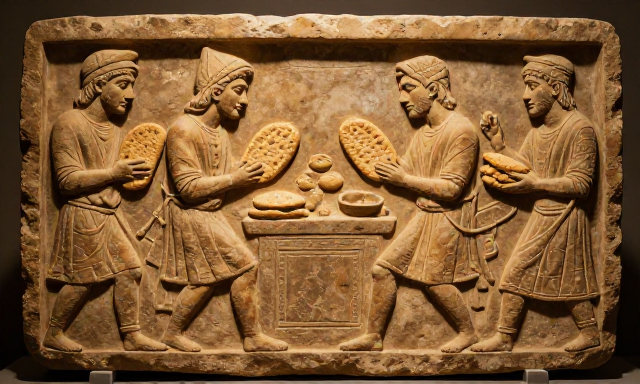
Flatbread: The Original Portable Food
Long before anything resembling a sandwich existed, early humans were grinding grain between stones and cooking the resulting paste on hot rocks. Archaeological evidence from sites in Jordan and the Fertile Crescent shows that flatbreads — unleavened, dense, and almost cracker-like — were being produced at least 14,000 years ago. These proto-breads served as edible utensils: scoops for cooked lentils, wrappers for roasted meats, and platforms for whatever protein a hunter had managed to procure. The concept was purely pragmatic — something sturdy enough to hold food and move with you. That instinct, bread-as-vehicle, is the genetic ancestor of every sandwich ever made.
The Fertile Crescent Bread Belt: Agriculture and Bread-Making Origins
The Fertile Crescent — the arc of arable land stretching from Egypt through the Levant to Mesopotamia — was the birthplace of organized grain agriculture around 10,000–8,000 BCE, and by 3,500 BCE it was the most sophisticated bread-producing region on earth. Emmer wheat and einkorn (ancient wheat varieties) were cultivated, processed at communal grinding stations, and baked into the earliest true breads: leavened, relatively light by modern standards, and produced in quantities that indicate organized commercial distribution. Grain silos, bakehouse remains, and bread molds from sites across Israel, Jordan, Syria, and Iraq document a bread-making culture so entrenched that bread was used as currency, offered to gods, and allocated as wages. The logic of bread as carrier — dense enough to hold other foods, nourishing enough to be a meal by itself — was established in this region and diffused outward to every subsequent civilization.
Sumerian Bread Culture and the First Recorded Fillings
The Sumerians of ancient Mesopotamia were among the most sophisticated bread-makers of the ancient world. Cuneiform tablets from around 3,000 BCE describe dozens of bread types — some with sesame, some with dates, some with rendered fat pressed into the dough. Archaeological evidence from the city of Ur suggests that workers building temples and ziggurats received daily rations of bread and onion, sometimes bundled together for transport. While we can't call this a sandwich in any modern sense, the pattern is unmistakable: bread, a filling, and a reason to eat on the move. The world's first labor lunch.
Egyptian Bread and the Pyramid Workers' Rations
Workers who built the great pyramids at Giza were not slaves, as long assumed — they were skilled laborers paid in food. Archaeologists excavating the workers' village at Giza have found massive bakeries capable of producing thousands of loaves per day, alongside evidence of onions, garlic, radishes, and dried fish. Egyptian bread was a dense, yeast-leavened loaf baked in clay molds. Workers almost certainly pressed fillings into or between these loaves for ease of eating during their shifts. Egyptian papyrus texts from the Middle Kingdom period describe flatbreads folded around meat or fish — the earliest textual descriptions of anything resembling a filled bread.
Beer, Bread, and the Egyptian Diet
Ancient Egyptian workers subsisted on a diet built almost entirely around bread and beer — the two primary products of grain. Workers' payslips (recorded on papyrus) at temples and state building projects list daily allocations of ten loaves and a jug of beer. Egyptian bread was made from emmer wheat, ground into flour, mixed with water and natural yeast, and baked in clay pots or flat on heated stones. Tomb paintings from this period show workers eating bread with dried fish, onions, and a thick lentil paste — always eaten together, often with bread used as a scoop or wrapper. The basic logic of the sandwich — bread carries flavor, absorbs moisture, travels without a plate — was fully established in the Nile Delta two millennia before Christ.
Greek Pita and the Meze Tradition
Ancient Greeks ate a flatbread called plakous, cooked on a heated stone, that bore a strong resemblance to modern pita. The Greeks habitually ate these breads alongside olives, cheese, fish paste, and roasted meats — not always assembled together, but frequently combined in transit. Soldiers in the armies of Athens and Sparta carried dried flatbreads and hard cheese as campaign rations, pressing the cheese into the bread softened by moisture and body heat. The Greek practice of meze — small dishes eaten together — also encouraged the combination of bread and toppings into single bites, a tradition that still defines Mediterranean eating today.
Homer's Bread: Sandwiches in the Odyssey Era
Homer's epics, the Iliad and the Odyssey, composed around the 8th century BCE, are rich with food detail that reveals how the ancient Greek world thought about bread and filling. In the Iliad, soldiers eat maza — a barley cake or flatbread — pressed around roasted meat, cheese, and onion during siege campaigns. Odysseus's crew, stranded and desperate across their decade-long voyage home, consistently relied on bread (when they could get it) as the vehicle for their meals. Greek symposia — the famous drinking and intellectual discussions — were accompanied by bread and a variety of dips, spreads, and finger-food items that were pressed together for eating without utensils. The Greek military diet, essentially bread-and-filling for men in the field, was codified across centuries of warfare.
Persian Lavash: Bread as a Wrap
The Persian Empire stretched from Egypt to India, and its soldiers needed portable food. Lavash — a thin, flexible flatbread baked against the walls of a clay tandoor oven — became the ideal military ration. Light, durable (it dries into crackers but softens again with moisture), and capable of being loaded with roasted lamb, fresh herbs, and yogurt, lavash is one of the oldest wrap-style breads still in continuous production. It remains a staple from Turkey to Iran to Armenia, where it was added to UNESCO's Intangible Cultural Heritage list in 2014. Every modern wrap sandwich owes a conceptual debt to Persian lavash.
Alexander's Army: Portable Bread Across Three Continents
Alexander the Great's campaigns (336–323 BCE) took his Macedonian and Greek armies from Greece through Persia, Egypt, Central Asia, and into the Indian subcontinent — the longest sustained military campaign of the ancient world. Feeding an army of 40,000 to 120,000 men across such distances required extraordinary logistical planning, and bread was the absolute foundation. Each soldier carried rations of grain, baked into hard bread cakes or flatbreads; supply trains and foraging supplemented camp bread production. As Alexander's army moved through different food cultures — Persian, Egyptian, Babylonian, Indian — soldiers encountered and adopted new bread forms and filling combinations. The Macedonian soldier's kit bag contained bread and salt pork or dried fish; by the time the army reached India, they were eating flatbreads with spiced lentils and roasted vegetables. Alexander's campaigns were the first great engine of sandwich cross-cultural exchange.
Roman Panis and Filled Bread in the Tabernae
Rome was the first great urban food culture, and the Roman street food scene was remarkably sophisticated. The city's tabernae — street-level shops built into the ground floors of insulae apartment blocks — sold a staggering variety of ready-to-eat food. Thermopolia (hot food counters, the ancestor of the food truck) offered bread alongside cooked meats, legumes, and cheese. Excavations at Pompeii, preserved by Vesuvius in 79 CE, have uncovered dozens of thermopolia with counter-top food containers still intact. Literary sources describe Roman soldiers eating panis militaris (military bread) pressed around fillings of cured meat, hard cheese, and preserved olives — a practical meal for men on the march.
Apicius and the Earliest Sandwich-Adjacent Recipes
The Roman cookbook De Re Coquinaria, attributed to Marcus Gavius Apicius (though likely compiled in the 4th or 5th century CE), contains recipes that describe bread combined with meat, fish, and egg fillings. One preparation involves soaking bread in milk and egg, frying it in oil, and topping it with honey — essentially an early form of French toast, but also evidence that Romans thought carefully about bread-and-filling combinations. Apicius also describes isicia omentata, a ground meat patty seasoned with pine nuts, pepper, and garum (fermented fish sauce) — cooked and served with bread. Roman garum, a pungent fermented condiment, prefigures the role of sauces and spreads in all subsequent sandwich culture.
The Hillel Sandwich: The First Named Sandwich in History
Hillel the Elder, a Jewish rabbi who lived in Jerusalem around the time of the Second Temple period (roughly 110 BCE to 10 CE), is credited with originating the Korech — a ritual food combination eaten during the Passover Seder. According to the Mishnah (compiled around 200 CE), Hillel would combine matzah (unleavened flatbread), bitter herbs (maror), and roasted lamb into a single edible unit — eating all three together as commanded in Exodus 12:8. This is arguably the earliest documented named sandwich in history, created for explicitly ceremonial reasons but structured exactly like a modern sandwich: two pieces of bread with filling in between. The Korech is still eaten at Seders worldwide.
Arabic Bread Culture and the Origins of the Pita Pocket
The Islamic Golden Age (roughly 750–1258 CE) produced extraordinary advances in mathematics, astronomy, medicine, and — less celebrated — food culture. Arabic bread traditions of the 7th–13th centuries were sophisticated and diverse: khubz (a round, flat leavened bread that puffs up when baked at high heat, creating a pocket) was ubiquitous from Baghdad to Córdoba. When baked in a very hot oven, khubz inflates as steam builds inside, creating the characteristic hollow pocket that makes pita bread perfect for filling. This is not accidental — it was deliberately exploited. Arabic culinary manuscripts from the Abbasid period (750–1258 CE) describe breads filled with spiced minced meat, cheese, or preserved vegetables. The falafel-in-pita combination, now considered a Middle Eastern staple, has roots in this period.
The Trencher: Bread as an Edible Plate
Medieval European dining relied heavily on a form of bread called a trencher — a thick, stale slab of dense rye or wheat bread used as a plate. Diners would place their meat, stew, or roasted vegetables directly on the trencher, which absorbed the juices throughout the meal. At the end, the trencher — now soaked with drippings and flavored with whatever had sat on it — was either eaten by the diner (if wealthy enough to eat fresh bread too, the trencher would go to servants or the poor) or fed to dogs. For the poor majority, the trencher was both plate and food: a primitive open-faced sandwich eaten as the final course. Some historians argue this is the first 'open-faced sandwich' at scale.
Monastery Bread and the Benedictine Kitchen Tradition
Medieval monasteries were the most sophisticated bread-baking operations in Europe. Benedictine and Cistercian monks maintained elaborate bakeries and developed bread recipes that would not be surpassed in quality until the modern artisan revival. Monastic records from abbeys in France, England, and Germany detail bread types baked for different occasions — coarse rye for lay workers, finer wheaten loaves for monks, and sweet breads for feast days. Monks in the field (tending vineyards, managing estate lands) carried bread with salted fish, hard cheese, or cooked vegetables in cloth wraps — a practical field lunch that combined bread and filling by necessity. The monastery kitchen tradition also preserved Roman bread-making knowledge through the Dark Ages, creating a direct line of transmission to modern European baking.
The Medieval English Breakfast Trencher and Ale
Records from medieval English monasteries and manors describe a morning meal of bread, hard cheese, and ale — frequently assembled together. Manor rolls from the 13th century list provisions for laborers that included bread and salt beef or bacon, with instructions that these be carried to the fields. Since medieval bread was dense, thick-crusted, and relatively impermeable to moisture, workers would press their salted meat into the soft crumb of a broken loaf and carry it wrapped in cloth. The working English countryside had been eating something functionally identical to sandwiches for centuries before the word existed.
English Tavern Culture and the Filled Loaf
The medieval English tavern was the social hub of every town and village — and its food revolved around bread. Taverns in London, York, Canterbury, and market towns across England served bread with potted meats, hard-boiled eggs, pickled vegetables, and strong cheese to travelers, laborers, and merchants stopping for the midday meal. Written records from the 14th century describe innkeepers selling 'bread with collops' (thin-sliced cured pork) and 'bread with salt fish' — directly analogous to what we would call open-faced sandwiches today. The innkeeper's skill at assembling bread and filling quickly and cheaply was a recognized trade, distinct from cooking per se. When William Langland wrote 'Piers Plowman' around 1370 CE, he described laborers eating bread-and-cheese 'as they went' — sandwiches in everything but name.
Spanish Bocadillo Origins and the Pan con Tomate Tradition
The Iberian Peninsula developed its own bread-and-filling traditions during the late medieval period. Catalan pan con tomate — ripe tomato rubbed into crusty bread with olive oil and salt — is first documented in Catalan cooking manuscripts from the 14th century. The bocadillo (small mouth), a filled crusty white roll, emerged as a staple of working-class Spanish life, filled with jamón serrano, manchego cheese, or tortilla española. These were the original fast foods of Spain, sold at market stalls and carried by laborers and shepherds. The Spanish bocadillo tradition remains one of the most sophisticated in the world, with regional variations that could fill an encyclopedia of their own.
Italian Renaissance Sandwich Precursors: The Tramezzino Origins
Renaissance Italy was developing a food culture of extraordinary sophistication, and its bread traditions laid the groundwork for the Italian sandwich heritage that continues today. The panino — a small bread roll filled with meat, cheese, or vegetables — was documented in Italian market records from Florence and Venice in the mid-15th century. Wealthy Renaissance households kept detailed kitchen accounts, and these show regular purchases of bread alongside prosciutto, salami, provolone, and preserved vegetables — almost certainly assembled together for household lunches. Italian travelers and merchants were known to carry filled rolls wrapped in cloth across alpine passes and sea routes. The tramezzino (a crustless white sandwich pressed flat), now considered quintessentially Italian, has its conceptual roots in this Renaissance-era portable eating culture.
Ottoman Empire Street Food: The Simit and Filled Pide
The Ottoman Empire at its height controlled an enormous swath of territory stretching from North Africa to Hungary, and it generated a rich urban street food culture centered on bread. The simit — a circular sesame-crusted bread ring — was sold by vendors on the streets of Istanbul from at least the 16th century, eaten plain or with white cheese and olives pressed inside. Pide, a boat-shaped flatbread often filled with spiced meat or eggs, was baked in woodfire ovens and sold hot to commuters. Ottoman court records from the 16th century describe vendors selling filled breads outside the Topkapi Palace gates. This tradition established the filled bread as central to Turkish culture, persisting directly into modern döner kebab culture.
The British Pub and the Original Ploughman's Lunch
The English country pub — the public house where agricultural workers gathered after a day in the fields — was the social center of rural life for centuries. The ploughman's lunch (bread, cheese, pickle, and occasionally cold meat) was the standard rural English midday meal long before the term was coined. Pub records from the 17th century document the selling of bread and cheese to farm workers stopping in from the fields, along with ale. The ploughman's as a composed offering — bread, a wedge of hard cheese, Branston pickle or pickled onion, a bit of cold meat — developed gradually over the 17th and 18th centuries into a recognizable format. The term 'ploughman's lunch' was actually invented by the English Country Cheese Council in the 1960s as a marketing campaign to sell more cheese, but the food it described had existed in English pub culture for at least three hundred years.
The Dutch Golden Age and the Boterham
The Dutch Golden Age of the 17th century — the era of Rembrandt, Vermeer, and global maritime trade — produced the boterham: a slice of bread, typically rye or wheat, buttered and eaten with a topping. Dutch Golden Age genre paintings frequently depict bread-and-filling meals in domestic interiors, with citizens eating butter, cheese, herring, or cold meats on bread slices. The Dutch word 'boterham' literally means 'butter-ham,' reflecting the two most common toppings. Sailors of the Dutch East India Company (VOC) carried dried rye bread and hard cheese or salt herring as staples on long sea voyages — filling their bread from ship's provisions as a practical matter. The Dutch boterham tradition established the open-faced bread-and-topping sandwich as a cultural institution that persists in the Netherlands to this day.
The Earl of Sandwich Names the Sandwich
On a night in 1762, John Montagu, the 4th Earl of Sandwich, reportedly refused to leave the gaming table long enough for a proper meal. According to the most widely cited account — first recorded by Pierre-Jean Grosley in his 1772 book 'Londres' — the Earl ordered his servant to bring him beef between two slices of bread so he could eat without putting down his cards or soiling them with grease. Other diners at the table were so taken with the idea that they began ordering 'the same as Sandwich.' Edward Gibbon, the historian who wrote 'The Decline and Fall of the Roman Empire,' recorded seeing Lord Sandwich eating this way at the Cocoa Tree Club and noted it as novel. The Earl's actual motivations are debated — some accounts suggest he invented it for the practical purpose of eating at his desk while working as First Lord of the Admiralty — but the naming is not.
The Sandwich Spreads Through London Society
Within weeks of the Earl's famous meal, 'sandwich' had entered the vocabulary of London's club culture. The Oxford English Dictionary's first documented written use of the word 'sandwich' in reference to food is in Edward Gibbon's journal entry from November 24, 1762, where he observed the habit at the Cocoa Tree Club. By the 1770s, cookbooks were beginning to include sandwich recipes. By the 1790s, sandwiches were standard fare at London supper parties, taverns, and public houses — available at all hours, accessible to any class. The speed with which the format spread suggests it filled a genuine need: easy, fast, informal food for an increasingly urban, mobile population.
French Revolution Street Food and the Portable Meal
The French Revolution (1789–1799) upended French society — and French food culture with it. The collapse of the aristocratic household system, which had employed thousands of trained cooks, sent skilled chefs into the open market. Paris's restaurant scene exploded in the 1790s. Street food vendors multiplied across the city, selling bread with savory toppings to workers, soldiers, and the newly politically engaged citizenry who spent long hours in the streets, at assemblies, and in makeshift courts and committees. The revolutionary café culture normalized eating on the move: a chunk of bread pressed around cheese or leftover roasted meat was the fuel of the Revolution's foot soldiers. French bread-and-filling habits, though never formalized as 'sandwiches' in the English sense, directly influenced sandwich culture across Europe.
The First Published Sandwich Recipes
The first British cookbook to include sandwich recipes was 'The Cook's Oracle' by William Kitchiner, published in 1817, but earlier manuscript cookbooks and household management guides from the 1790s show sandwiches appearing with increasing frequency. Elizabeth Raffald's 1769 'The Experienced English Housekeeper' doesn't use the word but includes several bread-and-filling preparations that are clearly what we'd call sandwiches today. Hannah Glasse's 'The Art of Cookery Made Plain and Easy' (1747) and its later editions include fillings between slices of bread for portable eating. By the 1790s, the concept was well-established enough that no introduction or explanation was needed in recipes.
The Sandwich Crosses the Atlantic
The sandwich came to the United States via British immigrants and the rapid expansion of urban life in the young republic. By the 1820s, American cookbooks were including sandwich recipes — typically thin slices of cold meat between buttered bread, eaten at room temperature. Elizabeth Leslie's 'Directions for Cookery in Its Various Branches' (1837) includes what many consider the first American sandwich recipe, describing 'ham sandwiches' using thinly sliced baked ham on white bread. The portable nature of the sandwich made it especially well-suited to American working life: factory workers, railroad laborers, and tradespeople adopted sandwiches as the ideal midday meal — easily carried, no utensils required, gone in minutes.
Railroad Food and the Traveling Sandwich
The explosive growth of American railroads in the 1840s and 1850s created a new problem: feeding passengers on long journeys. Early railroad travel had no dining cars — passengers brought their own food or bought from platform vendors at station stops. The sandwich was the ideal travel food. Platform vendors in New York, Philadelphia, Baltimore, and Chicago hawked wrapped sandwiches — ham, roast beef, and tongue on thick white bread — through train windows during brief station stops. Railroad expansion also drove industrialization of food production: large quantities of bread and cured meat were needed in cities along the tracks. The railroad platform sandwich vendor, ancestor of the airport terminal shop, established the sandwich as the default long-distance travel food in America.
Victorian Finger Sandwiches and the Culture of Afternoon Tea
Queen Victoria's reign transformed the sandwich into two very different social objects at once. For the working class, it remained practical fuel — dense bread, salt meat, pickles. For the upper class, it became the defining food of the elaborate ritual of afternoon tea. Anna Maria Russell, the 7th Duchess of Bedford, is credited with inventing afternoon tea around 1840 to address what she called 'a sinking feeling' between lunch and dinner. Sandwiches — cut into delicate triangles with crusts removed, filled with cucumber and cream cheese, smoked salmon, or egg mayonnaise — became the anchoring food of the ritual. These 'finger sandwiches' are still the platonic ideal of the form in British culture.
The Hot Dog and the American Street Sandwich
The hot dog — a Frankfurt-style sausage served in a bun — emerged in American food culture in the 1860s and 1870s, at the intersection of German immigrant sausage-making tradition and American street food pragmatism. The precise origin of the hot dog in a bun is disputed: claims include a St. Louis concessionaire named Antoine Feuchtwanger (who reportedly loaned white gloves to sausage buyers so they wouldn't burn their hands, then switched to buns when the gloves kept disappearing), and vendors at Coney Island in New York who began selling Frankfurt sausages in rolls in the early 1870s. Whatever the exact origin, by the 1880s, hot dogs in buns were being sold at baseball games, seaside resorts, and World's Fairs across America. The hot dog is the most consequential street sandwich in American history — more widely consumed than any other sandwich format, and the subject of the most contentious definitional debate in food history.
Civil War Hardtack and the Soldier's Bread
The American Civil War (1861–1865) fed millions of men for four years, and bread — specifically hardtack — was the backbone of both Union and Confederate military rations. Hardtack was a dense, unleavened biscuit made from flour, water, and salt, baked until rock-hard and impervious to mold for months. Soldiers ate it dry, soaked in water or coffee, or fried in pork fat. When they could get hold of extra rations — cured pork, salt beef, dried beans — soldiers pressed these between or onto their hardtack. Union soldiers' diaries are full of descriptions of elaborate improvised sandwich-like meals made from whatever was available at camp: hardtack spread with butter or fat, layered with salt pork or pickled beef, eaten cold in the field. The Civil War experience deepened the American working-class relationship with bread-and-filling as a utilitarian, democratic food.
The Club Sandwich Emerges from American Hotel Culture
The exact origin of the club sandwich is disputed, but the most credible account traces it to the Saratoga Club in Saratoga Springs, New York, sometime in the 1890s. The earliest confirmed printed appearance is in the 'Evening World' newspaper on November 18, 1889. The defining characteristics — two or three layers of toasted bread, chicken or turkey, bacon, lettuce, tomato, and mayonnaise, secured with toothpicks and cut into triangles — emerged from the culture of elite American social clubs where a substantial, sophisticated sandwich was needed for late-night snacking. The club sandwich was one of the first American sandwiches to transcend class: by 1900, it appeared on the menus of hotels, diners, and lunch counters across the country.
American Deli Culture Takes Root: The Lower East Side
The great wave of Jewish and Eastern European immigration to New York City in the 1880s through 1910s transformed American food culture — and sandwich culture most profoundly. Immigrants from Poland, Romania, Hungary, and Russia brought with them traditions of cured and smoked meats: pastrami, corned beef, tongue, brisket, salami. The Lower East Side of Manhattan became the world capital of cured-meat sandwich culture. By the 1880s, Katz's Delicatessen (founded 1888) and dozens of rival establishments were serving enormous hand-carved pastrami and corned beef sandwiches on rye bread with mustard — a format so perfect it has required no fundamental change in 140 years. These delis also established the counterman as a cultural archetype: a craftsman who sliced, layered, and assembled with expertise, pride, and strong opinions about how a sandwich should be built.
The Temperance Movement and the Sandwich Lunch
The American temperance movement, which eventually led to Prohibition (1920–1933), had an unexpected culinary legacy: the establishment of the sandwich as the standard American working lunch. Temperance advocates opened lunch counters and cafeterias in industrial cities as alternatives to the saloon, where working men had traditionally eaten their midday meals. These lunch rooms served simple, fast, inexpensive food — and the sandwich was perfect. By the 1890s, the sandwich lunch was a fixture of American working-class life, displacing the hot midday meal that had been standard. The switch from a hot lunch to a sandwich lunch represents one of the most significant changes in American eating habits, and temperance politics drove it.
The Peanut Butter Sandwich: A Sanatarium Invention Gone Global
Peanut butter was introduced to American consumers at the 1893 World's Columbian Exposition in Chicago, and its origins are more medical than culinary. Dr. John Harvey Kellogg (yes, of the cereal family) is credited with patenting a peanut butter process in 1895, initially as a protein supplement for patients at his Battle Creek Sanitarium who couldn't eat solid meat. Commercial peanut butter became widely available in the early 1900s, and the peanut butter sandwich became a children's lunch staple after World War I, when both peanut butter and pre-sliced bread became inexpensive and widely distributed. The peanut butter and jelly sandwich — combining Concord grape jelly with peanut butter on white bread — became the defining American children's sandwich, and one of the most reproduced food items in human history. An estimated 1.2 billion PB&J sandwiches are consumed in the United States each year.
The Reuben: A Sandwich Origin Debate
Few sandwiches carry more contested origin stories than the Reuben: corned beef, Swiss cheese, sauerkraut, and Thousand Island dressing on grilled rye bread. Two competing claims exist. The first credits Reuben Kulakofsky, a wholesale grocer from Omaha, Nebraska, who supposedly created the sandwich around 1925 for a poker game held at the Blackstone Hotel. The hotel's owner, Charles Schimmel, liked it so much he added it to the menu. The second claim traces the sandwich to Arnold Reuben, the owner of Reuben's Delicatessen in New York City, who reportedly made it in 1914. The Nebraska story won a national sandwich competition in 1956 and is generally accepted as primary, though the question will never be definitively resolved. The Reuben is now an American diner institution.
The Muffuletta Is Born at Central Grocery, New Orleans
In 1906, Sicilian immigrant Salvatore Lupo opened Central Grocery on Decatur Street in New Orleans, selling Italian dry goods, cured meats, and cheeses to the city's Italian immigrant community. Lupo noticed workers buying bread, salami, cheese, and olive salad separately and eating them standing at his counter. He put it all together on a large, round, sesame-seeded Sicilian loaf and the muffuletta was born. The sandwich — cured Italian meats, provolone, and marinated olive salad on a split round loaf — is defined by its olive salad, which soaks into the bread over time and improves as it sits. Central Grocery still sells it today, cut into quarters, whole or half, wrapped in white paper. It has never fundamentally changed.
The BLT: Bacon, Lettuce, Tomato and the Icebox Revolution
The BLT — bacon, lettuce, and tomato on toasted white bread with mayonnaise — is one of the most American of sandwiches, but its rise was contingent on two early 20th century food technologies: home refrigeration (which allowed fresh mayonnaise and vegetables to be kept safely) and year-round commercial bacon production. The earliest printed reference to a BLT is in a 1903 Good Housekeeping recipe book, but the sandwich only became a national staple after refrigerators became common in American homes in the 1920s and 1930s. The iceberg lettuce — developed for its durability and shipping resilience — became standard in BLTs because it held up, didn't wilt, and provided textural contrast without overpowering flavor. The BLT's genius is its simplicity: four components (five if you count the bread separately), each essential, none expendable.
WWI Trench Food and the Bread Ration
World War I was fought largely from trenches, and feeding the men trapped in them was one of the greatest logistical challenges of the war. Allied forces received daily rations that included roughly a pound of bread (or hardtack biscuit when bread couldn't reach the front), canned bully beef or Maconochie stew, and sometimes jam or margarine. Soldiers in the trenches improvised constantly with their rations — pressing biscuits together with jam or beef dripping, stacking bread with whatever canned meat they had. The British army's 'bread and bully beef' became a symbol of trench warfare. Letters home from soldiers on both sides describe the creative combinations they made with bread and rations: proto-sandwiches assembled from whatever was available, eaten cold in dugouts under shellfire. The war introduced an entire generation of European and American men to military-issue bread-and-filling as their primary sustenance.
Katz's Deli and the New York Pastrami Canon
Katz's Delicatessen on the Lower East Side of Manhattan has been operating since 1888, but it reached a new level of cultural prominence in the early decades of the 20th century as the Lower East Side became the most densely settled immigrant neighborhood in the world. By the 1920s, Katz's was the most famous Jewish deli in New York, serving towering hand-carved pastrami and corned beef sandwiches to a clientele that ranged from recent immigrants to celebrities, politicians, and newspaper columnists who wrote about it reverently. Katz's pastrami — navel-cut beef brisket, dry-rubbed with spices, cured for weeks, smoked over hardwood, then steamed to order and sliced thick by hand — was the most refined expression of the Eastern European Jewish cured meat tradition on American soil. The Katz's pastrami sandwich on rye bread with yellow mustard and a half-sour pickle became the Platonic form of the American deli sandwich.
Sliced Bread: 'The Greatest Thing Since...'
On July 7, 1928, the Chillicothe Baking Company in Chillicothe, Missouri became the first bakery to sell commercially sliced bread. The machine responsible was invented by Otto Frederick Rohwedder, an Iowa-born jeweler turned inventor who had been working on the concept since 1912. His first prototype was destroyed in a fire in 1917; his second took until 1927 to perfect. Rohwedder's machine sliced bread to uniform thickness and wrapped it in wax paper to keep it fresh. The Chillicothe Baking Company's 'Kleen Maid Sliced Bread' sold out immediately. Wonder Bread adopted the process in 1930, and by 1933, 80% of all bread sold in America was pre-sliced. The phrase 'the greatest thing since sliced bread' emerged almost immediately, entered common usage by the 1930s, and has never left. The sandwich was now trivially easy to make at home: no knife skills required.
The Martin Brothers' Po'Boy: Labor, Bread, and New Orleans
In 1929, New Orleans streetcar workers went on strike, and brothers Benny and Clovis Martin — themselves former streetcar conductors who had left the lines to open a restaurant on St. Claude Avenue — vowed to feed the striking workers for free. When a striker entered, Clovis would call back to the kitchen: 'Here comes another poor boy!' The sandwich the Martins fed them — crisp New Orleans French bread (a distinct, lighter product than a baguette, made with a different flour ratio), filled with fried shrimp, oysters, or roast beef 'with debris' (the meat and drippings that fall into the roasting pan), dressed with lettuce, tomato, pickles, and mayonnaise — took the striker's nickname as its permanent name. The po'boy is as much a labor history artifact as a food: created in an act of solidarity, eaten by workers, and carrying the memory of that political moment into every dressed po'boy served in New Orleans ever since.
The Dagwood Sandwich: Comics Culture and Excess
Dagwood Bumstead, the perpetually harassed husband in Chic Young's comic strip 'Blondie' (launched September 8, 1930), became famous for making towering, architecturally improbable midnight sandwiches from refrigerator leftovers. The 'Dagwood sandwich' — stacked high with whatever was available, held together by improbable physics — became a cultural shorthand for sandwich excess. Young never specified exactly what went into a Dagwood, which is part of the genius: it was any and all leftovers, whatever the sandwich-maker had on hand, stacked without logic or restraint. The Dagwood became America's first sandwich celebrity, and 'Dagwood' entered the English language as a word for any oversized, over-stuffed sandwich.
Military Rations and the Industrialization of the Sandwich
World War II industrialized food at a scale never seen before, and the sandwich was central to feeding millions of soldiers. U.S. Army field rations included canned Vienna sausages, crackers, peanut butter, and canned meat products that GIs universally pressed between whatever bread they could find. The Army's development of military-specification bread — dense, mold-resistant, long-lasting — drove enormous improvements in commercial bread production. More significantly, the experience of millions of American, British, and Australian soldiers eating sandwiches daily for years normalized the sandwich as a standard meal across social classes and regions. The GI Bill generation came home with a deep-seated relationship with simple, portable bread-based food.
K-Rations and the Science of the Portable Meal
The U.S. Army's K-ration, designed by physiologist Ancel Keys (who later became famous for the Seven Countries Study on diet and heart disease), was the individual daily combat ration of World War II. Each K-ration contained a canned meat product, crackers or biscuits, a small chocolate bar, coffee, sugar, and bouillon cubes. Soldiers universally combined the crackers with the canned meat — pressed together, layered, or spread — creating a primitive sandwich that sustained troops in the Pacific theater, in Europe, and in North Africa. The K-ration taught the U.S. military that portable food needed to be calorie-dense, compact, psychologically satisfying, and assembleable without utensils. These lessons drove post-war food technology and eventually influenced the design of convenience foods for civilian markets.
The Submarine Sandwich: New England's Contribution
The sub, hoagie, hero, grinder, torpedo, po'boy — the long sandwich on a split roll has more regional names in America than almost any other food, which is a testament to how independently it was invented across different communities. The 'submarine' name is most strongly associated with New London, Connecticut, where Italian immigrant food shop owner Benedetto Capaldo sold them near the Naval Submarine Base in the 1940s, and the shape of the long roll reportedly reminded sailors of the vessels they worked on. The 'hoagie' name comes from Hog Island in Philadelphia, where Italian shipyard workers ate long Italian sandwiches in the 1920s. The 'hero' is New York; the 'grinder' is New England; the 'torpedo' is regional to certain mid-Atlantic areas. All describe the same basic thing: a split long roll loaded with Italian deli meats, cheese, and condiments.
Suburban Deli Culture and the Post-War American Lunch
The post-war suburban boom transformed American eating. As millions of families left cities for new suburban developments, the local deli — which had been a fixture of urban immigrant neighborhoods — followed them. Suburban delicatessens opened in strip malls alongside supermarkets and drugstores across Long Island, New Jersey, Connecticut, and the Ohio suburbs. These delis maintained the core city deli tradition (pastrami, corned beef, turkey clubs) but adapted to suburban tastes: lighter sandwiches, more variety, counter service. The suburban deli of the 1950s was where the American sandwich reached its widest demographic — no longer an immigrant food or an elite hotel menu item, but the middle-class family lunch. White bread, bologna, American cheese, and yellow mustard became the suburban sandwich archetype.
The Po'Boy: New Orleans Working-Class Icon
The po'boy was created in New Orleans by brothers Benny and Clovis Martin, former streetcar workers who opened a sandwich shop in 1929. During a 1929 streetcar workers' strike, the Martin brothers vowed to feed the striking workers for free, and when a striking worker came in, Clovis would call back to the kitchen 'Here comes another poor boy!' The sandwich — crisp French bread, fried seafood or roast beef with 'debris' (the meat scraps that fall into the roasting juices), dressed with lettuce, tomatoes, pickles, and mayonnaise — became the working-class soul food of New Orleans. The 'dressed' versus 'undressed' distinction (with or without the lettuce, tomato, mayo trifecta) remains one of the most important vocabulary items in New Orleans dining culture.
Elvis Presley and the Peanut Butter Banana Sandwich
Elvis Presley's passion for the peanut butter and banana sandwich — grilled in butter until golden on both sides — became one of American food culture's most famous eccentricities. Elvis reportedly consumed these sandwiches in enormous quantities, and his favorite version, made by his cook Mary Jenkins at Graceland, became the stuff of legend: peanut butter and mashed banana on white bread, griddled in a full stick of butter until hot through and crispy outside. The story that Elvis once chartered a private jet from Memphis to Denver specifically to eat a 'Fool's Gold Loaf' — a loaf of white bread stuffed with a full jar each of peanut butter and jelly plus a pound of bacon — became one of rock and roll's great food myths. Whether apocryphal or not, it cemented the sandwich as a vehicle for American excess and celebrity.
The Cheesesteak: Philadelphia's Greatest Export
The Philadelphia cheesesteak — thinly sliced ribeye beef, cooked on a flat-top griddle, piled onto a Amoroso's or Vilotti-Pisanelli Italian roll and topped with Cheez Whiz, provolone, or American cheese — was invented by Pat Olivieri, a hot dog vendor in South Philadelphia, in the 1930s. According to legend, Olivieri was grilling beef for his own lunch one day when a taxi driver smelled it and asked for one. Olivieri sold it without cheese initially; the cheese was added by a Olivieri's shop manager named Joe Lorenzo in the 1940s. Pat's King of Steaks has been open continuously since then. The cheesesteak wars — the fierce civic debate over which Philadelphia shop makes the best cheesesteak, and which cheese (Whiz vs. provolone vs. American) is correct — became one of the most emotionally charged regional food debates in America. The cheesesteak became Philadelphia's most powerful food identity marker, a civic treasure as closely associated with the city as its sports teams.
Subway Founded: The Sandwich Goes Global Fast Food
On August 28, 1965, 17-year-old Fred DeLuca borrowed $1,000 from his family friend Peter Buck (a nuclear physicist) to open Pete's Super Submarines in Bridgeport, Connecticut. The concept was simple: long Italian bread, your choice of meats and vegetables, assembled in front of you. By 1974, they had 16 locations and the name had changed to Subway. By 1982, 200 locations. By 1990, 5,000. By 2023, Subway had over 37,000 locations worldwide — more than McDonald's, making it the largest fast food chain in the world by location count. Subway's model of customer-directed sandwich assembly, a 'sandwich theater' where you watched your food being made, was revolutionary and has been copied by dozens of competitors. The company essentially created the fast-casual category.
The Filet-O-Fish, the Big Mac, and the Fast Food Sandwich Wars
McDonald's launch of the Big Mac in 1968 (designed by franchisee Jim Delligatti) was a watershed moment in American fast food — and in the history of the sandwich. The Big Mac — two beef patties, special sauce, lettuce, cheese, pickles, onions on a three-part sesame bun — was a direct response to the success of the Whopper (1957, Burger King) and represented an arms race in fast food sandwich innovation that would define the next five decades. Wendy's entered in 1969, Jack in the Box expanded, and regional chains proliferated. Each chain competed on sandwich architecture: more patties, more layers, special sauces, premium buns. The fast food burger-sandwich became the most consumed sandwich format in American history, eaten by hundreds of millions of people annually by the 1970s.
The Club Sandwich Codification and American Diner Culture
By the late 1960s and early 1970s, the club sandwich had become the universal symbol of American diner cuisine — present on virtually every lunch counter menu from Portland, Maine to Portland, Oregon. The format had fully codified: three slices of white toast, turkey or chicken, bacon, lettuce, tomato, and mayonnaise, cut into four triangles and secured with toothpicks, served with a dill pickle spear and potato chips. The consistency of the American club sandwich — the same basic composition in a truck stop in Alabama as in a luxury hotel in Chicago — represented the standardization of American taste in the post-war era. Food writers and cultural commentators of the 1970s used the club sandwich as a symbol of American middle-class uniformity, both an insult and a compliment depending on the writer.
The Bánh Mì Goes International
The bánh mì is itself a product of colonialism: the French baguette, introduced to Vietnam during French colonial rule (1858–1954), was adopted and transformed by Vietnamese food culture. Vietnamese bakers modified the baguette recipe to use rice flour, creating a lighter, crispier loaf with a crackly crust and airy interior. The filling combined French influences — pâté, mayo, butter — with Vietnamese aromatics: pickled daikon and carrot, sliced jalapeño, fresh cilantro, cucumber, and seasoned pork or grilled chicken. After the fall of Saigon in 1975, Vietnamese refugees brought the bánh mì to the United States, Australia, France, and beyond. By the 2000s, it had been 'discovered' by mainstream food media and declared one of the world's great sandwiches. It is now made on every continent.
The Panini Press and Italian Sandwich Culture Goes Mainstream
The panino (plural panini) — an Italian pressed and grilled sandwich on ciabatta, focaccia, or a split roll — has existed in Italy for decades, but the commercial panini press transformed it into an international phenomenon in the 1980s and 1990s. Italian café culture had long included the toasted tramezzino (a pressed white sandwich on crustless bread, traditionally cut into triangles) and the grilled panino as standard bar food. When Italian-style café culture spread to the United States and UK in the 1980s and 1990s — driven by the espresso coffee boom — the panini came with it. By the mid-1990s, panini presses were standard equipment in American coffee shops, delis, and home kitchens. The pressed, griddled sandwich had found its industrial moment.
The Wrap Arrives: Tortilla as Universal Sandwich Bread
The 'wrap sandwich' — fillings rolled inside a large flour tortilla — emerged in American restaurant culture in the mid-1980s and became a mainstream menu item by the 1990s. The format drew directly on the burrito tradition of Mexican border food but stripped away its Mexican identity to create a 'neutral' vehicle that could carry any filling: Caesar salad wraps, turkey and avocado wraps, hummus and roasted vegetable wraps. The wrap sandwich was enthusiastically promoted as a 'lighter' alternative to bread-based sandwiches (which was largely illusory — a large flour tortilla contains as many calories as two slices of bread) and became a fixture of American casual dining, cafeteria menus, and fast food chains in the 1990s. The wrap also represented the first major challenge to sliced bread as the default sandwich bread in 60 years, and its success demonstrated that the American sandwich-eating public was open to new formats.
The Torta: Mexico's Great Sandwich Tradition Gains International Recognition
The torta — a Mexican sandwich served on a crusty white roll called a telera or bolillo — has deep roots in the culinary traditions that emerged from the Spanish colonial period and the subsequent French intervention (which brought baguette-style bread to Mexico in the 1860s). The torta al pastor, filled with spit-roasted pork seasoned with dried chilies and pineapple, became one of Mexico City's defining street foods. By the late 1980s, as Mexican immigration to the United States accelerated and Mexican food culture gained international attention, the torta began appearing in American cities. Food writers who had written breathlessly about the bánh mì began discovering the torta cubana (stacked with multiple meats, melted cheese, jalapeños, and avocado) with the same excitement. The torta ahogada of Guadalajara — a birote roll filled with pork carnitas and drowned in spicy tomato-chili sauce — is now considered one of the world's great sandwiches.
The Artisan Bread Revolution and the Gourmet Sandwich
The late 1980s and 1990s saw a rebellion against industrial bread. Baker and food writer Peter Reinhart's 'The Bread Baker's Apprentice' (2001) and Chad Robertson's Tartine Bakery in San Francisco (2002) became touchstones of an artisan bread movement that emphasized long fermentation, wild yeast starters, high-hydration doughs, and traditional techniques. As bread quality improved, sandwich quality followed. New York's Katz's Delicatessen, which had been serving enormous pastrami sandwiches since 1888, was 'rediscovered' by food writers. The gourmet sandwich shop became a fixture of urban food culture: chefs who had trained in fine-dining kitchens applied those techniques to the humble sandwich, using house-cured meats, cultured butter, fresh-baked bread, and house-made condiments.
The Food Truck Revolution and Street Sandwich Culture
The modern food truck revolution began not in Los Angeles in 2008, as is often claimed, but in the early 1990s with the expansion of taco trucks and roach coaches in American cities. By the early 1990s, established taco trucks were serving elaborate Mexican street sandwiches — tortas, cemitas — to urban workers across the Southwest. The Kogi Korean BBQ truck in Los Angeles (2008, founded by Roy Choi) is often cited as the founding moment of the modern gourmet food truck era, but it built on decades of established street food truck culture. Roy Choi's Korean short rib tacos — essentially Korean barbecue in a Mexican wrapper — were a sandwich in every meaningful sense, and their viral spread via Twitter in 2008 demonstrated that the sandwich was the ideal food truck format: fast, portable, Instagram-ready.
The Gua Bao Goes Global: Taiwan's Pork Belly Bun
The gua bao — a steamed folded bun, shaped like a taco or half-moon, filled with braised pork belly, pickled mustard greens, ground peanuts, and cilantro — has been a street food staple in Taiwan for centuries. Taiwanese night markets served it to generations of diners for whom it was simply a convenient, satisfying snack. Its international breakthrough came in stages: first through Taiwanese and Chinese diaspora communities in New York, San Francisco, and London; then through David Chang's Momofuku Noodle Bar (which served a pork bun that was clearly inspired by the gua bao concept); and then through the London restaurant Bao (founded 2013), which made the Taiwanese pork belly bun its signature item and built a cult following. By the late 2010s, gua bao variants appeared on menus across the world — a soft, pillowy vessel for any number of innovative fillings.
The Birria Taco and the Rise of the Sauced Sandwich
Birria — a slow-braised goat or beef stew from Jalisco, Mexico, traditionally served at celebrations and special occasions — underwent a remarkable transformation in the 2010s and 2020s. Los Angeles-based taco shops began dipping birria-filled corn tortillas in consommé (the braising liquid) and griddling them until crispy, creating the quesabirria taco — simultaneously a taco, a sandwich, and a dunking experience that social media was perfectly designed to celebrate. Videos of molten cheese being pulled from quesabirria tacos before dipping in deep red consommé racked up millions of views on Instagram and TikTok. By 2021–2022, birria tacos had spread across the United States, Canada, and the UK. The birria phenomenon demonstrated a principle that would define 2020s sandwich culture: the sauced, dipped, dripping sandwich was the most photogenic — and most viral — format in the history of the form.
The Japanese Sando: Precision, Softness, and the Katsu Craze
The Japanese sando (サンド) is a category unto itself. Built on shokupan — a milk bread of extraordinary softness, pillowy and slightly sweet, developed in Japan in the early 20th century based on British sandwich loaves — the sando is characterized by precision. Crusts are removed. Fillings are centered so that every cross-section looks identical to the last. The katsu sando, filled with a breaded and fried pork cutlet and shredded cabbage dressed with tonkatsu sauce, became internationally famous in the 2010s when food media discovered it. The tamago sando (egg salad) became a symbol of Japanese convenience store cuisine — 7-Eleven Japan's egg salad sandwich is sold millions of units per year and has a dedicated international fanbase. Japanese sandwich culture prizes texture contrast and visual perfection above all else.
The Korean Corn Dog Invasion
The Korean corn dog — a hot dog (or rice cake, or mozzarella stick) coated in a rice flour batter, deep-fried, dipped in sugar, and topped with a sauce — arrived in the United States largely through social media in the mid-2010s, but its roots go back to the Korean street food scene of the early 2000s. Korean food culture's genius for reinventing Western fast food forms — the corn dog, the sandwich, the burger — and making them hyperbolically indulgent, visually dramatic, and texturally complex has been one of the defining food export stories of the 21st century. Myungrang Hot Dog, Isaac Toast, and other Korean fast casual chains popularized the format. By 2020, Korean corn dog shops had opened in major American cities, and TikTok videos of cheese-pulling corn dogs were generating tens of millions of views.
Instagram Food Culture and the Rise of the Visual Sandwich
Instagram launched in October 2010, but the smartphone camera revolution that would transform food culture had been underway since 2007 with the iPhone. The sandwich proved uniquely suited to the age of food photography: a cross-section of a well-built sandwich — the perfect layers of meat, cheese, and vegetable visible from the cut edge — is one of the most compelling food images possible. The 'money shot' of sandwich photography (slicing through a fully loaded sandwich to reveal the cross-section) became a genre unto itself. By the early 2010s, sandwich shops in New York, London, and Melbourne were designing their sandwiches specifically for photographic impact: oversized portions, dramatic fillings, architectural stacking. Food media followed: publications like Serious Eats, Eater, and The Infatuation built sandwich coverage into regular features, and Instagram food accounts devoted entirely to sandwiches built six-figure followings.
The 'Is a Hot Dog a Sandwich?' Philosophical Debate
In the early 2010s, a seemingly trivial question began to occupy a remarkable amount of internet and eventually mainstream media attention: is a hot dog a sandwich? The debate is not actually trivial — it forces a serious examination of what a sandwich is, and different definitional approaches yield genuinely different answers. The 'bread-and-filling' definition says yes. The 'two separate pieces of bread' definition says no (hot dog buns are connected on one side). The Cube Rule of Food, a semi-satirical taxonomy proposed in 2018, classifies a hot dog as a taco, which introduces further chaos. The legal definition (the USDA classifies hot dogs and sandwiches separately for regulatory purposes) adds bureaucratic complexity. The New York State Department of Taxation and Finance ruled in 2011 that hot dogs are not sandwiches for tax purposes. The debate has never been resolved, and that's the point: it illuminates the genuinely fuzzy edges of food categories.
The Smash Burger Renaissance
Smash Burger — the technique of pressing a ball of ground beef hard against a screaming-hot griddle to create craggy, caramelized edges — dates to at least the 1960s in certain regional American diners, particularly in Kentucky and Ohio. The fast food chain Smashburger popularized it nationally starting in 2007. But the real smash burger renaissance came in the mid-2010s, driven by YouTube cooking videos and the pandemic home cooking boom of 2020–2021. The thin, double-smashed patty with American cheese, special sauce, pickles, and onions on a potato roll became the aspirational backyard burger. It's technically simple (no special equipment needed) but technique-dependent, which made it ideal for home cooks wanting to master a skill. The smash burger became the most-recreated sandwich format of the early 2020s.
The Nashville Hot Chicken Sandwich: Regional to National
Nashville hot chicken — fried chicken doused in a cayenne-heavy paste and served on white bread with pickles — has been a Nashville institution since the 1930s, associated with Prince's Hot Chicken Shack (founded by Thornton Prince in 1945, though the recipe dates to the 1930s). For decades it was a local phenomenon, known to Nashville residents and food pilgrims willing to make the journey. The national breakthrough came in stages: first through Andrew Zimmern's Bizarre Foods coverage, then through a 2013 Southern Foodways Alliance symposium, and then — decisively — through KFC's launch of a Nashville Hot Chicken product in 2016, followed by Wendy's and virtually every other fast food chain. The Nashville hot chicken sandwich became one of the defining food trends of the late 2010s, demonstrating how quickly a regional American food could be nationalized through fast food adoption and social media amplification.
The Popeyes Chicken Sandwich War
On August 12, 2019, Popeyes Louisiana Kitchen launched a new fried chicken sandwich: a crispy fried chicken breast on a brioche bun with pickles and either classic or Cajun spread. The response was unprecedented. Lines stretched around city blocks. Locations sold out within hours. Twitter erupted in a viral exchange with Chick-fil-A about which chain had the superior chicken sandwich. The Popeyes chicken sandwich became the first food item to go genuinely viral on social media at national scale — not just popular on Instagram, but a true cultural event covered by mainstream news organizations. Popeyes temporarily stopped selling it due to supply shortages after just two weeks. When it returned in November 2019, the lines were even longer. The chicken sandwich had become, briefly, the most talked-about food in America.
The Pandemic Bread Baking Explosion and Sandwich Revival
The COVID-19 pandemic of 2020–2022 produced an unexpected cultural phenomenon: mass amateur bread baking. Sourdough starter kits sold out globally; flour was rationed in supermarkets; Instagram and YouTube were flooded with crumb shots and crust photos. The reasons were multiple — time, anxiety relief, the desire to create something tangible and nourishing. As people baked better bread than they'd ever bought, they naturally began to make better sandwiches. Home chefs who had spent months perfecting their sourdough began applying the same seriousness to their sandwich fillings — house-cured meats, cultured butter, fermented pickles. The pandemic revived home sandwich culture at a level not seen since the post-WWII era and produced a generation of home cooks with genuine bread knowledge.
The $24 Deli Sandwich and the Premium Sandwich Economy
The post-pandemic economy produced a remarkable phenomenon in urban food culture: the $20+ artisan sandwich. Propelled by rising ingredient costs, labor shortages, and a generation of diners trained by the pandemic to value quality over price, gourmet sandwich shops in New York, Los Angeles, London, and Sydney began charging prices for sandwiches that would have seemed absurd in 2015. Shops like Lilia's team's sandwich pop-ups, Superiority Burger, or Any Sandwich Shop with a cult following could charge $18 to $28 for a single sandwich — and customers lined up to pay. Food media covered this phenomenon extensively, debating whether the 'premium sandwich' represented a genuine quality evolution or simply inflation rebranded as artisanship. The answer, as usual, was both.
The Global Sandwich Landscape: 7,000 Years in One Moment
In 2023, the global sandwich market was valued at approximately $28 billion annually and growing. Subway remained the world's largest restaurant chain by location count with over 37,000 stores in 100 countries. But alongside the global chains, a genuine artisan sandwich revival was underway in every major food city on earth: London's Bao (Taiwanese gua bao), New York's Superiority Burger (vegetarian), Tokyo's countless sando specialists, Sydney's Vietnamese bánh mì shops, Mexico City's torta stands, Cape Town's boerewors roll vendors. The sandwich had become, in 2023, both the world's most democratic food and its most artisan — an object that existed simultaneously in every price point, every cuisine, every culture. Seven thousand years of human ingenuity had produced the same essential insight: food is better with bread.
History is only the beginning. Explore the full glossary of sandwich terminology, the world sandwich map, or the science of why sandwiches taste so good.