Ingredient Guide

The
Meat
Guide

The protein determines the sandwich. A field guide to 46 sandwich meats and proteins — their origins, how they're made, how they taste, and what to build with them.

46 proteins covered | Cured & Smoked · Poultry · Seafood · Hot Proteins · Plant-Based
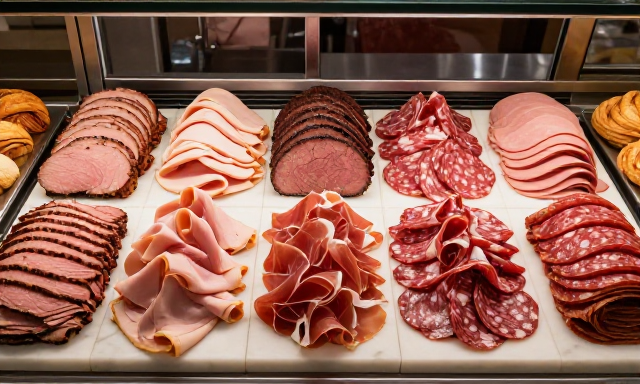
Premium deli meats for sandwiches

The protein is the structural argument of the sandwich — the reason the whole thing exists. But protein quality, preparation method, and fat content determine the entire character of what you're building. Pastrami and corned beef start from the same animal and the same cut; the cure and the smoke take them to completely different places. Karaage and roast chicken are both poultry; the marinade, the frying method, and the potato starch crust make one of them a revelation. This guide covers the full spectrum — from the cured meats of European tradition to the grilled proteins of Middle Eastern street food to the plant-based options that have earned their place at the counter.

Cured & Smoked

18 meats

Pastrami

Romania / Jewish deli tradition, New York
Flavor Profile Smoky, peppery, intensely beefy, briny, with aromatic spice from coriander

Pastrami begins as beef navel or brisket that is wet-brined in a solution of salt, sugar, and pickling spices for one to two weeks, then coated in a thick crust of cracked black pepper and coriander before being cold-smoked over hardwood for several more hours. The final step — steaming — is what transforms the smoked meat into something transcendent: the steam breaks down the remaining collagen, turns the fat nearly liquid, and produces the signature fall-apart texture. The flavor profile is layered: briny from the cure, smoky from the wood, aggressively spiced from the pepper-coriander bark, and deeply beefy underneath it all. New York deli pastrami and Montreal smoked meat are related but distinct traditions — Montreal uses a dry rub and produces a leaner, more aggressively spiced result.

Builder's Tip

Always order it steamed hot and hand-carved, never pre-sliced. Cold pastrami is a fundamentally different and lesser product. The fat cap is essential — lean pastrami is a category error.

How It's Made

Wet-brined for 1–2 weeks, black pepper and coriander crust, cold-smoked, then steamed to order

Best In
  • Pastrami on Rye
  • Reuben
  • Pastrami Hash Sandwich

Corned Beef

Irish-American / Jewish deli tradition
Flavor Profile Mild, briny, beefy, lightly spiced with a gentle sweetness from the cure

Corned beef is brisket that has been wet-cured in a brine of salt, sugar, and whole spices — the 'corns' refer to the large grains of salt used in traditional brining. Unlike pastrami, corned beef is not smoked; it is simply brined and then boiled or braised low and slow until the tough brisket collagen converts to gelatin and the meat can be pulled apart in long strands. The flavor is cleaner and milder than pastrami — less smoky, more purely beefy and lightly spiced with bay leaf, peppercorn, and clove. Irish-American corned beef and cabbage is a different preparation than the deli version, but both stem from the same brined brisket. In the deli context, corned beef is nearly always served hot, hand-sliced against the grain to shorten the muscle fibers.

Builder's Tip

Slice it thin and against the grain for the most tender texture. The fat content matters enormously — ask for point-cut rather than flat-cut in a deli for more marbling.

How It's Made

Wet-brined in salt, sugar, and pickling spices; then boiled or braised until tender

Best In
  • Reuben
  • Corned Beef on Rye
  • Rachel (Reuben with coleslaw)

Prosciutto

Italy (Parma and San Daniele)
Flavor Profile Sweet, silky, nutty, delicately salty, with a long umami finish

Prosciutto is dry-cured ham made from the hind leg of a pig — specifically bred, fed, and slaughtered to an exacting specification — that is salted and then hung to air-cure for a minimum of 14 months, though Prosciutto di Parma DOP must cure for at least 12 months and premium versions age up to 36. During curing, proteolytic enzymes break down the muscle proteins into amino acids that produce the characteristic sweet, nutty complexity; the fat whitens and softens to a nearly lard-like silkiness. The production zones matter enormously: Parma's specific microclimate, with dry winds from the Apennines, creates conditions that produce the mildest, most delicate prosciutto. San Daniele, from Friuli, is slightly sweeter and thinner. The paper-thin slice allows body heat to melt the fat against the palate in a way no thicker cut can replicate.

Builder's Tip

Prosciutto should be served at room temperature, never cold — the fat needs to be soft and yielding. Fold rather than lay flat: a ribbon fold releases the flavor more gradually than a flat slice.

How It's Made

Dry-cured with sea salt only; air-dried for 14–36 months. Never smoked or cooked.

Best In
  • Prosciutto e Melone Panino
  • Italian Sub
  • Croque Monsieur (with prosciutto cotto variant)
  • Flatbread Sandwich

Coppa / Capicola

Southern Italy (Calabria, Campania)
Flavor Profile Richly savory, fatty, with depth from the cure and either sweet spice (northern) or aggressive heat (Calabrian)

Coppa — also called capicola, capocollo, or simply 'gabagool' in the New York-Italian pronunciation immortalized by 'The Sopranos' — is cured pork neck and shoulder, one of the most intensely flavored of the Italian cold cuts. The muscle group runs from the head (capo) to the fourth or fifth rib (collo), producing a meat that is marbled with fat in a way shoulder alone cannot replicate. It is cured with salt, sugar, and varying spice blends depending on region — Calabrian coppa uses fiery red pepper to produce a dark, hot version, while northern versions use wine and milder herbs. After curing, it is encased in natural casing and hung to dry for two to six months. The cross-section reveals a mosaic of lean and fat that makes each slice visually and texturally complex.

Builder's Tip

Ask for it sliced thin — the fat needs to be nearly translucent to reveal its full character. Calabrian hot coppa is one of the best things you can put on a sandwich. Do not skip it.

How It's Made

Neck and shoulder rubbed with salt, spices, and wine; stuffed into natural casing and aged 2–6 months

Best In
  • Italian Sub
  • Muffuletta
  • Cuban (occasionally)
  • Italian Hoagie

Mortadella

Bologna, Italy
Flavor Profile Delicate, sweet, milky, porky, with subtle spice from pepper and myrtle; pistachio versions add a slightly grassy nuttiness

Mortadella is a finely emulsified Italian sausage from Bologna — the city's name gave 'boloney' to American English as a corruption of the imported product — made from finely ground pork that is seasoned with whole black peppercorns, pistachios (in the premium version), and myrtle berries before being stuffed into a massive casing and heat-cured in a special oven. Real mortadella from Italy has an IGP designation that protects the production method and region. The texture is silken and fine-grained, almost mousse-like when sliced paper-thin, with pockets of pure white fat studded throughout the pink meat. Mortadella's flavor is mild, sweet, and porky with a subtle spice note — the antithesis of aggressive American bologna, which is a corrupted approximation made with inferior cuts and fillers.

Builder's Tip

The thickness of the slice changes the entire experience: thin is silky and delicate; thick-cut (1cm) is fatty and rich. Try it warm — briefly in a pan — to unlock a different dimension. Combine with burrata and no other meat for the most refined expression.

How It's Made

Finely emulsified ground pork with whole pepper, pistachios, and fat cubes; slow heat-cured in large casings

Best In
  • Mortadella on Ciabatta with burrata
  • Italian Sub
  • Mortadella and Pistachio Panino

Salami

Italy (various regional types)
Flavor Profile Tangy, garlicky, fatty, salty, with notes ranging from fennel (Finocchiona) to wine (Barolo salami) to red pepper (Calabrese)

Salami is a family of dry-cured fermented sausages made from pork, beef, or a combination, mixed with salt, sugar, garlic, wine, and varying spices, then stuffed into casings and fermented with lactic acid bacteria before air-drying. The fermentation lowers the pH and creates the characteristic tang; the drying concentrates flavors and develops the characteristic salami funk — a blend of lactic acid, cured pork fat, and aging byproducts. Milan-style salami is the standard, finely ground and mild; Finocchiona is Tuscan, fennel-forward and slightly sweet; Genoa salami uses both pork and beef with garlic and black pepper. The white bloom on the exterior is Penicillium mold — a sign of proper air-curing, not spoilage. Quality salami should have visible fat marbling in the cross-section, a tangy aroma, and a texture that holds its shape when sliced thin.

Builder's Tip

Room temperature is essential — cold salami loses its fat bloom and flavor complexity. Different salami warrant different sandwiches: Finocchiona wants fig jam; Calabrese wants provolone and pickled peppers.

How It's Made

Fermented with lactic acid bacteria after mixing; air-dried for 6 weeks to 6+ months depending on size

Best In
  • Italian Sub
  • Muffuletta
  • Salami and Butter on Baguette
  • Antipasto Sandwich

Pepperoni

Italian-American, early 20th century USA
Flavor Profile Spicy, paprika-forward, garlicky, slightly tangy from fermentation, with a distinctive rendered-fat finish when heated

Pepperoni is a distinctly American invention — there is no Italian original — developed by Italian-American immigrants in the early twentieth century who adapted Old World fermented sausage techniques to American palates and ingredient availability. It is made from a blend of pork and beef, heavily seasoned with paprika (which gives the characteristic orange-red color), cayenne, and fennel, then fermented and dried in a way that produces a finely textured, slightly soft sausage with a characteristic greasy sheen when heated. As a pizza topping, the fat renders and the edges curl and crisp in a way no other sausage manages as efficiently. On a sandwich, it reads as boldly spiced, slightly tangy, and intensely porky. The American appetite for pepperoni is extraordinary: more than 250 million pounds are consumed annually in the United States.

Builder's Tip

Cup-and-char pepperoni — which curls into concave rounds and chars at the edges in high heat — is the superior pizza format. For a sandwich, thin slices layered generously beat thick slices every time.

How It's Made

Pork and beef blend, fermented and air-dried; heavily seasoned with paprika and cayenne

Best In
  • Pepperoni Sub
  • Italian Hoagie
  • Stromboli Sandwich
  • Pizza Sandwich

Soppressata

Southern Italy (Calabria, Basilicata, Campania)
Flavor Profile Coarse, meaty, aggressively spiced, either hot (Calabrian) or richly sweet-savory (other regions); more pronounced tang than salami

Soppressata is a pressed, dry-cured salami from Southern Italy with a more irregular, rustic cross-section than the finely ground Milan-style salamis — the meat is coarsely ground or chopped, which preserves visible fat and muscle texture that finer grinding destroys. The Calabrian version is seasoned with hot red pepper and can be ferociously spicy; the Lucanian version from Basilicata uses sweet pepper, garlic, and wine for a milder result. The name references the pressing ('soppressata' means 'pressed') that the sausage receives during drying, which flattens it into its characteristic oval or rectangular shape. Soppressata has become the Italian-American deli's most popular upgrade from standard salami — its aggressive seasoning, visible texture, and more pronounced fermentation tang distinguish it clearly from its milder cousins.

Builder's Tip

The Calabrian hot version is for people who want to understand why Italian charcuterie has a spice tradition. Pair with provolone to temper the heat.

How It's Made

Coarsely ground or hand-cut pork, spiced, stuffed into natural casings, and pressed flat during air-drying

Best In
  • Italian Hoagie
  • Muffuletta
  • Italian Sub with hot peppers

Bresaola

Lombardy, Italy (Valtellina)
Flavor Profile Deep, mineral, beefy, with wine and warm spice notes from the cure; lean and clean on the palate

Bresaola is the great lean cured meat of the Italian tradition — air-dried beef (typically eye of round) from the Valtellina valley in Lombardy, cured with salt, sugar, red wine, and aromatic spices including juniper, cinnamon, and cloves, then hung to air-dry for two to three months. The result is a ruby-red, firm meat with an intense, concentrated beef flavor that is entirely unlike any pork-based salumi. The leanness means the fat complexity of prosciutto or coppa is absent, but bresaola compensates with clarity of beef flavor and a subtle wine-and-spice perfume from the cure. It is sliced paper-thin, typically served draped over arugula with lemon, extra-virgin olive oil, and Parmigiano — but it also makes a serious sandwich protein when paired with ingredients that provide fat (burrata, avocado, mayonnaise).

Builder's Tip

Always serve at room temperature. The paper-thin slice is essential — bresaola thicker than a millimeter loses the delicate texture that defines the product. Acidity (lemon, pickled vegetables) amplifies its flavor.

How It's Made

Eye of round cured in red wine, salt, and aromatic spices; air-dried for 2–3 months

Best In
  • Bresaola and Burrata on Ciabatta
  • Bresaola with Rocket and Parmesan Flatbread Sandwich

Speck

South Tyrol, Italy / Austria
Flavor Profile Sweet, smoky, herbal (juniper), with more assertive salt than prosciutto and a firmer, less silky texture

Speck Alto Adige IGP is a smoked, dry-cured ham from the South Tyrol region of northern Italy — a product that sits between prosciutto and bacon in both preparation and flavor. Unlike prosciutto, which is never smoked, speck is cold-smoked over beechwood and juniper intermittently during a curing process that also involves open-air drying in the mountain climate. The result is a ham with the sweetness of prosciutto combined with a distinctive smoky backbone and the herbal notes from juniper. The flavor is more assertive than prosciutto, less fatty, and with a firmer texture that holds up better in sandwiches with aggressive fillings. Speck Alto Adige is a product of the cultural crossroads between Germanic and Italian food traditions in the Alps.

Builder's Tip

Speck is sturdier than prosciutto and pairs well with robust, dark breads rather than the delicate white breads that serve prosciutto best. The smoky character makes it pair naturally with mustard.

How It's Made

Cured with salt and spices; alternately cold-smoked over beechwood/juniper and air-dried for 22+ weeks

Best In
  • Speck on Dark Rye with Gruyère
  • Speck and Sauerkraut Sandwich
  • Speck Panino with Horseradish

American-Style Bacon

USA (from European side bacon traditions)
Flavor Profile Smoky, salty, sweet from the cure and caramelized sugar, deeply savory, with a rendered-fat richness

American bacon is side pork — the belly of the pig — cured in salt, sugar, and sodium nitrate, then smoked over hardwood (hickory, applewood, and cherry are the most common) and sold raw for home cooking. The belly's high fat-to-lean ratio produces the characteristic architecture of alternating layers that, when cooked, renders the fat to a liquid crisp while the muscle proteins set firm — the origin of the phrase 'crispy bacon.' The Maillard reaction and fat rendering during cooking produce several hundred flavor compounds: the characteristic smoky, sweet, savory, and slightly charred complexity that makes bacon arguably the most universally appealing food in Western culture. The sugar content of the cure — and any added flavoring like maple — caramelizes during cooking to add an additional sweetness layer.

Builder's Tip

The pan-fry method produces better bacon than the oven for a sandwich: the rendered fat bastes the bacon as it cooks. Use medium heat and start in a cold pan. Save the bacon fat — it is one of the world's great cooking fats.

How It's Made

Pork belly wet-brined or dry-cured; cold- or hot-smoked over hardwood; sold raw

Best In
  • BLT
  • Club Sandwich
  • BLAT (with avocado)
  • Bacon Egg and Cheese
  • Banh Mi (bacon variant)

Canadian Bacon / Back Bacon

Canada (UK peameal tradition)
Flavor Profile Mild, lightly smoky, sweet, and hammy; much leaner and more delicate than strip bacon

Canadian bacon — called back bacon in Canada — is made from the lean eye of pork loin rather than the fatty belly, producing a cured meat that is far lower in fat than American bacon and resembles ham more closely than strip bacon. In Canada proper, 'peameal bacon' is the authentic form: cured loin rolled in ground yellow peas (historically) or cornmeal (now standard) and sold unsmoked, requiring cooking. The American version is typically fully cooked and lightly smoked, sold in cylindrical rounds, and best known as the protein on an Eggs Benedict. The lean loin muscle has a mild, slightly sweet pork flavor and a firm, almost ham-like texture. It is a fundamentally different product from American-style belly bacon and should not be approached with the same expectations.

Builder's Tip

Peameal bacon is best pan-seared hot: the cornmeal crust caramelizes. It is completely different from the pre-cooked American version and worth seeking out.

How It's Made

Pork loin cured with salt and maple; rolled in cornmeal (peameal) or lightly smoked

Best In
  • Eggs Benedict Sandwich
  • Canadian Bacon and Egg English Muffin
  • Ham and Cheese (as a close relation)

Smoked Ham

Global (various traditions)
Flavor Profile Mildly sweet and smoky (city ham); deeply savory, salty, and funky (country ham); both with classic pork backbone

Ham is the cured hind leg of a pig, and smoked ham adds a layer of wood smoke — typically hickory, apple, or cherry — after curing to add depth and preserve character beyond the cure alone. City ham (the most common American deli ham) is wet-cured and hot-smoked, producing a moist, relatively mild product with a pink interior and faintly sweet, smoky character. Country ham (Virginia, Tennessee) is dry-cured and cold-smoked for months, producing an intensely salty, funky, firm product that requires soaking before cooking and is closer to European dry-cured hams in its production logic. The difference between a mediocre smoked ham from a grocery counter and a properly cured ham from a dedicated producer is enormous — the former is largely water, the latter is concentrated pork and time.

Builder's Tip

For a Cuban sandwich, use a well-smoked city ham sliced thin — country ham is too assertive and will overpower the other flavors. For country ham biscuits, thin-sliced country ham on a buttered biscuit with no additions is the proper form.

How It's Made

Wet-cured (city) or dry-cured (country); hot- or cold-smoked depending on type

Best In
  • Cuban
  • Ham and Cheese
  • Monte Cristo
  • Club Sandwich

Black Forest Ham

Black Forest region, Germany
Flavor Profile Assertively smoky (fir/pine notes), deeply savory, garlicky, with aromatic spice from juniper

Schwarzwälder Schinken — Black Forest Ham — is a German dry-cured ham with IGP protection, produced in the Black Forest region of Baden-Württemberg. The ham is cured in a mixture of salt, garlic, and spices including juniper berries, pepper, and mountain herbs, then cold-smoked over fir branches and sawdust, which gives the exterior its characteristic dark, almost black crust. The interior is a deep red with a robust, smoky, slightly herbal flavor profile that is more assertive than most deli hams. The authentic product requires months of production; mass-market versions labeled 'Black Forest-style' in American supermarkets are typically liquid-smoked with added coloring and should not be confused with the genuine article.

Builder's Tip

The dark exterior is not char — it is the fir smoke coating. Authentic Black Forest ham has a much more complex, resinous smoke note than hickory-smoked American ham. Look for the IGP designation.

How It's Made

Dry-cured with salt and spices; cold-smoked over fir branches and sawdust for the dark exterior crust

Best In
  • Black Forest Ham and Swiss
  • German-Style Sandwich with Mustard and Pickle
  • Deli Sandwich with Horseradish

Jamón Serrano

Spain
Flavor Profile Sweet, gently salty, clean pork flavor, slightly nutty from aging; more delicate and less fatty than Ibérico

Jamón Serrano is Spain's most widely consumed cured ham, made from commercial white-pig breeds and air-cured in the mountain ('sierra') air of various Spanish regions for a minimum of seven months, though quality versions age for 12 to 24. The process is salt-curing followed by long ambient air-drying in which mountain breezes and cool temperatures work on the ham more slowly than any artificial climate control. The result is a sweet, gently salty ham with a slightly firmer texture than prosciutto, a paler rose color, and less fat marbling than its Ibérico cousin. Serrano is the everyday ham of Spain — sliced at bars, added to bocadillos, and eaten as a tapa in quantities that would alarm a cardiologist — and its quality range is wide, from industrial mediocrity to exceptional.

Builder's Tip

For a bocadillo, the serrano must be at room temperature and sliced thin. Rub the bread with tomato, add olive oil, then lay the ham — the traditional pan con tomate preparation elevates every component.

How It's Made

Salt-cured whole hind leg; air-dried in mountain conditions for 7–24 months

Best In
  • Bocadillo de Jamón
  • Pan con Tomate with Jamón
  • Spanish Tortilla Sandwich

Jamón Ibérico

Spain and Portugal (Iberian Peninsula)
Flavor Profile Nutty (acorn), intensely umami, deeply savory, with liquid fat that dissolves on the palate; complex dried-fruit notes from long aging

Jamón Ibérico de Bellota — from free-range Ibérico pigs finished on acorns in the dehesa oak forest pastures — is one of the world's most expensive and complex cured meats, and the best expression of what patience and breed quality can produce. The pigs convert the oleic acid from acorns into intramuscular fat that, after 36 to 48 months of air-curing, produces a ham with a flavor profile unlike any other: intense umami, deep nuttiness from the acorn-derived fat, a dark maroon color from the long cure, and an almost liquid fat that melts at body temperature when placed on the tongue. The finest Ibérico de Bellota Pata Negra (black hoof) carries the 'black label' designation. It should be eaten in two or three thin slices alone, not buried in a sandwich, to appreciate what it is — though a bocadillo de Ibérico is one of Spain's great simple pleasures.

Builder's Tip

Serve alone or on bread rubbed with tomato and olive oil — no other ingredients. Slice directly from the leg with a sharp jamon knife; pre-packaged is acceptable but loses some of the fat oxidation complexity. Eat within 10 minutes of slicing.

How It's Made

Free-range Ibérico pigs finished on acorns; dry-salted and air-cured for 36–48 months

Best In
  • Bocadillo de Jamón Ibérico on Pan de Cristal
  • Jamón Ibérico with Manchego

Chorizo (Spanish)

Spain
Flavor Profile Smoky, paprika-forward, sweet-to-spicy depending on type, with a rich rendered-fat character

Spanish chorizo is a cured, fermented pork sausage seasoned with pimentón (smoked paprika), which gives it the characteristic deep red color and smoky, sweet-spicy flavor that distinguishes it absolutely from Mexican chorizo. Pimentón may be dulce (sweet), agridulce (bittersweet), or picante (hot), producing chorizo variations across a spice spectrum, but the common thread is the smoked paprika character that permeates every bite. Spanish chorizo is typically fully cured and shelf-stable — sliced and eaten as charcuterie without cooking, though cooking renders out the fat and intensifies the flavor. The fat is suffused with paprika oil, which bleeds into bread, eggs, and cooking oil, staining everything it touches a beautiful saffron-red.

Builder's Tip

The difference between sweet and hot pimentón determines the character of the chorizo. Both are good; the hot version is more interesting on a sandwich. Slice thin for charcuterie; dice for cooking where the rendered fat will perfume the whole dish.

How It's Made

Pork heavily seasoned with pimentón and garlic; fermented and air-dried for weeks to months

Best In
  • Bocadillo de Chorizo
  • Montadito de Chorizo
  • Chorizo and Manchego Sandwich

Chorizo (Mexican)

Mexico (derived from Spanish chorizo)
Flavor Profile Fiery, tangy, chile-forward, warmly spiced with cumin and oregano; bright orange rendered fat

Mexican chorizo is a fresh (raw) pork sausage — not cured or dried — seasoned with dried chiles (typically ancho and guajillo), garlic, vinegar, cumin, and Mexican oregano. It is sold raw in a casing or as loose ground meat and must be cooked before eating; the fat renders and the chile oils release, turning the surrounding pan a vivid orange-red. The flavor is entirely different from Spanish chorizo: more chile-forward, tangier from the vinegar, warmer-spiced, and without the smoked paprika character. Mexican chorizo is the foundation of chorizo con huevos (with scrambled eggs), the breakfast taco filling that defines northern Mexican breakfast culture. In Oaxaca, chorizo negro uses black beans and plantain in addition to pork for a unique regional variation.

Builder's Tip

Cook it in a dry pan and drain excess fat, or retain the fat and add eggs directly to the pan. The rendered orange fat is a flavor vehicle — use it. Do not substitute Spanish chorizo in Mexican recipes or vice versa; they are categorically different.

How It's Made

Ground pork mixed with dried chiles, garlic, vinegar, and spices; sold raw, cooked by crumbling in a hot pan

Best In
  • Torta de Chorizo
  • Chorizo and Egg Breakfast Burrito / Sandwich
  • Chorizo Torta Ahogada

Poultry

6 meats

Roast Turkey Breast

USA (deli tradition)
Flavor Profile Mild, sweet, clean poultry flavor; roasted versions have a golden, savory exterior crust; varies enormously by quality

Deli roast turkey breast is the sandwich world's most widely consumed poultry protein, though the quality range between an excellent version and a mediocre one is wider than almost any other sandwich meat. At its best, roast turkey breast is a whole-muscle, bone-in breast that is seasoned, slow-roasted to just-cooked at around 165°F, then chilled and hand-sliced — producing a juicy, slightly pink interior (the myoglobin in turkey does not fully denature at safe temperatures) with genuine roasted-bird flavor. At its worst, it is a processed loaf of compressed turkey paste extruded into a cylinder, sliced thinly, and containing more water and sodium than actual turkey character. The difference in sandwich quality between these two endpoints is total.

Builder's Tip

Buy turkey at a deli counter that roasts whole breasts, not extruded loaves. Ask to see the whole piece before slicing. The dark meat (thigh) makes a better sandwich protein — it has more fat and flavor.

How It's Made

Whole breast roasted to 165°F (or pressed/formed loaf, which is inferior); served cold-sliced

Best In
  • Turkey Club
  • Turkey and Avocado
  • Turkey Reuben (Rachel)
  • Hot Turkey Sandwich

Grilled Chicken Breast

Global
Flavor Profile Mild, clean poultry flavor; char notes from the grill; lightly smoky if cooked over wood or charcoal

Grilled chicken breast has become one of the most consumed sandwich proteins in the world, which is both a testament to its versatility and a caution about how badly it can be executed. The breast muscle, almost devoid of fat, dries out catastrophically when overcooked — the window between properly cooked and rubber is approximately ten degrees of internal temperature. Brining the chicken before grilling (either wet brine in salt water or dry brine with salt) forces moisture into the muscle that the cooking process cannot fully expel. A properly executed grilled chicken breast, brined and cooked to 160°F, is juicy, lightly charred on the exterior, and delivers a clean protein canvas for whatever condiment system it is paired with.

Builder's Tip

Never skip the brine. Pound the breast to even thickness before grilling so the thin end doesn't dry out before the thick end is cooked. Slice against the grain for tenderness.

How It's Made

Brined in salt solution for 2–4 hours; grilled hot for char marks then finished at lower heat; rested before slicing

Best In
  • Grilled Chicken Club
  • Chicken Caesar Wrap
  • Greek Chicken Sandwich with Tzatziki

Chicken Tikka

Punjab, South Asia (popularized in UK)
Flavor Profile Warmly spiced, tangy from yogurt marinade, slightly charred, with aromatic depth from tandoor cooking

Chicken tikka is marinated and grilled chicken — traditionally cooked in a tandoor oven — that has become one of Britain's most beloved sandwich and wrap fillings, particularly through the 'chicken tikka masala sandwich' that is a staple of British supermarket meal deals. The marinade of yogurt, ginger, garlic, and aromatic spices including cumin, coriander, turmeric, and Kashmiri red chili gives the chicken its characteristic orange-red color, slightly charred exterior, and deeply spiced, tangy flavor. The yogurt tenderizes the protein while the spices penetrate the meat. As a cold sandwich filling mixed with cucumber, mango chutney, and mayonnaise, it represents one of Britain's genuine contributions to global sandwich culture — a fusion that emerged from the South Asian diaspora in the UK.

Builder's Tip

The best version combines warm chicken tikka with cold cucumber and a cooling sauce. Mango chutney provides the sweet counterpoint. Do not use the same spice quantity cold as you would hot — the flavors intensify as the sandwich cools.

How It's Made

Marinated in yogurt and spices; cooked in tandoor oven or grilled at high heat for char

Best In
  • Chicken Tikka Sandwich (British supermarket style)
  • Chicken Tikka Wrap with Raita
  • Chicken Tikka Naan Sandwich

Karaage Fried Chicken

Japan
Flavor Profile Savory, soy-umami, ginger-bright, juicy, with a delicate, crackling potato-starch crust

Karaage is the Japanese method of deep-frying marinated chicken — typically dark meat, cut into irregular pieces — that has produced one of the world's great fried chicken forms and, in sandwich format, one of the most influential sandwiches of the 2010s. The chicken is marinated in soy sauce, sake or mirin, and ginger, then dredged in potato starch and deep-fried in multiple stages: an initial fry to cook through, followed by a second high-heat fry to achieve the shatteringly crispy exterior that defines karaage. The potato starch crust is more delicate and lacier than flour-based batters, and it holds its crunch longer. The marinade penetrates the meat fully in the few minutes before frying, giving every bite savory depth.

Builder's Tip

Use thigh meat only — breast meat lacks the fat to survive double-frying. The double-fry is not optional. Kewpie mayonnaise and pickled cabbage are the only necessary accompaniments.

How It's Made

Dark meat marinated in soy, sake, ginger; double-fried in potato starch for maximum crunch

Best In
  • Karaage Chicken Sando on Shokupan
  • Karaage Banh Mi
  • Karaage Brioche Sandwich

Smoked Duck Breast

France / China (two separate traditions)
Flavor Profile Rich, deeply savory, smoky, with the lush duck fat character that no poultry can replicate; warm spice notes from curing

Smoked duck breast sits at the premium end of the sandwich poultry spectrum: the high fat content of the Pekin or Moulard duck breast — running as a thick subcutaneous layer between the skin and the lean muscle — means that smoking and moderate heat produces an extraordinarily rich, deeply flavored protein that can stand up to strong accompaniments. French preparations typically cure the breast briefly in salt and herbs before cold-smoking over cherry or applewood, then serve it cold in thin slices. Chinese preparations (bao and duck sandwich contexts) often use different spicing — five-spice, star anise — and may combine roasting with smoking. The fat beneath the crisped skin, which renders during cooking, carries the smoke and spice flavor and releases it slowly across the palate.

Builder's Tip

Score the fat cap before cooking to render it properly. The rendered duck fat can be used to toast bread — this is one of cooking's great upgrades. Acid (citrus, pickled plum, fig) is essential to cut the richness.

How It's Made

Cured briefly in salt and spices; cold-smoked over fruitwood; served sliced thin at room temperature or slightly warm

Best In
  • Smoked Duck and Fig Jam on Walnut Bread
  • Duck Bao Sandwich
  • Duck Confit Sandwich

Buffalo Chicken

Buffalo, New York (Anchor Bar, 1964)
Flavor Profile Spicy, vinegary, tangy, with the richness of butter and the heat of cayenne; the cooling blue cheese dressing is an essential counterpart

Buffalo chicken as a sandwich protein traces directly to the Anchor Bar in Buffalo, New York, where Teressa Bellissimo deep-fried chicken wings and tossed them in a sauce of Frank's Red Hot and melted butter in 1964 — a technique that has since been applied to every form of chicken in the American culinary imagination. The essential Buffalo formula is simple: the acidity of cayenne pepper hot sauce combined with the richness of butter or oil creates a sharp, bright, fatty sauce that coats crispy chicken and produces the most direct pleasure-delivering mechanism in American bar food. On a sandwich, Buffalo chicken — whether fried, grilled, or pulled — demands blue cheese dressing and celery for the same reason the wings demand them: the cool dairy and vegetal crunch are necessary structural counterpoints to the heat and richness.

Builder's Tip

The sauce ratio matters: more hot sauce than butter for a sharper result, more butter for a more rounded one. Blue cheese, not ranch — this is non-negotiable in Buffalo. The celery provides necessary crunch and cooling.

How It's Made

Fried, grilled, or pulled chicken tossed in a sauce of hot sauce and melted butter; served hot immediately

Best In
  • Buffalo Chicken Sandwich with Blue Cheese and Celery
  • Buffalo Chicken Sub
  • Buffalo Grilled Chicken Wrap

Seafood

7 meats

Canned Tuna

Global (industrial canning from San Francisco, late 19th century)
Flavor Profile Mild to medium oceanic; oil-packed is richer and silkier; water-packed is cleaner and leaner; the mayo-based tuna salad reads as a complete flavor system

Canned tuna is the world's most consumed canned fish and one of the most important sandwich proteins in history — its affordability, shelf stability, and protein density made it a 20th-century staple across American households and gave the tuna salad sandwich its iconic status. The quality spectrum is enormous: inferior brands use albacore or yellowfin canned in water with minimal quality control, producing a dry, tin-flavored product; premium options (Tonnino, Ortiz, Jose Gourmet) use line-caught yellowfin or bluefin belly packed in extra-virgin olive oil, which produces a silky, meaty, genuinely luxurious product. The choice of oil vs. water, albacore vs. yellowfin, and chunk vs. solid affect the final sandwich substantially.

Builder's Tip

Always drain oil-packed tuna and press it dry before mixing — excess oil dilutes the dressing. Celery is structural and textural, not just filler. Make tuna salad the night before for better flavor integration.

How It's Made

Cooked and hermetically sealed in can with water or oil; serve cold mixed with accompaniments

Best In
  • Tuna Salad Sandwich
  • Tuna Melt
  • Niçoise Sandwich (pan bagnat)
  • Tuna on Toasted Sourdough

Smoked Salmon / Lox

Pacific Northwest and Scandinavian (smoked salmon) / Eastern European Jewish (lox)
Flavor Profile Silky, rich, briny, with cold-smoke character ranging from delicate (Nova) to aggressive (Pacific-style); salmon fat carries all other flavors

Smoked salmon and lox are related but distinct products that are frequently confused. Lox (from the Yiddish 'laks') is salmon belly that is salt-cured but never smoked — the cure alone produces the silky, intensely salty product. Nova lox is a cold-smoked version of the cured salmon that most New Yorkers now call simply 'lox,' though purists note the difference. Hot-smoked salmon (kippered salmon) is cooked through and has a flaky texture rather than the silky sliced texture of cold-smoked. The fat content of salmon belly makes it one of the world's great cured meat analog products: the fat carries the cure and smoke in a way that lean fish cannot replicate. On a bagel with cream cheese, it achieves one of the most fully composed flavor balances in sandwich history.

Builder's Tip

The ratio of cream cheese to lox matters: cream cheese is the fat medium, not the star. Capers provide necessary acid and brine. Red onion, thin-sliced, is essential for allium sharpness that cuts the fat.

How It's Made

Salt-cured (lox) or cold-smoked at under 80°F (Nova/smoked salmon) over alder, cherry, or applewood

Best In
  • Bagel with Lox and Cream Cheese
  • Smoked Salmon and Cucumber on Brown Bread
  • Smoked Salmon Open-Faced Rye

Lobster

Maine coast / New England
Flavor Profile Sweet, briny, delicately oceanic; claw meat is more tender and sweet than tail; warm butter preparation is more decadent, cold mayo is cleaner

Lobster as a sandwich protein is the Maine lobster roll's defining contribution to American food culture — and the question of how to dress it (cold with mayo, warm with butter, or undressed) is the sandwich equivalent of a constitutional debate in New England. The claw and knuckle meat is generally preferred for rolls over the tail, which is firmer and less sweet; the claw meat, barely touched and pulled in large pieces, has a delicacy and sweetness that no other shellfish replicates. Fresh lobster, picked the same day it is cooked, requires very little dressing — a warm split-top bun, butter or a minimal amount of mayo, and good sea salt is the entire recipe. The economics of lobster make it a seasonal luxury; the price spike in summer and collapse in late fall tracks exactly with lobster fishing cycles.

Builder's Tip

Never use frozen lobster meat for a lobster roll — the texture becomes watery and mushy. The split-top bun, buttered and toasted on a griddle, is the only acceptable vessel. A hot dog bun is not a substitute.

How It's Made

Steamed or boiled whole; meat picked from shell; dressed minimally and chilled (Maine style) or served warm with drawn butter (Connecticut)

Best In
  • Maine Lobster Roll (butter or mayo)
  • Connecticut Lobster Roll (warm with butter)
  • Lobster BLT

Shrimp

Global (Gulf shrimp paramount in US sandwich context)
Flavor Profile Sweet, briny, lightly oceanic; fried shrimp adds crunch and richness; the firm snap of well-cooked shrimp against bread is a defining textural pleasure

Shrimp as a sandwich protein appears across world food cultures in radically different forms: the New Orleans shrimp po'boy (battered and deep-fried, dressed on French bread), the Vietnamese bánh mì shrimp (grilled or steamed), the Japanese ebi sando (shrimp tempura or katsu on shokupan), and the prawn marie rose sandwich of British cafés. The Gulf shrimp of Louisiana and Texas, when battered in seasoned cornmeal and fried in oil to a golden crisp, becomes one of the most satisfying sandwich proteins on earth: the firm snap of the shrimp, the crunch of the batter, and the gentle sweetness of the crustacean work against the richness of remoulade or tartar sauce in a way that makes the sum greater than its parts.

Builder's Tip

For a fried shrimp po'boy, use a cornmeal batter with cayenne and fry in hot oil. 'Dressed' means lettuce, tomato, pickle, and mayo on French bread. Overcooking shrimp is the most common error — they need 90 seconds at most.

How It's Made

Varies by preparation: fried in seasoned batter (po'boy), grilled over high heat, or katsu-fried in panko crust

Best In
  • Fried Shrimp Po'Boy
  • Shrimp Banh Mi
  • Ebi Katsu Sando
  • Prawn Marie Rose Sandwich

Sardines

Mediterranean (Sardinia, Portugal)
Flavor Profile Briny, oceanic, richly savory; fresh-canned is mild; aged tinned is assertive and complex with umami depth

Canned sardines — a great underused sandwich protein — offer one of the most complete nutritional and flavor profiles available in a pantry: high in omega-3 fatty acids, calcium, protein, and B vitamins, with a flavor that ranges from mild and milky (freshly canned Portuguese sardines in olive oil) to assertive and fishy (matured tinned fish after several years of development). The oil-packing both preserves and cooks the sardine in a slow confit process during high-pressure canning, and premium sardines improve dramatically with aging — a two-year-old tin of Breton sardines in olive oil is a genuinely complex product. On bread with lemon, capers, and a sharp mustard, sardines function as a complete sandwich: the oil is the fat, the fish is the protein, and the brine is the salt.

Builder's Tip

Choose sardines packed in extra-virgin olive oil for the richest experience. Age your tins — buy a case and eat them over two to three years. Lemon zest, not just juice, is essential for brightness.

How It's Made

Cooked and sealed in olive oil, water, or tomato sauce; serve directly from tin on bread

Best In
  • Sardine Toast with Lemon and Capers
  • Portuguese Sardine Sandwich (Bifanas companion)
  • Scandinavian Open-Faced Sardine on Rye

Anchovies

Mediterranean
Flavor Profile Intensely briny, deeply umami, funky and oceanic, with fat richness from the olive oil packing; salt-preserved version more assertive than fresh

The cured anchovy is one of the most powerful flavor tools available to a sandwich builder — not primarily as a standalone protein but as an umami amplifier whose presence, even in tiny quantities, elevates everything around it without announcing itself. Salt-cured anchovies begin as fresh fish packed tightly in salt for a minimum of six months, during which autolytic enzymes break down the flesh proteins into free amino acids and glutamates that produce extraordinary umami intensity. The resulting fillets, rinsed and packed in olive oil, are nothing like fresh anchovy — they are concentrated savory, slightly funky, deeply oceanic. Anchovies dissolved in butter become the base of countless French and Italian preparations. On a sandwich, two fillets add the equivalent of a full seasoning layer.

Builder's Tip

If you find anchovies too strong, you are using too many. Two fillets for a whole sandwich is a condiment; six fillets is a statement. Rinse salt-packed anchovies thoroughly before use — they are considerably more intense than oil-packed.

How It's Made

Whole fish packed tightly in salt for 6+ months; rinsed and oil-packed for storage and service

Best In
  • Pan Bagnat
  • Salade Niçoise Sandwich
  • Anchovy and Butter Baguette
  • Caesar Sandwich

Smoked Mackerel

UK and Scandinavia
Flavor Profile Assertively fishy, deeply smoky (hot-smoked), richly oily, with a warm pepper crust on standard versions

Smoked mackerel is Britain's most beloved smoked fish after smoked salmon, and unlike salmon, it is affordable enough to be an everyday sandwich ingredient. Atlantic mackerel has an extremely high fat content — running between 16 and 25 percent body fat depending on season — and that fat carries smoke in a way leaner fish cannot, producing a hot-smoked product (cooked through, not cold-smoked) that is deeply flavored, flaky, and assertively fishy in the best possible sense. The peppercorn-crusted version, which is the most common in British supermarkets, adds an additional layer of warmth that works against the oiliness. On brown bread with horseradish cream or cream cheese and lemon, smoked mackerel functions as a complete open-faced sandwich without requiring any other protein.

Builder's Tip

Remove the skin (it peels off easily) and flake the flesh rather than slicing it. Horseradish or mustard is essential to cut the richness. Leftover smoked mackerel makes one of the best pâtés of any fish.

How It's Made

Hot-smoked over oak or applewood; cooked through, sold as whole fillets or portions

Best In
  • Smoked Mackerel on Brown Bread with Horseradish
  • Smoked Mackerel and Cucumber Open Sandwich
  • Scandinavian Smørrebrød with Mackerel

Hot Proteins

9 meats

Pulled Pork

American South (BBQ tradition)
Flavor Profile Smoky, fatty, rich, with deep pork flavor and a sauce character that varies by region from vinegar-bright to tomato-sweet

Pulled pork is pork shoulder (Boston butt or picnic shoulder) cooked low and slow — typically 225°F to 250°F — over wood smoke for 10 to 16 hours until the internal temperature reaches 195°F to 205°F and the collagen has fully converted to gelatin, at which point the meat can be pulled apart into long, juicy strands with no knife required. The process is the cornerstone of American barbecue culture and exists in distinct regional variants: the Carolinas emphasize a vinegar-based sauce; Memphis uses a dry rub; Texas goes without sauce; Kansas City applies a sweet tomato-based glaze. Each regional tradition produces a pulled pork sandwich with a meaningfully different character, though all share the fundamental pleasure of tender, smoky, fatty pork against a soft bun.

Builder's Tip

The bark — the dark, spiced crust that forms on the exterior — is the best part. Don't discard it. Mix it evenly through the pulled meat. Coleslaw on the sandwich is structural, not decorative: the crunch and acidity are necessary counterpoints to the meat's richness.

How It's Made

Pork shoulder smoked low and slow at 225–250°F for 10–16 hours; pulled by hand when internal temp reaches 200°F

Best In
  • Carolina Pulled Pork Sandwich with Vinegar Slaw
  • Memphis-Style Pulled Pork on a Bun
  • Pulled Pork Banh Mi

Smoked Brisket

Texas BBQ tradition
Flavor Profile Deeply beefy, smoky (post oak or oak), with rendered fat that is almost buttery; black pepper bark adds heat and texture; smoke ring is visual proof of process

Texas-style smoked brisket — specifically the full packer brisket that combines the lean flat and the fatty point — is one of the most technically demanding and most rewarding things a sandwich maker can put between two pieces of bread. The brisket is seasoned only with salt and cracked black pepper in the purest Central Texas tradition, then smoked over post oak for 10 to 18 hours until an internal temperature of 200°F to 210°F yields a probe-tender result where the collagen has become gelatin and the fat has rendered to an almost liquid state. Sliced correctly — perpendicular to the grain, through both the flat and the point — each slice has a distinct smoke ring on the exterior, a dark bark, and a glistening interior. The fatty point is the better sandwich protein; the flat is leaner and more prone to dryness.

Builder's Tip

Order the fatty side (point) for a sandwich. In Texas, brisket is served on white bread with pickles and raw onion — resist the urge to complicate it. The rest is as important as the cook.

How It's Made

Full packer brisket seasoned with salt and pepper only; smoked over post oak at 250°F for 10–18 hours; rested 1+ hour before slicing

Best In
  • Brisket Sandwich on White Bread (Texas-style)
  • Brisket Reuben
  • Brisket Chopped Sandwich

Meatballs

Italian-American (derived from Italian polpette)
Flavor Profile Savory, beefy and porky in combination, with garlic, Parmigiano richness, and the tomato sauce's acidity and sweetness

The meatball sub is one of the great American Italian-American sandwiches, and the quality of the meatball determines the quality of the sandwich completely. Italian-American meatballs combine ground beef, ground pork, breadcrumbs soaked in milk (panade), Parmigiano, garlic, and egg into a mixture that is rolled into large rounds and browned in oil before simmering in tomato sauce until fully cooked through. The panade is the critical technical step: the soaked breadcrumbs retain moisture during cooking, keeping the meatball tender while the protein sets. The tomato sauce is not background noise — it saturates the bread during eating and determines whether the sandwich is merely good or genuinely memorable. Provolone or mozzarella melted over the top is non-negotiable.

Builder's Tip

The meatball should be too large to eat in one bite and too messy to eat without some structural planning. This is intentional. Use tongs, not a fork. Press the meatballs slightly into the bread to prevent rolling.

How It's Made

Ground beef/pork mixture with panade; browned then simmered in tomato sauce; served hot with melted provolone

Best In
  • Meatball Sub / Hero
  • Meatball Panino
  • Meatball Parm Sandwich

Italian Beef (Chicago-Style)

Chicago, Italian-American community, early 20th century
Flavor Profile Deeply beefy and savory, herb-forward from oregano and garlic, rich from the cooking liquid; the dip amplifies everything

Chicago Italian beef is thinly shaved roast beef that has been slow-roasted in a spiced gravy of beef stock, garlic, oregano, pepper, and Italian seasoning, then held in that cooking liquid to maintain temperature and tenderness. The beef is typically top round or bottom round, shaved so thin on a deli slicer that individual slices are nearly translucent, and the volume-to-weight ratio makes it seem improbably abundant in the roll. The au jus ('gravy' in Chicago parlance) is the defining component: the sandwich can be ordered 'dry' (no extra gravy), 'regular,' or 'dipped' — fully submerged in the gravy for maximum saturation. Sweet peppers or hot giardiniera are the traditional accompaniments, and both are correct; ordering one or both is a declaration of personal values.

Builder's Tip

Order it wet or dipped on your first visit. Lean into the mess — it is unavoidable and the point. Eat over the paper wrapping. Hot giardiniera adds necessary crunch and heat.

How It's Made

Top or bottom round slow-roasted in spiced beef broth; shaved paper-thin on slicer; held in gravy for service

Best In
  • Italian Beef Sandwich (Chicago-style)
  • Combo (beef and Italian sausage)
  • Italian Beef Dipped

Carnitas

Michoacán, Mexico
Flavor Profile Rich, porky, slightly sweet from caramelization, with crispy exterior contrasting yielding interior; lard-cooked versions have extra depth

Carnitas — literally 'little meats' — is the Mexican technique of slow-cooking pork in its own fat (a pork confit, essentially) until tender, then crisping the exterior on high heat to create the textural contrast of yielding interior and crackly, caramelized exterior that defines the best carnitas. Traditional Michoacán-style carnitas uses a copper cazo (cauldron) over an open wood fire, cooking the whole pig for hours with nothing but its own lard and salt, then finishing at high heat to create the crispy bits. The technique's genius is the two-stage cooking: the low-and-slow phase renders the fat and breaks down the collagen; the high-heat finish caramelizes the exterior through Maillard reactions. As a sandwich protein, carnitas inside a torta with avocado, pickled jalapeños, and refried beans is one of the most satisfying things you can eat.

Builder's Tip

The crispy bits from the bottom of the cazo are the best part. Always mix them in when serving. The torta combination of carnitas, avocado, pickled jalapeños, and crema is a complete flavor system.

How It's Made

Pork shoulder cooked in lard or its own fat at low temperature for 3–4 hours; finished at high heat for crisping

Best In
  • Torta de Carnitas
  • Carnitas Quesadilla Sandwich
  • Carnitas and Avocado Sandwich

Gyro / Döner Kebab

Greece (gyro) / Ottoman Empire via Turkey (döner)
Flavor Profile Savory, herb-forward (oregano, cumin, garlic), lightly spiced, with crispy-edged meat and the rendered fat of lamb or pork

Gyro and döner are two expressions of the same fundamental concept: seasoned meat cooked slowly on a vertical rotisserie, with the exterior sliced continuously as it crisps. Greek gyro uses ground pork or lamb (or a combination), seasoned with oregano, cumin, and garlic, compressed into a cone and cooked against vertical heat; German-Turkish döner uses marinated lamb, chicken, or veal slices stacked on the spit rather than ground. Both produce a sandwich that combines the textural contrast of crisped exterior and warm interior with the accumulation of seasoning and fat that comes from constant basting. The Berlin döner — on Turkish flatbread with roasted peppers, yogurt sauce, and iceberg — is a specifically German evolution that differs meaningfully from the Turkish or Greek original.

Builder's Tip

The last slices from the spit are the most intensely caramelized and worth waiting for. Tzatziki is not a condiment — it is a structural component that provides acid and cool dairy to balance the hot, fatty meat.

How It's Made

Meat compressed or stacked on vertical rotisserie; shaved from the outside as the exterior crisps; served immediately

Best In
  • Greek Gyro in Pita with Tzatziki
  • Berlin-Style Döner in Flatbread
  • Lamb Döner Dürüm (wrap)

Chicken Shawarma

Levant / Ottoman Empire
Flavor Profile Warmly spiced (turmeric, allspice, cumin), garlic-forward, tangy from yogurt marinade, with the juicy char of freshly shaved meat

Chicken shawarma is the Levantine version of the döner concept: marinated chicken thighs stacked on a vertical rotisserie with alternating fat layers (typically sheep tail fat or chicken fat) and cooked slowly over gas or charcoal heat, shaved to order. The marinade typically includes yogurt, turmeric, allspice, cumin, coriander, garlic, and lemon — producing a yellow-orange color and an aromatic, warmly spiced profile quite different from beef or lamb shawarma. The finished sandwich, rolled in Lebanese flatbread with garlic sauce (toum), pickled vegetables, and sometimes fries, is one of the most widely consumed street sandwiches in the world. Israeli shawarma uses turkey rather than chicken and typically adds pickled mango (amba) and zhug (Yemeni hot sauce).

Builder's Tip

Toum (Lebanese garlic sauce, essentially an aioli made with garlic alone) is the essential condiment. Pickled turnips provide necessary acid and color. A Syrian shawarma sandwich with all the accompaniments takes 15 minutes to construct — patience is warranted.

How It's Made

Chicken thighs marinated in yogurt and Middle Eastern spices; stacked on vertical spit with fat layers; shaved to order

Best In
  • Chicken Shawarma in Pita with Toum
  • Shawarma Wrap with Pickled Turnips
  • Israeli Shawarma with Amba

Falafel

Middle East (Egypt, Levant)
Flavor Profile Earthy chickpea, fresh herb-bright (parsley, cilantro), cumin-warm, crunchy exterior giving way to fluffy interior

Falafel is made from ground dried chickpeas (the Egyptian ta'amiya uses fava beans) that have been soaked but not cooked, blended with fresh parsley, cilantro, garlic, cumin, and baking powder, then formed into balls or patties and deep-fried in hot oil. The critical technical point — using raw soaked chickpeas, not cooked canned ones — is what produces the fluffy interior and crispy exterior that distinguishes excellent falafel from the dense, hockey-puck failures that result from the wrong starting ingredient. The crust formed by deep-frying in oil at 375°F is crispy-brittle for approximately 15 minutes before moisture migration from the interior softens it; falafel should be eaten immediately. As a sandwich protein in a pita with tahini, pickled vegetables, and fresh herbs, it represents one of the world's great vegetarian sandwich systems.

Builder's Tip

Never use canned chickpeas for falafel — the texture will be wrong. Soak dried chickpeas for 18–24 hours. Eat within 10 minutes of frying. The tahini sauce must be thinned with lemon juice and water to a pourable consistency.

How It's Made

Raw soaked (not cooked) chickpeas blended with herbs and spices; deep-fried at 375°F immediately before serving

Best In
  • Falafel Pita with Tahini and Pickled Vegetables
  • Falafel Wrap
  • Sabich (with falafel)

Carne Asada

Northern Mexico
Flavor Profile Charred, beefy, citrus-bright from the marinade, herb-forward from oregano, with the slightly caramelized sweetness of high-heat grilling

Carne asada — literally 'grilled meat' — is the Northern Mexican tradition of grilling thin-cut beef (typically flank steak, skirt steak, or flap meat) over high charcoal or wood fire after marinating in citrus, garlic, oregano, and cumin. The high heat and thin cut produce rapid Maillard browning on the exterior while the interior stays juicy and slightly pink, with a char-and-citrus crust that carries the flavor. In the Sonoran and Norteño tradition, carne asada is cut directly from the grill into a flour tortilla or bolillo. In the San Diego taco shop tradition, it is the primary protein in burritos, quesadillas, and tacos. On a torta, it pairs with avocado, jalapeño, and queso fresco in one of Mexico's great casual sandwiches.

Builder's Tip

The thin cut is essential — flank or skirt steak must be cut across the grain to be tender. High heat, short time: carne asada should be done in 3–4 minutes per side. Do not fully cook it — pink inside is correct.

How It's Made

Thin-cut flank or skirt steak marinated in citrus, garlic, and spices; grilled over high charcoal heat; rested and sliced or chopped

Best In
  • Carne Asada Torta
  • Carne Asada Quesadilla Sandwich
  • Carne Asada Burrito as a Sandwich

Plant-Based

6 meats

Portobello Mushroom

Global (cultivated mushroom, Italian-American popularity)
Flavor Profile Earthy, umami, savory, with a meaty chew; roasting intensifies all qualities and adds caramelized sweetness

The portobello mushroom — the full-grown, open-capped version of the cremini, which is itself a mature version of the white button mushroom — became the default vegetarian burger and sandwich protein in American restaurants in the 1990s, not because it is inherently inferior to meat but because it was frequently treated as a simple substitute rather than a distinct ingredient with its own requirements. A properly prepared portobello — marinated in balsamic, olive oil, and herbs, then grilled or roasted at high heat — has a meaty, savory character from its high glutamate content, a substantial chew from its dense flesh, and a robust umami depth from the Maillard reaction on its surface. The mistake is treating it like it needs to taste like meat; it should taste like a very good mushroom.

Builder's Tip

Remove the gills — they turn bitter and dark when cooked. Marinate for at least 30 minutes. The mushroom will release significant moisture during cooking; don't be alarmed, but account for it in the sandwich construction (don't saturate the bread).

How It's Made

Marinated in oil, vinegar, and herbs; grilled or roasted at high heat (400°F+) until tender and well-caramelized; served immediately

Best In
  • Grilled Portobello with Roasted Red Pepper
  • Portobello Caprese Sandwich
  • Portobello and Goat Cheese on Ciabatta

Fried Egg

Global
Flavor Profile Rich, eggy, savory; the yolk acts as a sauce when broken; crispy lace edges from butter-fried whites are essential

The fried egg as a primary sandwich protein is one of the oldest and most satisfying protein choices in sandwich history — found everywhere from the British bacon sarnie to the Japanese tamago sando to the American breakfast sandwich to the Chilean chorrillana. The fried egg contributes protein, fat from the yolk, a crisp-edged exterior from the white in contact with butter or oil, and — critically — the liquid yolk that acts as a built-in sauce when broken. The technical challenge is producing a fried egg with maximum crispy lace on the exterior white, a set white overall, and a still-runny yolk: this requires high heat, adequate fat, and perfect timing. The egg-on-a-sandwich tradition spans every cuisine because eggs are universal and this combination is one of the most satisfying things a human can eat.

Builder's Tip

Use more butter than seems reasonable. High heat for the first 30 seconds creates the lacy, crispy edge; lower the heat and cover for the last 30 seconds to set the white without overcooking the yolk. The runny yolk is not optional — it is the sauce.

How It's Made

Cracked into hot buttered pan; high heat for crispy edges; covered briefly for set white while yolk remains liquid

Best In
  • Bacon Egg and Cheese on a Roll
  • Egg McMuffin-style English Muffin Sandwich
  • Japanese Tamago Sando
  • Chilean Churrasco with Egg

Halloumi

Cyprus
Flavor Profile Salty, milky, tangy, with a squeaky chew when hot; deeply caramelized exterior adds sweetness; cools to rubbery if not eaten quickly

Halloumi is a semi-hard, unripened brined cheese made from a blend of sheep and goat milk (with sometimes cow's milk added), produced in Cyprus with PDO protection. Its defining characteristic is its extremely high melting point compared to most cheeses — a consequence of its production method, which involves heating the curds and whey together before pressing and brining — which allows it to be grilled or pan-fried until deeply golden and caramelized on the exterior without melting into a puddle. When hot, halloumi has a squeaky, chewy texture with a saline, milky, and slightly tangy flavor; the caramelized crust adds sweetness and a browned-butter note. As a sandwich protein, it functions best when very hot, as cooling halloumi becomes rubbery and the salty brine character dominates.

Builder's Tip

Do not add oil — halloumi has enough fat to cook without sticking in a hot dry pan. Eat it within two minutes of cooking before it firms up. Chilli jam, pomegranate molasses, or a strong herb (mint, za'atar) cuts the saltiness.

How It's Made

Sliced 1cm thick; pan-fried or grilled dry at high heat until deeply golden on both sides; served immediately

Best In
  • Grilled Halloumi and Roasted Pepper Wrap
  • Halloumi Burger on a Bun
  • Halloumi and Chilli Jam Sandwich

Tempeh

Java, Indonesia
Flavor Profile Nutty, earthy, slightly mushroomy, with a firm chew; caramelizes to crispy-savory when pan-fried; takes bold marinades well

Tempeh is a fermented soybean product that originated in Java and has been consumed in Indonesia for at least several hundred years. Whole cooked soybeans are bound together by the mycelium of Rhizopus mold into a firm, sliceable cake with a distinctly earthy, nutty, slightly mushroomy flavor that is entirely different from tofu. The fermentation process produces a product with more bioavailable protein and a more complex flavor than unfermented soy, and the firm texture holds up to high-heat cooking without disintegrating. Tempeh absorbs marinades readily and caramelizes beautifully when pan-fried, grilled, or baked, developing a crispy crust that makes it genuinely satisfying as a sandwich protein rather than a meat substitute. It works best with bold, acidic, or spicy accompaniments that complement its earthiness.

Builder's Tip

Steam tempeh for 10 minutes before marinating — this opens the structure for better absorption and removes any bitterness. The BLT application works remarkably well when tempeh is sliced thin, marinated in smoked paprika and soy, and crisped in a cast iron pan.

How It's Made

Sliced and marinated; pan-fried, grilled, or baked at high heat; often smoked or marinated in soy, liquid smoke, and maple for 'bacon' applications

Best In
  • Tempeh BLT with Smoked Tempeh
  • Tempeh Reuben
  • Indonesian-Style Tempeh Sandwich with Sambal

Smoked Tofu

China (tofu tradition); smoked form developed across East Asia and adopted in European vegetarian cuisine
Flavor Profile Smoky exterior, mild-beany interior; firm, slightly chewy texture; takes condiments like mustard and horseradish well

Smoked tofu is firm tofu that has been pressed to remove excess moisture and then cold-smoked over wood, which both flavors the exterior and firms the texture further. The smoking process penetrates the outer layers of the tofu block, creating a dark, chewy skin with a definite smoke character that the unsmoked interior completes with its neutral, slightly beany background. In German and Northern European vegetarian cooking, smoked tofu has become a standard sandwich ingredient — sliced on rye with mustard, pickles, and sauerkraut in a configuration that mimics the cold cut sandwich tradition convincingly. The product quality varies enormously between brands; the best versions have an aggressively smoked exterior and a firm, relatively dry interior that holds its shape when sliced.

Builder's Tip

Pan-frying smoked tofu in a little oil after slicing adds caramelization that dramatically improves both flavor and texture. Use it cold from the package only with very strong condiments.

How It's Made

Firm tofu pressed dry; cold-smoked over hardwood; sliced and served cold or pan-fried for additional caramelization

Best In
  • Smoked Tofu on Rye with Mustard and Pickles
  • Smoked Tofu Banh Mi
  • German-Style Smoked Tofu Sandwich

Avocado

Mesoamerica (cultivated in Mexico for 5,000+ years)
Flavor Profile Mild, buttery, creamy, with a barely-there grassy note; neutral enough to function as a fat medium for other flavors

Avocado occupies a unique position in sandwich architecture: it functions simultaneously as fat, protein supplement, creaminess, and structural element, performing the role that mayonnaise plays while adding fiber, potassium, and monounsaturated fat. The Hass variety — which dominates commercial production — has a higher fat content (20–30%) than any other widely consumed fruit, and that fat is the source of its extraordinary creaminess on the palate. Avocado's flavor is mild and buttery when perfectly ripe (yielding under gentle pressure, flesh slightly resistant), but it has a one-to-two-day window between underripe (flavorless, rubbery) and overripe (brown, stringy). Its mild flavor means it supports rather than competes with other sandwich components, making it one of the most versatile sandwich additions available.

Builder's Tip

Season aggressively — avocado is almost flavorless without adequate salt and acid. The stone-pressed-into-guacamole trick does not prevent browning: only keeping oxygen off the surface (plastic wrap directly on the flesh) does.

How It's Made

Sliced or mashed depending on application; seasoned with salt and lemon or lime immediately to prevent oxidation

Best In
  • Avocado Toast (the canonical open-faced sandwich)
  • BLAT (BLT with Avocado)
  • Turkey and Avocado
  • Veggie Sandwich
Related Guides

The meat is only half the equation. Pair it with the right bread and condiment, or see where the world's greatest sandwiches are made.

Bread Guide → Condiments Guide Famous Shops How to Build