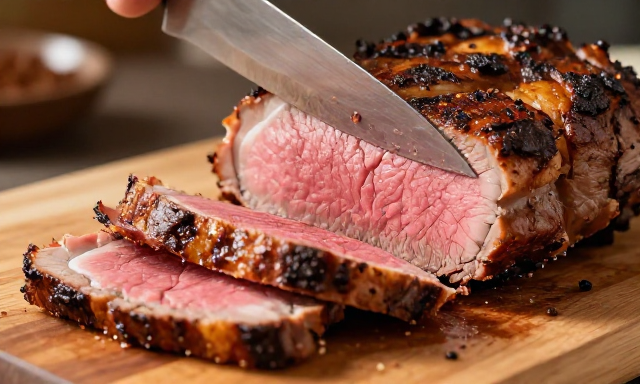
The Technique
Look at the surface of a cooked piece of meat and find the direction the muscle fibers run — these are the parallel lines or striations visible on the surface. Then cut perpendicular to those lines rather than parallel. Each slice then severs many short fiber segments rather than running along long, continuous fibers. The result is a tender, clean bite rather than a chewy, stringy one.
Why It Works
Muscle fibers in meat run in one direction, bundled together by connective tissue. When you cut with the grain, your knife runs alongside these fibers, leaving long intact strands that require significant force to chew through. Cutting against the grain severs these fibers into short segments — typically less than half an inch — that offer minimal resistance. This is the single biggest factor in why restaurant roast beef or brisket can be tender while homemade versions of the same cut seem tough. The cut is different, not the meat.
When to Use It
For any whole-muscle meat you're preparing at home for sandwiches: roast beef, brisket, flank steak, tri-tip, chicken breast, pork loin. Deli-sliced meats have already been processed this way. The technique matters most for tougher cuts like brisket, flank steak, and skirt steak, where going with the grain makes the difference between chewy and nearly unchewable. Even for tender cuts like ribeye, against-the-grain slicing still produces a noticeably silkier bite.
Pro Tips
- Let meat rest before slicing — hot meat is harder to read and cut
- Use a sharp slicing or carving knife; a dull blade tears rather than cuts
- For flank steak and skirt steak, the grain is usually very obvious and runs lengthwise down the muscle
- For large roasts, identify the grain direction on the raw meat before cooking so you know where to cut later