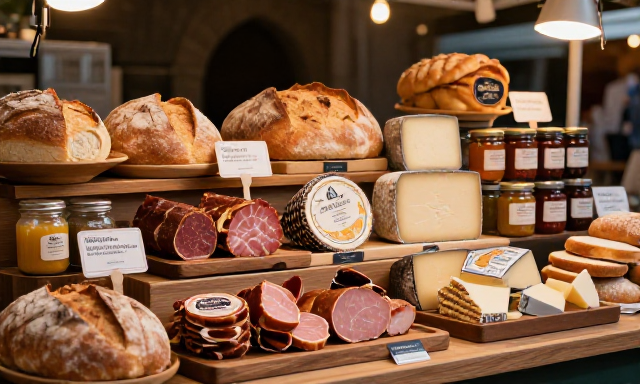
Specialty Meats
Moderate
Italian Mortadella
True Mortadella di Bologna IGP is nothing like the supermarket bologna that shares a distant etymological ancestor. The real thing is made from finely ground pork, seasoned with black pepper, myrtle berries, and sometimes pistachio, studded with large cubes of pure pork fat that melt on the tongue. The protected designation of origin (IGP) means it was produced and processed in the Bologna area of Emilia-Romagna. It has a delicate, almost silky quality that transforms a simple sandwich into something genuinely extraordinary.
Where to Find
Specialty Italian delis, online from Olivieri 1882, Alma Gourmet, or Gustiamo. Eataly locations carry it. In major cities, look for an Italian market — not a generic deli counter. Ask if it's IGP certified.
What to Look For
Deep pink color with uniformly distributed white fat cubes. If pistachio is included, they should be bright green, not gray. The smell should be subtly spiced, not aggressively processed. Avoid anything labeled 'mortadella style' or packed in a shrink sleeve with no origin information.
Storage
Whole: 3–4 weeks refrigerated. Sliced: 3–5 days, wrapped tightly. Do not freeze — it destroys the texture.
Estimated Cost
$8–14/lb
Pro Tip
Ask for it sliced thin — paper thin — on the deli slicer. Fold the slices rather than lay them flat. The extra surface area changes the mouthfeel dramatically.
Use in:
Mortadella sandwich
Italian sub
Panino
Specialty Meats
Moderate
Coppa (Capicola)
Coppa is a cured whole-muscle cut from the neck and shoulder of the pig, so it has beautiful marbling throughout — not uniform like sliced deli meat. The fat is distributed in ribbons, which means it melts against the tongue as you chew. Italian-made Coppa di Testa is a PDO product; the American version is often called capicola or gabagool (the South Jersey pronunciation that became cultural shorthand for Italian-American deli culture).
Where to Find
Italian specialty delis, Salumeria Biellese in NYC, La Quercia online, DiBruno Bros in Philadelphia. Whole Foods occasionally carries decent versions in their charcuterie section.
What to Look For
Deep burgundy-red meat with white fat ribbons throughout. It should look marbled, not uniform. If it's all one color, it's a lesser product. The aroma should be spiced and complex — often rubbed with black pepper, red pepper, or wine.
Storage
Sliced: 5–7 days refrigerated. Keep well-wrapped as it dries quickly once cut.
Estimated Cost
$12–18/lb
Pro Tip
Medium-thick slices (1/16 inch) work better than paper-thin. You want enough fat to melt, not evaporate.
Use in:
Italian sub
Muffuletta
Pressed sandwich
Specialty Meats
Specialist
Speck Alto Adige IGP
Speck is the cured, lightly smoked ham from South Tyrol — the alpine border region between Italy and Austria. It's air-cured for at least 22 weeks, rubbed with spices including juniper, rosemary, and bay leaf, and given light cold smoking. The result is earthier and more complex than prosciutto, with a faint smokiness that doesn't overwhelm. It's one of the rare cured meats that works beautifully in sandwiches involving strong cheeses like Gruyère or aged Fontina.
Where to Find
Specialty cheese shops and Italian importers. Online from Alma Gourmet, Zingerman's, or Formaggio Kitchen. Look specifically for 'Alto Adige IGP' — generic 'speck' can be anything.
What to Look For
Lean, firm texture. The rind should show signs of curing — dark, dried outer edge. The interior should be deep rose with a thin, even fat layer. Should smell smoky-herbal, not just salty.
Storage
Whole leg: months in a cool, dry place. Sliced: 1 week refrigerated.
Estimated Cost
$16–24/lb
Pro Tip
Let it come to room temperature before eating. The fat softens and the aromatic compounds open up — eating it cold is like listening to music through a wall.
Use in:
Alpine-style sandwich
Tramezzino
Pressed baguette
Specialty Meats
Moderate
Porchetta
Porchetta is roasted whole pig — deboned, seasoned aggressively with rosemary, garlic, fennel, and black pepper, then rolled and slow-roasted until the skin is shatteringly crisp and the interior is impossibly juicy. In Italy, porchettaio vans park at markets and festivals; the porchetta sandwich is one of Italy's great street foods. Made well, a slice of porchetta with its crackled skin on a crusty roll is one of the finest things you can eat.
Where to Find
Italian butchers who make it in-house, farmers markets in cities with strong Italian communities, specialty charcuterie shops. It's increasingly available from online producers — The Fatted Calf ships nationally.
What to Look For
The skin (crackling) should be blistered and golden, not soft. The interior should show visible herb and garlic distribution throughout the meat. It should smell heavily of fennel and roasted pork — if it's subtle, it was under-seasoned.
Storage
2–3 days refrigerated. Reheat briefly under a broiler to re-crisp the skin.
Estimated Cost
$10–16/lb
Pro Tip
Always get the crackling included with your slice. If the skin is soft, ask them to stick it under the broiler for 90 seconds. The crackling is the whole point.
Use in:
Porchetta sandwich
Ciabatta roll sandwich
Roman street sandwich
Specialty Meats
Moderate
Nduja
Nduja (en-DOO-ya) is a spreadable, fiery Calabrian salami made from coarsely ground pork fat and Calabrian chilis. It has the consistency of softened butter, the heat of a serious chili sauce, and the richness of cured pork — all at once. A thin smear on bread is enough to transform an ordinary sandwich. It's not a meat in the traditional sense; it's closer to a condiment with serious cured-pork credentials.
Where to Find
Specialty Italian delis, Eataly, online from Bricco Salumeria, Zingerman's Deli, or directly from Calabrian producers through importers like Gustiamo.
What to Look For
Deep red-orange color from the chilis. It should be spreadable at room temperature. If it's hard and sliceable, it's either been over-refrigerated or it's a different product entirely. The heat should build — not hit you instantly.
Storage
Refrigerated in its casing: several months. Once opened: 2–3 weeks tightly wrapped.
Estimated Cost
$14–22/lb
Pro Tip
Spread it directly on the bread before adding anything else — it needs direct contact with the crumb to distribute. A thin scraping goes a long way.
Use in:
Italian sub
Nduja toast
Charcuterie board sandwich
Specialty Meats
Specialist
House-Cured Pastrami
Mass-market pastrami is fine. House-cured pastrami from a serious deli is a completely different food. The difference is the cure (how long, what spices), the smoke (what wood, how long), and the steam-finishing — great pastrami is steamed to order until it nearly falls apart. The fat cap on a good brisket flat renders to silk. There is no shortcut for this, and when you find a place doing it properly, you should order multiple sandwiches.
Where to Find
Katz's Delicatessen (NYC), Langer's (LA), Kenny & Zuke's (Portland), Mile End (NYC), Smoque BBQ-adjacent spots. Look for places that cure in-house, not those that heat packaged product.
What to Look For
Deep mahogany exterior with visible spice crust. Bright pink interior (from the sodium nitrate cure). The fat should be translucent and soft, not white and waxy. Should be sliced to order from the steamer, not pre-sliced and reheated.
Storage
Best consumed same day. Keeps 3–4 days refrigerated; reheat by steaming, never microwave.
Estimated Cost
$18–28/lb at a serious deli; $500+ for a cured whole brisket to make at home
Pro Tip
Order it fatty. The lean pastrami that looks 'better' is the wrong call — the fat is where the flavor lives.
Use in:
Pastrami on rye
Reuben
Pastrami melt
Artisan Breads
Specialist
Michetta (Italian Rosette Roll)
Michetta is the traditional roll of Milan — a crispy, hollow roll with a flower petal pattern on top. The interior is almost entirely air, which sounds like a liability until you understand what that does: it forces all the textural contrast onto the crust, which is shattering-crispy. Fillings sit inside a crunchy shell rather than compressing into soft bread. It's the perfect vessel for mortadella or coppa — the hollow interior catches the flavors.
Where to Find
Authentic michetta is nearly impossible outside Italy and Chicago's Randolph Street Market area. A few Italian bakeries in New York and San Francisco make them. If you can't find them, a good hollow French roll is the closest substitute.
What to Look For
The distinctive 5-petal rosette shape. Extremely light for its size — should feel almost hollow when you pick it up. The crust should be genuinely hard, not semi-soft.
Storage
Day-of only. These do not keep. After 6 hours they soften.
Estimated Cost
$3–5 per roll
Pro Tip
Press the filling in firmly and then press the top closed. The hollow center is not a flaw — it's the point. The bread encases the filling rather than absorbing it.
Use in:
Michetta sandwich
Panino Milanese
Italian street sandwich
Artisan Breads
Moderate
Pain de Campagne
Pain de campagne — French country bread — is made with a blend of white and whole wheat (or rye) flour, typically with a long cold fermentation that develops complex, mildly sour flavor. The crust is thick and chewy; the crumb is open and irregular. It has enough structural integrity to handle substantial fillings without becoming soggy, and enough flavor complexity to contribute something to the sandwich rather than just holding ingredients apart.
Where to Find
Good artisan bakeries. Look for Tartine Bakery in SF, Bien Cuit in NYC, or any bakery that prominently mentions levain or long fermentation. Farmers markets often have small bakers selling excellent versions.
What to Look For
Thick, irregular crust with visible scoring (the pattern of cuts on top that allow controlled expansion). The bottom should be firm and sound hollow when tapped. Crumb should show irregular holes — uniformly fine crumb means it wasn't fermented long enough.
Storage
Room temperature, cut-side down: 2–3 days. Slice and freeze if you can't finish it.
Estimated Cost
$8–14 per loaf
Pro Tip
Slice thick — at least 3/4 inch. Pain de campagne's flavor is mostly in the crust, and thin slices give you too little crust per bite.
Use in:
Croque-Monsieur
French dip
Jambon-beurre
Artisan Breads
Easy
Ciabatta
Real ciabatta — invented in 1982 by baker Arnaldo Cavallari in Verona — has a wet, sticky dough (very high hydration) that produces an extremely open crumb with large, irregular holes. The crust is thin and chewy, the interior almost custardy in the best versions. The holes aren't a bug; they're the point. They trap olive oil, juices, and condiments rather than letting them saturate the bread. The American grocery store version with its uniform crumb and soft crust is not the same bread.
Where to Find
Italian bakeries, artisan bread shops. Trader Joe's sells a passable version. The best are baked same-day and sold at farmers markets.
What to Look For
Flat, elongated shape (ciabatta means 'slipper'). Dusty flour exterior. When you squeeze it, it should be firm but give slightly. Tear it open — the holes should be large and irregular. If it looks like English muffin crumb, it was under-proofed.
Storage
Day of purchase. Freezes well: slice before freezing, toast from frozen.
Estimated Cost
$4–7 per loaf
Pro Tip
Toast it cut-side down in a dry skillet until deeply golden. This creates a surface that holds up to even wet ingredients for 30+ minutes.
Use in:
Italian sub
Bruschetta sandwich
Grilled vegetable sandwich
Artisan Breads
Easy
Martin's Potato Rolls
Martin's Potato Rolls are the correct bun for a certain category of sandwich — the kind where you want a soft, slightly sweet, structurally cooperative vessel that doesn't compete with the filling. They have a particular pillowy quality from the potato flour that gives them a unique softness-with-structure: they compress without shredding, hold moisture without becoming soggy, and have a slight sweetness that plays well against both savory meats and tangy condiments. Serious BBQ joints and burger restaurants use them because the science actually works.
Where to Find
Available nationally at most major grocery chains (Giant, Weis, Walmart). Also findable online via the Martin's website.
What to Look For
Golden-yellow color from the potato flour and egg. Extremely soft texture. Uniform, close crumb — this is not a flaw, it's the design. The 'Long Potato Rolls' are the correct format for hot dogs and sausages.
Storage
Room temperature: 5–7 days. Freeze well.
Estimated Cost
$3–5 per bag
Pro Tip
For smash burgers, skip toasting. The soft, untoasted surface actually grips the meat better and absorbs the beef fat properly.
Use in:
Pulled pork sandwich
Smash burger
Lobster roll
Artisan Breads
Moderate
Hoagie Rolls (Philadelphia Style)
A proper Philadelphia hoagie roll has a thin, slightly crispy crust that shatters when you bite but doesn't lacerate your gums. The crumb is tight enough to hold the structural load of a full hoagie but soft enough to compress slightly with the filling. The best examples — from Amoroso's or Vilotti-Pisanelli — have a faint yeasty sweetness. The essential quality is that they flex rather than crack when you press the sandwich together.
Where to Find
Amoroso's Baking Company ships nationally. In Philadelphia they're in every corner store. Outside the region, look for a Philadelphia-style Italian bakery, or any bakery advertising 'sub rolls' that are made in-house.
What to Look For
Thin but firm crust. Light interior. Should give when squeezed but spring back. If it sounds hollow when tapped on the bottom, it's correct. Avoid rolls with a thick, hard crust — they'll cut your mouth.
Storage
Day of, or freeze immediately. These stale fast.
Estimated Cost
$1–2 per roll
Pro Tip
Heat the roll briefly (30 seconds) in a 350F oven before assembly. It refreshes the crust and creates just enough warmth to start softening the meat.
Use in:
Hoagie
Italian sub
Cheesesteak
Quality Cheeses
Easy
Aged Provolone
Young provolone is mild and rubbery — adequate but unremarkable. Provolone Valpadana Piccante (aged 3+ months) is an entirely different cheese: sharp, piquant, with a dry, crumbly texture and a bite that finishes on the tongue. It can stand up to strong meats like coppa and nduja without disappearing. It's one of the few cheeses that improves dramatically when sliced thin and allowed to come to room temperature before assembling the sandwich.
Where to Find
Italian specialty delis and cheese shops. Look specifically for Provolone Piccante (sharp) rather than Dolce (mild). Di Palo's in New York, Salumeria Italiana in Boston, or any serious Italian market.
What to Look For
Firm, slightly oily exterior. The interior should be dense and pale yellow, not rubbery white. It should smell distinctly sharp and complex. Ask to try a sample — mild provolone is not the right product.
Storage
Wrapped in wax paper or parchment: 3–4 weeks refrigerated. Wrap loosely to allow slight breathing.
Estimated Cost
$10–16/lb
Pro Tip
Slice it thin on a deli slicer. The sharpness distributes more evenly when the surface area increases.
Use in:
Italian sub
Hoagie
Pressed sandwich
Quality Cheeses
Moderate
Fontina Val d'Aosta DOP
Fontina Val d'Aosta is a semi-firm alpine cow's milk cheese with an earthiness that no other melting cheese quite replicates. Made only in the Aosta Valley from the milk of Valdostana cows, it melts into a silky, almost fondue-like consistency that's perfect for hot sandwiches. The flavor is nutty and slightly pungent — assertive enough to matter, mild enough to complement rather than dominate. The imitation 'fontal' sold in most grocery stores is not the same cheese.
Where to Find
Specialty cheese shops, Murray's Cheese, Di Palo's, Formaggio Kitchen. Look for the DOP seal and the words 'Val d'Aosta' specifically.
What to Look For
Brown or straw-colored wax rind with the consortium's mark. Pale yellow interior with small, irregular holes. Slightly tacky surface when cut. The smell should be earthy and barn-like in the best possible way.
Storage
Wrapped in wax paper: 2–3 weeks refrigerated. It will continue to develop character.
Estimated Cost
$18–26/lb
Pro Tip
Grate it coarsely rather than slicing — it melts faster and more evenly when shredded.
Use in:
Croque-Monsieur
Alpine grilled sandwich
Hot pressed sandwich
Quality Cheeses
Easy
Gruyere AOP
Gruyère is the gold standard for melting cheese in a sandwich context. Its fat content, protein structure, and moisture level are essentially perfect for grilled and pressed applications: it melts smoothly without breaking, maintains its flavor under heat, and forms a golden crust when properly browned in butter. The nutty, slightly sweet flavor deepens with age. Aged Gruyère (Réserve, aged 12+ months) has an additional crystalline crunch and intensity that elevates it further.
Where to Find
Widely available at Whole Foods, Trader Joe's, specialty cheese shops. Buy it from a wheel cut to order, not pre-wrapped wedges — the flavor degrades once packaged.
What to Look For
AOP certification on the label. Golden interior with small, irregular holes (called 'eyes'). Firm but not dry. A nutty aroma. Avoid anything pre-sliced in packages.
Storage
Wrapped in wax paper: 3–6 weeks. This is a sturdy cheese.
Estimated Cost
$14–22/lb
Pro Tip
Slice it thick and let it come to room temperature before grilling. Cold cheese from the fridge slows the melt and you end up with browned bread before the cheese is ready.
Use in:
Croque-Monsieur
French Dip
Grilled cheese
Quality Cheeses
Moderate
Fresh Mozzarella di Bufala DOP
Fresh mozzarella made from water buffalo milk (Mozzarella di Bufala Campana DOP) has a higher fat content, richer flavor, and more delicate texture than cow's milk versions. It's produced the same day it's eaten in the Campania region of Italy. The flavor has a faint sourness that lifts the richness, and the texture — when fresh — is almost liquid at the center. For cold sandwiches where the cheese is a primary flavor (not just a melting element), there is no substitute.
Where to Find
Italian specialty stores, Eataly, high-end cheese shops. Some Whole Foods locations carry DOP-certified versions shipped in brine. Do not use the dry, packaged 'fresh mozzarella' balls from standard grocery stores for this application.
What to Look For
DOP certification. Sold in brine or whey, not dry. The ball should be white, slightly translucent, and spring back when poked. The liquid should be milky white, not yellow or cloudy.
Storage
In its brine: 3–5 days refrigerated. Never freeze. Use the day you buy it if possible.
Estimated Cost
$12–20/lb
Pro Tip
Slice it at room temperature and let it drain on paper towels for 10 minutes. The excess liquid that drains off is what turns your bread soggy.
Use in:
Caprese sandwich
Mozzarella sandwich on ciabatta
Panino
Quality Cheeses
Easy
Pecorino Romano DOP
Pecorino Romano is a hard, aged sheep's milk cheese with a sharp, salty, assertive quality that few cow's milk cheeses can match. It shaves into thin curls that add a burst of concentrated flavor without requiring much quantity. In a sandwich context, it works as a finishing cheese — shaved over a finished sandwich rather than as the primary melt. It pairs brilliantly with cured meats and bitter greens like arugula. The mass-market canned 'Romano' is not the same product.
Where to Find
Any Italian market, Whole Foods, or specialty cheese shop. Buy it in a wedge and shave it yourself — pre-grated loses its character quickly.
What to Look For
Hard, dry texture. White to pale yellow interior. Very salty smell. DOP seal on the rind. The real product should taste genuinely sharp — if it's mild, it's either not Pecorino Romano or it's very young.
Storage
Wrapped in wax paper then plastic: 2–3 months refrigerated. This is a hard aged cheese.
Estimated Cost
$12–18/lb
Pro Tip
Use a vegetable peeler to get thin curls. Grating makes it disappear into the background; shaving lets it register as a distinct flavor element.
Use in:
Italian sub (as finishing cheese)
Arugula and prosciutto sandwich
Roman-style panino
Condiments & Spreads
Easy
Calabrian Chili Oil
Calabrian chilis are a specific variety from southern Italy with a medium-high heat that's fruity rather than harsh. Packed in olive oil, they create a condiment that delivers heat, fruitiness, and fat simultaneously. It's one of the most versatile sandwich condiments in existence: it adds heat without the vinegar sharpness of hot sauce, richness from the oil, and a distinct Italian flavor profile. A tablespoon changes an ordinary Italian sub into something memorable.
Where to Find
Trader Joe's carries a jarred version. Whole Foods and Italian specialty stores usually stock Tutto Calabria brand, which is excellent. Also widely available online.
What to Look For
Deep red chilis with visible seeds. The oil should be deeply colored from the chilis. Avoid 'Calabrian chili paste' that lists a dozen additives — the real thing is just chilis and olive oil.
Storage
Opened jar: 3 months refrigerated. The oil preserves the chilis.
Estimated Cost
$6–12 per jar
Pro Tip
Use both the chilis and the oil. The oil is where much of the flavor lives — drizzle it on the bread before adding anything else.
Use in:
Italian sub
Nduja toast
Any sandwich needing heat and richness
Condiments & Spreads
Easy
Chicago-Style Giardiniera
Chicago giardiniera (the oil-packed version) is the correct condiment for an Italian beef sandwich, but it's also one of the most underrated sandwich condiments in general. It combines pickled cauliflower, celery, olives, pepperoncini, and sport peppers in olive oil with spices. The oil carries the flavor of all the pickled vegetables, and the result is simultaneously tangy, spicy, and rich. It adds crunch, acid, heat, and fat in one component — which is doing a lot of work.
Where to Find
Hot suppers and Italian beef shops in Chicago. Nationally, Marconi or Vienna Beef brands are widely available. Potbelly sandwich shops use a version. Available on Amazon and at Italian grocery stores.
What to Look For
Oil-packed (not brine), with visible sport peppers and multiple vegetable types. Should look densely packed in the jar. The oil should be cloudy and orange-tinted from the peppers.
Storage
Jar: 3–6 months refrigerated once opened.
Estimated Cost
$6–12 per jar
Pro Tip
Drain lightly before use but don't rinse — you want the seasoned oil. Chop it finely for better distribution.
Use in:
Italian beef sandwich
Italian sub
Chicago-style combo
Condiments & Spreads
Easy
Proper Dijon Mustard
The difference between French Dijon mustard and American yellow mustard is approximately the same as the difference between Champagne and sparkling grape juice — same category, completely different product. True Dijon is made from brown or black mustard seeds, white wine (or verjuice), and salt. It has sharp, immediate heat that dissipates quickly (unlike the lingering capsaicin heat of chili), and a complex, savory depth. Maille and Edmond Fallot are the benchmark brands. Grey Poupon, despite its fancy reputation in the US, is the entry-level Dijon.
Where to Find
Any decent grocery store carries Maille or Grey Poupon. Specialty stores and French markets carry Edmond Fallot, which is significantly better. Some shops carry the whole-grain version (Meaux style) which is excellent on charcuterie sandwiches.
What to Look For
Smooth, pale yellow-tan paste (not yellow like American mustard). Should have a sharp, immediately pungent smell. The ingredient list should be short: mustard seeds, white wine, salt, vinegar.
Storage
Refrigerated once opened: 1 year.
Estimated Cost
$4–12 per jar
Pro Tip
Mix Dijon with softened butter (1:1 ratio) and spread it on bread before grilling. The compound butter browns beautifully and the mustard flavor deepens under heat.
Use in:
Croque-Monsieur
Jambon-beurre
French dip
Charcuterie sandwich
Condiments & Spreads
Specialist
Guindilla Peppers
Guindilla peppers are long, slim, mild Spanish pickled peppers — not to be confused with pepperoncini, which are softer and more acidic. Guindillas have a specific crunch and a bright, clean acid punch with barely any heat. In Basque cuisine they appear on pintxos; in a sandwich context they add the acid and textural contrast that makes everything else taste more vivid. They're the reason the 'dressed' version of many Italian sandwiches tastes more alive than the 'plain' version.
Where to Find
Spanish specialty stores, La Tienda online (the best US source for Spanish pantry items), Whole Foods in well-stocked regions. Also Despaña Foods if you're in NYC.
What to Look For
Long and slender, packed in mild brine (not heavy vinegar). Firm texture — they should have snap when bitten. Pale green to yellow-green color. 'Guindillas de Ibarra' is a protected variety worth seeking.
Storage
Jar: 1 year pantry; 6 months refrigerated once opened.
Estimated Cost
$8–14 per jar
Pro Tip
They're not interchangeable with pepperoncini. If you must substitute, use banana peppers — not the jarred Italian style, but the crisp, whole pickled type.
Use in:
Pintxo sandwich
Spanish bocadillo
Anchovy-based sandwich
Condiments & Spreads
Specialist
Mostarda di Cremona
Mostarda is a Northern Italian condiment of candied whole fruits (quince, pear, cherry, fig) preserved in a mustard-oil syrup. It's sweet, intensely aromatic, and has a nasal heat from mustard oil that hits the sinuses rather than the tongue. In the context of a rich charcuterie or cheese sandwich, it provides sweet-hot contrast that cuts through fat brilliantly. It's one of those condiments that seems unusual until you try it, and then you wonder how you ate sandwiches without it.
Where to Find
Specialty Italian stores, Eataly, Formaggio Kitchen, Di Palo's. Online from Gustiamo or Alma Gourmet. If you live outside a major city, mail order is the only reliable option.
What to Look For
Whole or large pieces of fruit in syrup. The syrup should be golden and viscous. Taste before buying — it should be sweet with a building mustard-oil heat.
Storage
Sealed jar: 1 year. Refrigerate after opening.
Estimated Cost
$12–20 per jar
Pro Tip
Use it sparingly — a teaspoon is often enough. Chop the fruit into smaller pieces so it distributes. It will overpower everything if you're heavy-handed.
Use in:
Charcuterie sandwich
Cotechino sandwich
Aged cheese and cured meat panino
Condiments & Spreads
Moderate
House-Made Aioli
True aioli is emulsified garlic and olive oil — not mayonnaise with garlic added. Making your own changes the sandwich quality ceiling entirely. The flavor is brighter, the garlic more pungent, and the emulsion looser and more alive than commercial mayo. Modern 'aioli' made with eggs is a Provencal riff that still far exceeds anything from a jar. The fat in aioli creates the moisture barrier on the bread that prevents sogginess — and when that fat is high-quality olive oil, it contributes its own flavor.
Where to Find
Make it. It's 4 ingredients and 5 minutes. For store-bought, look for small-batch aioli from local charcuterie shops, or Hellmann's Real Mayonnaise as a base to doctor with roasted garlic, lemon, and quality olive oil.
What to Look For
When making at home: emulsified (not broken and oily), pale yellow, strong garlic flavor, bright with lemon. Store-bought: short ingredient list, olive oil listed first.
Storage
Homemade: 3–5 days refrigerated. Commercial: per label.
Estimated Cost
$2–4 to make at home (4 servings)
Pro Tip
For a quick version: 2 egg yolks, 1 large garlic clove (minced or pressed), 1 tablespoon lemon juice, 1/4 teaspoon salt, slowly stream in 1/2 cup neutral oil then 1/4 cup olive oil while whisking. Done.
Use in:
Any sandwich
Lobster roll
Pressed Italian sandwich
Produce
Moderate
Heirloom Tomatoes
A commercially grown tomato, bred for shelf stability and uniform appearance, has had most of its flavor bred out of it. An heirloom tomato — grown from seed varieties maintained before industrial agriculture — can have 10 to 40 times the flavor complexity of a supermarket specimen. The difference in a tomato sandwich is total: one is a texture and mild acid note, the other is a peak summer experience. This is the one ingredient where the gap between commodity and quality is widest.
Where to Find
Farmers markets in summer (June through September in most of the US). Some Whole Foods and specialty grocers carry them. Look for Cherokee Purple, Brandywine, Green Zebra, or any paste variety like San Marzano for different applications.
What to Look For
Irregular shape, uneven coloring, slightly soft when pressed (not rock-hard). Heavy for its size. The stem end should smell like a tomato plant — intensely green and floral. Never buy a tomato that smells like nothing.
Storage
Room temperature only. Never refrigerate a tomato — it destroys the flavor compounds and mealy-fies the texture within hours.
Estimated Cost
$4–8/lb at farmers markets
Pro Tip
Slice thick (3/4 inch), season aggressively with flaky salt immediately before eating (not before — it draws water), and eat within 20 minutes of cutting.
Use in:
Tomato sandwich
BLT
Caprese sandwich
Produce
Easy
Butter Lettuce
Iceberg lettuce provides crunch and moisture but essentially zero flavor. Butter lettuce (also called Bibb or Boston lettuce) has an actual flavor — slightly sweet, subtly buttery, with more tender texture. The leaves also conform to the shape of the sandwich better than iceberg's rigid structure, creating better integration of ingredients rather than a discrete layer that slips out. For sandwiches where lettuce is a featured element rather than a structural one, butter lettuce is the correct choice.
Where to Find
Any grocery store. Buy it as a living head (roots still attached, sold in a plastic sleeve) rather than pre-cut — it stays fresh longer.
What to Look For
Pale green to yellow-green inner leaves. Outer leaves should be intact, not wilted or slimy at the base. Should smell clean and fresh, not grassy or strong.
Storage
Living head: 10 days in the fridge. Cut leaves: 2–3 days in damp paper towels.
Estimated Cost
$2–4 per head
Pro Tip
Separate leaves and dry them completely before use. Wet lettuce slides and dilutes flavors. A salad spinner and a few minutes of air-drying makes a real difference.
Use in:
Chicken sandwich
Lobster roll
Classic American-style sandwich
Produce
Easy
Avocado Selection
The avocado you buy Tuesday won't be ready until Thursday. This is the central difficulty of avocado-forward sandwiches and why so many people end up with either a rock or a brown mush. Understanding ripeness stages and how to accelerate or slow them changes your cooking life. A properly ripe Hass avocado at the exact right moment has a butteriness and richness that no other ingredient replicates — it's simultaneously a fat source, a flavor, and a texture element.
Where to Find
Buy from any store, but buy them 2–3 days before you need them if they feel firm. The stem trick: remove the small stem button at the top — if the flesh underneath is green, it's ready; yellow means another day; brown means overripe.
What to Look For
Black or very dark green skin (Hass variety). Should yield to gentle pressure without feeling mushy. The stem button should come off cleanly. A shiny skin usually means underripe.
Storage
Uncut at room temperature: ripen until ready, then refrigerate for up to 2 days. Cut: rub with lemon/lime juice and wrap tightly.
Estimated Cost
$1–2.50 each
Pro Tip
For sandwiches, smash rather than slice. Mashed avocado stays in place; sliced avocado slides. Season aggressively with salt and a squeeze of lime before spreading.
Use in:
California club
Turkey avocado sandwich
BLT upgrade
Produce
Moderate
Pickled Vegetables (House-Pickled)
Commercial pickles are made for long shelf life, which means heavy brine, preservatives, and often a one-note sourness that doesn't contribute complexity. Quick-pickled vegetables made with a 1:1 ratio of vinegar to water (plus salt and sugar) are ready in 30 minutes and taste of the vegetable first, acid second. They add crunch, brightness, and acid balance to sandwiches in a way that elevates every other ingredient — particularly rich, fatty ones like pastrami or pork.
Where to Find
Make them. The quick-pickle method requires 15 minutes of active time. For ready-made, look for small-batch producers at farmers markets, or Rick's Picks (nationally distributed).
What to Look For
Commercial: short ingredient list, refrigerated section (not shelf-stable), visible spices in the jar. Avoid anything with artificial colors or preservatives.
Storage
Homemade quick-pickles: 2–3 weeks refrigerated. Quality commercial: per label.
Estimated Cost
$2–5 to make a jar at home
Pro Tip
Cucumber, red onion, jalapeño, and carrot are the best candidates. Keep each vegetable separate — they pickle at different rates. Red onion: 30 minutes. Carrots: 2 hours. Cucumber: use same day.
Use in:
Bánh mì
Pulled pork sandwich
Any rich meat sandwich
Produce
Easy
Arugula vs. Other Greens
Arugula (rocket) has peppery, slightly bitter flavor that acts as a counterpoint to rich, fatty ingredients — exactly what many Italian-style sandwiches need. Its texture holds up better than lettuce under light heat from warm meats or pressed sandwiches. When you see Italian delis piling arugula on mortadella or prosciutto, it's not decoration — the bitter pepper note is doing flavor work that no other commonly available green can replicate as efficiently.
Where to Find
Any grocery store. Wild arugula (more peppery, smaller leaves) is superior to the large-leaf cultivated version. Farmers markets often have the wild variety in season.
What to Look For
Firm, dark green leaves with no yellowing or sliminess. The smaller the leaves, the more intense the flavor. Pre-washed bags are acceptable but the leaves are often larger and milder.
Storage
Unwashed: 5–7 days in a bag with a paper towel. Once washed: 2–3 days.
Estimated Cost
$3–5 per bunch or bag
Pro Tip
Dress arugula lightly with olive oil and a few drops of lemon juice directly before placing it on the sandwich. Dressed arugula stays in place and doesn't slide. Plain arugula falls out of everything.
Use in:
Italian sub
Prosciutto and fig sandwich
Steak sandwich