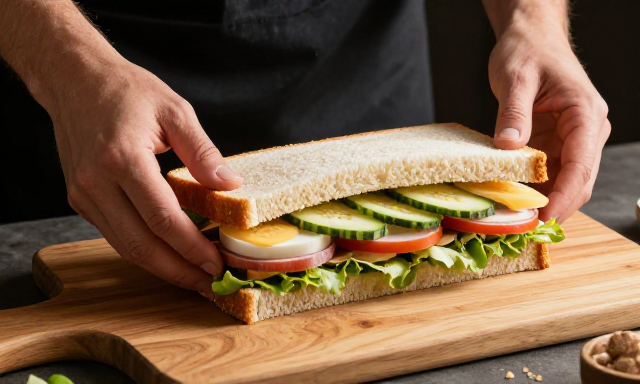
The Technique
Build your sandwich from the top slice down, then flip it before serving. Start with the bottom slice facing up on your board. Add your spreads, then your sturdiest ingredients (meats, dense vegetables), then cheese, then delicate items like lettuce and tomato, then the top slice. When you flip it, the lettuce and tomato are now resting on the sturdier foundation rather than being compressed under the meat.
Why It Works
When you build a sandwich conventionally — bottom slice up, piling ingredients, then adding the top — the heaviest items end up on the top when you flip it over to serve. This crushes delicate ingredients and shifts the weight distribution. Building upside-down puts sturdy items next to the bread where they belong, keeps delicate greens from being crushed, and means the architectural logic of the sandwich actually plays out the way you intend when it's in the diner's hand. It also helps prevent the top-heavy collapse that causes sandwiches to slide apart when bitten.
When to Use It
For any tall or layered sandwich where structural integrity matters — club sandwiches, stacked deli subs, BLTs. It's most useful when you have a combination of sturdy and delicate ingredients that need to be kept in the right relationship. Simpler two-ingredient sandwiches don't require this level of planning, but the habit is worth building for when it counts.
Pro Tips
- Think of yourself as building a bridge: your heaviest materials should be at the base
- Tuck lettuce around the perimeter to hold other ingredients in place
- Slice immediately after flipping — the compression of cutting helps lock layers together
- For sandwiches on round rolls, the bottom bun should be slightly thicker than the top to bear the weight