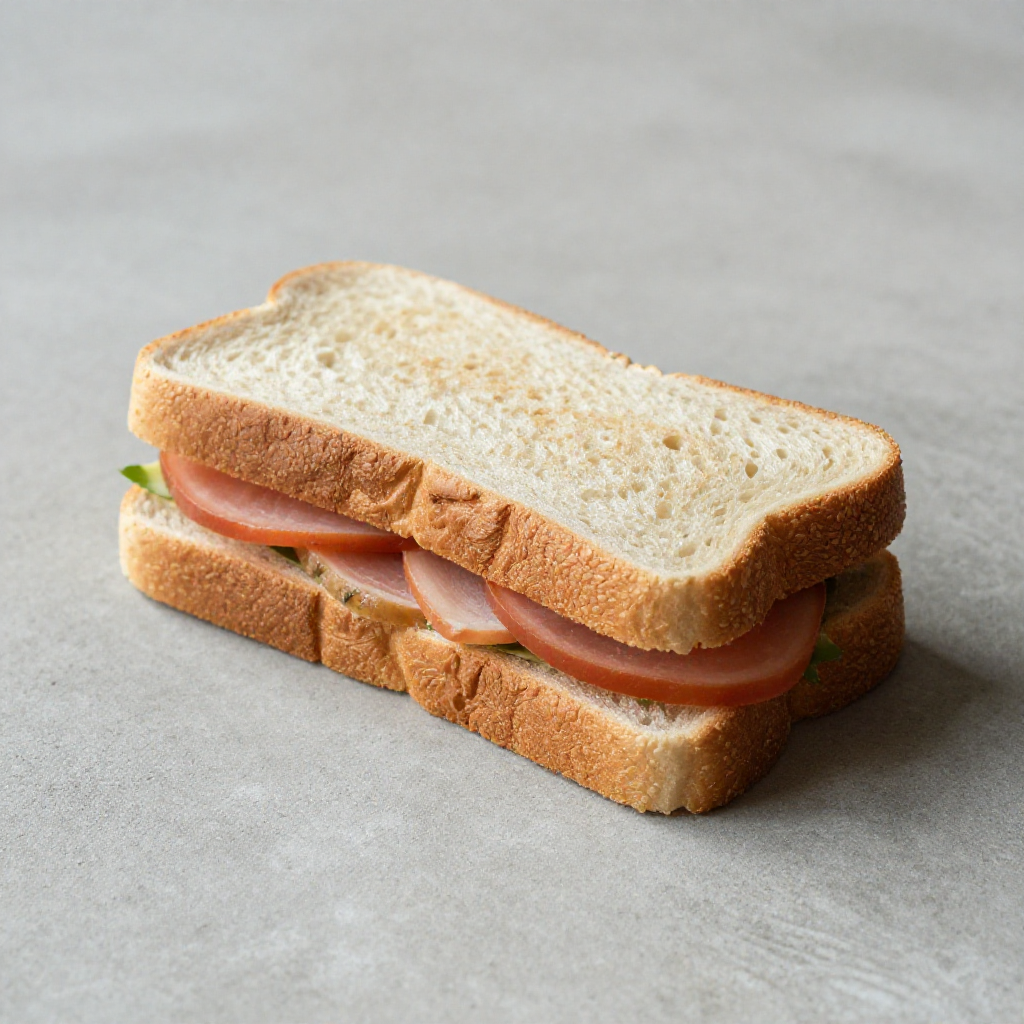
The filling gets all the credit, but the bread decides whether your sandwich holds together or falls apart in your lap. A Reuben on soft white turns to paste. A delicate tamago sando on a crusty baguette shreds the roof of your mouth. Bread is structure, and structure is a choice you make at the store before you slice anything.
Here is the short version of what the best bread for sandwiches actually depends on: how wet the filling is, whether you plan to toast or press it, and how much chew you want fighting back. Below is a bread-by-bread breakdown, a comparison table, and a straight answer to "which loaf do I buy for this specific sandwich."
The Seven Breads That Cover Almost Everything
Ciabatta: the sponge that survives oil
Ciabatta has a wide-open, irregular crumb and a thin, crackly crust. Those big holes are the whole point: they soak up olive oil, vinegar, and rendered fat without collapsing, which is why ciabatta is the default for pressed sandwiches and oil-forward subs. Split it, and the airy interior compresses under a panini press into something dense and chewy instead of turning to mush. It toasts fast because there is not much crumb to heat through.
Best for: pressed paninis, an oily Italian sub loaded with cured meats, anything you want to grill under weight.
Rye: the bread built for fat and acid
Rye's tight, dense crumb and low gluten give it a firm chew that stands up to a pile of corned beef or pastrami without going soggy under sauerkraut and dressing. The caraway seed most people associate with deli rye is a flavor decision, not a structural one, but the density is what matters: it resists moisture longer than white bread and grills into a sturdy shell. This is the bread a Reuben was designed around, and the same logic carries the patty melt.
Best for: Reuben, patty melt, anything with a wet, fatty, acidic filling that would drown softer bread.
Brioche: rich bread for rich builds
Brioche is enriched with butter and eggs, which makes it tender, faintly sweet, and prone to falling apart if you overload it with anything wet. Its strength is contrast: the sweetness plays against salt and richness, which is why brioche buns work under fried chicken, burgers, and breakfast sandwiches. Toast the cut side and the butter in the crumb caramelizes into something closer to a pastry. Do not ask brioche to hold a dripping French dip. It will lose.
Best for: burgers, fried chicken sandwiches, breakfast sandwiches, sweet-leaning builds where tenderness beats structure.
Baguette: crust as the load-bearing wall
A good baguette is a hard crust wrapped around a chewy, relatively dry crumb. That dryness is a feature: it means the interior resists sogginess long enough to carry pâté, pickled vegetables, and mayo across town. The crust is the structural spine, but it is also the risk. Fresh baguette shatters cleanly; day-old baguette saws the inside of your mouth. This is the classic vehicle for the bánh mì and the French jambon-beurre, both of which lean on the contrast between crackling crust and cool filling.
Best for: bánh mì, jambon-beurre, ham-and-butter builds, anything that wants crunch on the outside and restraint on the inside.
Shokupan and milk bread: the soft, sturdy paradox
Japanese milk bread (shokupan) is made with a cooked flour-and-water paste called tangzhong that traps moisture, giving the bread a cloud-soft, tight crumb that somehow does not fall apart. That combination is rare: most soft breads are structurally weak, but shokupan holds a clean cut and a heavy filling. It is the correct bread for a katsu sando, where the pillowy crumb is the deliberate counterweight to a crunchy fried cutlet, and for the delicate tamago sando, where anything crustier would fight the egg.
Best for: katsu sando, tamago (egg) sando, fruit sando, any Japanese-style sandwich where softness is the entire aesthetic.
Sourdough: the melt specialist
Sourdough's firm crumb and sturdy crust toast into a rigid, golden panel that stays crisp while the inside stays chewy. The mild tang cuts through fat, which is why it is the reliable pick for grilled cheese and tuna melts: it can take direct heat and a lot of butter without going limp. It also slices thin and holds its shape, so it works cold as easily as it works griddled.
Best for: grilled cheese, tuna melt, any open-faced or griddled sandwich that needs a crisp exterior.
Pita and laffa: the pocket and the wrap
Pita and laffa are the outliers here because they are not sliced loaves. Pita's pocket contains loose, saucy fillings that would slide off flat bread; laffa is larger, softer, and made to wrap. Both are thin and pliable, so they carry shawarma, kefta, and falafel without adding much chew of their own, letting the filling and sauce do the talking. They also stale fast, so warmth matters more here than with any other bread on this list.
Best for: shawarma, kefta, falafel, gyro, any layered or saucy filling that needs to be contained rather than stacked.
Bread Comparison at a Glance
| Bread | Crumb | Toasting behavior | Sogginess resistance | Best use |
|---|---|---|---|---|
| Ciabatta | Open, airy, large holes | Fast, crisps well under a press | High (absorbs oil without collapse) | Pressed subs, paninis |
| Rye | Dense, tight | Grills into a firm shell | High | Reuben, patty melt |
| Brioche | Soft, tender, enriched | Caramelizes, browns quickly | Low | Burgers, fried chicken, breakfast |
| Baguette | Chewy, dry, hard crust | Crust crisps, crumb stays chewy | Medium-high | Bánh mì, jambon-beurre |
| Shokupan / milk bread | Soft, tight, cloud-like | Toasts light, stays tender | Medium | Katsu sando, tamago sando |
| Sourdough | Firm, chewy, holey crust | Crisps hard, holds shape | High | Grilled cheese, tuna melt |
| Pita / laffa | Thin, pliable, soft | Warms rather than crisps | Low (eat fresh) | Shawarma, falafel, kefta |
Which Bread Should I Buy for This Sandwich?
- Grilled cheese or tuna melt: sourdough. It crisps hard and the tang cuts the fat.
- Reuben or patty melt: rye. Density beats the wet filling.
- Italian sub or any oily cold-cut build: ciabatta, especially if you are pressing it.
- Bánh mì or jambon-beurre: baguette, and buy it the same day.
- Katsu sando, tamago sando, or fruit sando: shokupan or milk bread, no crust required.
- Burger, fried chicken, or breakfast sandwich: brioche, cut side toasted.
- Shawarma, falafel, or kefta: pita for pockets, laffa for wraps.
The One Rule Under All the Others
Match the bread's moisture resistance to the wetness of the filling, and match its chew to how much the filling can afford to fight back. A dry filling forgives a soft bread; a wet one demands a dense or crusty one. Everything else, the caraway, the sweetness, the char, is flavor tuning on top of that structural decision. If you want to go deeper on how bread mass balances against everything you put between the slices, the breakdown on bread-to-filling ratio is the next thing to read.
Buy the loaf that fits the job, slice it to the thickness the filling needs, and most of the work of a good sandwich is already done before the knife touches the meat.