Pav Bhaji Roll
● IndiaPav bhaji was created in Mumbai in the 1850s to feed the textile mill workers who needed a fast, filling, affordable meal. The story holds that mill workers' short lunch breaks inspired vendors to mash together whatever vegetables were available and serve them with butter-fried pav rolls for speed. The dish has since become one of India's most beloved street foods.
Pav bhaji is now eaten across India and in Indian communities worldwide, but it remains most associated with Mumbai's street food culture. The vendor who prepares it becomes an artist — the bhaji is mashed and cooked on a large flat griddle with vigorous pressing and stirring, topped with a knob of butter that melts dramatically into the orange curry.
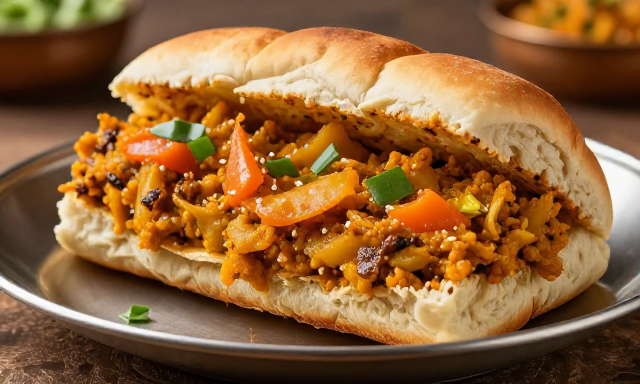
Boil potatoes, cauliflower, carrots, and peas until very tender. Sauté onion, ginger, garlic, tomatoes, and capsicum in butter with pav bhaji masala (a blend of spices) until deep orange and aromatic. Add the boiled vegetables and mash vigorously with a potato masher. Cook together until well combined. Butter and griddle the pav rolls until golden. Serve the bhaji with diced raw onion, lemon, and coriander.