Bifana
● PortugalThe bifana originated in the Alentejo region of Portugal but spread rapidly to Lisbon in the 20th century, where it became the working-class street food sandwich. The name likely derives from the Portuguese word for veal (vitela) that was later applied to pork. By the 1960s it was established as a fixture of Lisbon tascas and tabernas.
The bifana is Portugal's most beloved casual sandwich, consumed at all hours from dedicated bifana shops and tascas. Football stadiums serve them, petrol stations sell them, and a good bifana shop draws queues. The quality varies enormously — the best involve pork marinated overnight in white wine, garlic, and paprika, slow-cooked in the same marinade.
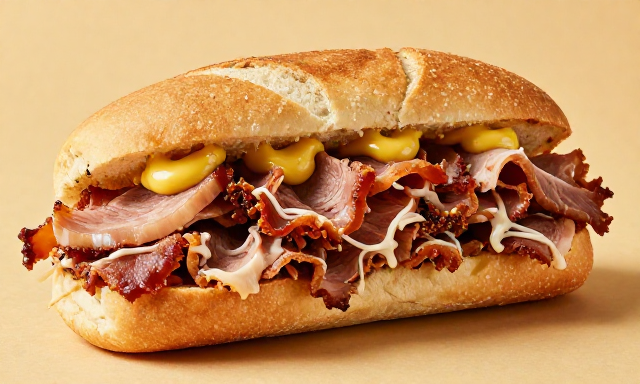
Marinate thin pork escalopes overnight in dry white wine, garlic, paprika, bay leaf, and salt. Simmer the pork gently in the marinade until very tender, about 45 minutes. Toast a crusty papo-seco roll. Fill with the pork and a generous spoonful of the cooking juices. Add piri-piri sauce and mustard to taste.