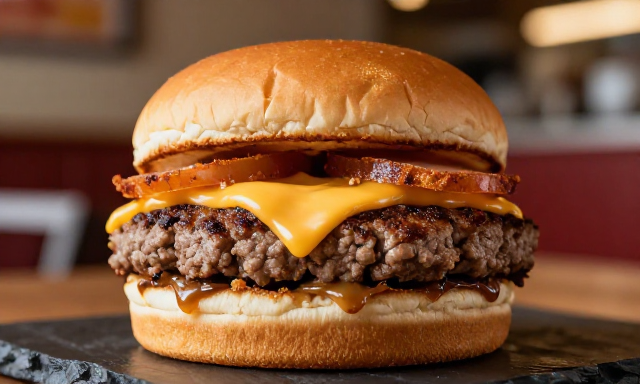
The technique is almost violently simple: take a loosely packed ball of 80/20 ground beef, place it on a ripping-hot cast iron or steel griddle, and press it flat with a spatula, hard and fast, within the first ten seconds of contact. What happens next is the point. The aggressive smash maximizes surface contact between the meat and the hot metal, triggering a rapid Maillard reaction across the entire patty face. The result is a thin burger with deeply browned, lacy, almost crispy edges and a juicy interior that no thick patty can match — because thick patties steam as much as they sear.
The smash technique existed quietly in old diners — Steak 'n Shake had been doing it since 1934 — but it lived in the background of burger culture until food media discovered it around 2012. J. Kenji López-Alt's detailed write-up of the science involved at Serious Eats gave the technique intellectual legitimacy, and the social media era's obsession with crispy edges and cross-section glamour shots did the rest. By 2018, the smash burger was a food media archetype. By 2022, it was everywhere.
The canonical smash burger sandwich has a specific architecture: one or two thin patties (rarely three), American cheese melted completely into the meat before the patty is removed from the griddle, a soft enriched bun (brioche or potato rolls are standard), and condiments that don't fight the beef — classic special sauce, pickles, shredded iceberg, white onion. Nothing that adds moisture bulk. The restraint is part of the philosophy: every element exists to amplify the patty.
Key operators shaped the canon. Shake Shack's smashed patties (thicker than a strict smash but still pressed) brought the technique to a national audience. Dedicated smash shops like Hamburger Mary's Los Angeles outpost and independent operations like Smashburger refined the single-patty format. The real action, though, has been at pop-ups and food trucks where individual cooks have pushed the smash burger into a format that deserves the word sandwich: compound butters, house-made pickles, regional cheeses, local beef blends. The technique has become a canvas.
"A thick patty is a different product," said a pitmaster who converted his barbecue operation to a smash burger concept in 2024. "It's beef as meat. A smash patty is beef as flavor delivery system. The whole surface is crust. Every bite is edge." Whether or not you accept the theology, the smash burger's dominance in 2026 food culture is undeniable — and its insistence on simplicity has made it the most sandwich-like burger form in the history of the medium.
Original Source
This story was reported by Food & Wine. Read the original article →