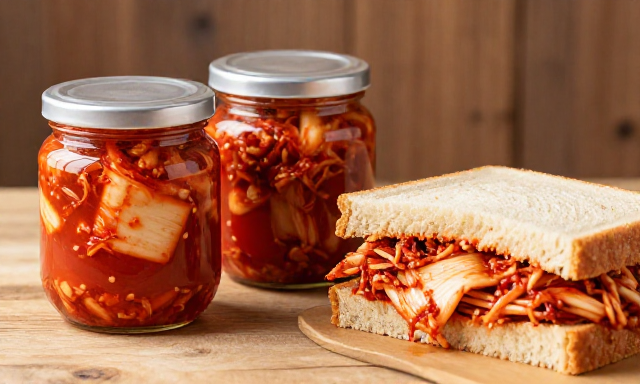
For most of the twentieth century, the condiment options at a sandwich counter were predictable to the point of ritual: yellow mustard, Dijon, mayo, ketchup. These four dominated because they were shelf-stable, affordable, and familiar. The fermentation revolution now underway is not replacing them so much as exposing how limited they always were.
The shift began in Korean-American cooking, where kimchi — fermented napa cabbage with gochugaru, garlic, and ginger — started appearing on pulled pork sandwiches, grilled cheese, and bánh mì-adjacent creations around 2015. The combination worked because kimchi delivers everything a good condiment should: acid, heat, funk, crunch, and complexity that deepens rather than flattens whatever it accompanies. Once American eaters understood that, the door opened to everything fermentation could offer.
The science supports the enthusiasm. Lacto-fermented foods undergo bacterial conversion of sugars to lactic acid via Lactobacillus species, producing a range of flavor compounds — esters, short-chain fatty acids, and glutamates — that create the layered umami complexity food scientists call kokumi. When applied to sandwiches, these compounds interact with the Maillard-browned crust of grilled bread or the fat in cured meats to produce flavor effects that no single commercial condiment can replicate.
Specific pairings have emerged as canonical: kimchi with pulled pork or smoked brisket (the fermented funk cuts the fat); miso mayo on a katsu sando (umami meets crunch); gochujang aioli on a fried chicken sandwich (heat and depth together); fermented hot sauce — the kind made with lacto-fermented peppers rather than vinegar-pickled ones — on an Italian beef. The home fermentation market has expanded accordingly. Starter kits for kimchi, koji rice, and lacto-fermented hot sauce are now available at most grocery chains, not just specialty food stores.
"The condiment is where sandwiches get their personality," said a chef at a fermentation-focused sandwich shop in Portland that has a waiting list for lunch. "When your condiment has twelve months of bacterial activity behind it, that personality is a lot more interesting than a squeeze bottle of French's."
Original Source
This story was reported by Bon Appétit. Read the original article →