Spam Musubi Sandwich
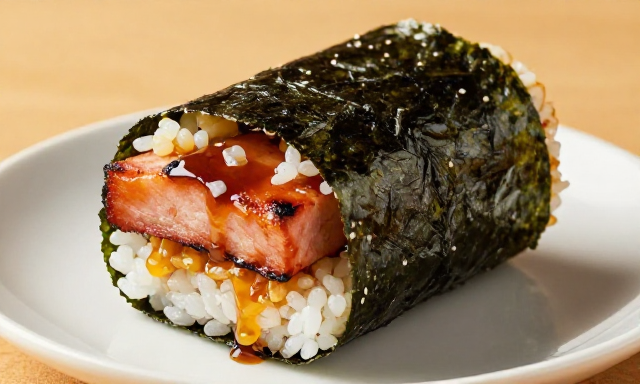
Fried Spam and rice wrapped in nori — Hawaii's iconic snack that bridges Japanese and American food cultures.
Origin Story
Spam was introduced to Hawaii by the US military during World War II, when fresh meat was scarce. The local Japanese-Hawaiian community adapted it into musubi — a rice cake wrapped in nori, inspired by Japanese onigiri — creating something that was distinctly Hawaiian. Spam musubi is now found in every Hawaiian 7-Eleven, ABC Store, and school cafeteria.
Cultural Context
Spam musubi is the food that represents Hawaii's multicultural food identity — the convergence of Japanese rice-and-nori tradition with American canned meat, seasoned with shoyu and sugar in a way that is entirely local. It is eaten at the beach, at sports events, as breakfast, as a road trip snack. Hawaii consumes more Spam per capita than any other US state.
Recipe
Slice Spam and fry in a pan with a glaze of soy sauce and sugar until caramelised. Press hot cooked sushi rice into a Spam musubi mould (or use the Spam can itself). Place a slice of glazed Spam on top. Wrap a strip of nori around the assembly. Press firmly and eat while the rice is still slightly warm.